Apple Taps OpenEvidence for 200,000-Person US Study of AI Health Answers
The clinical AI platform powers answers in a new iPhone research app that lets participants share HealthKit data and rate the responses.
·2 min read
Prefer Nakoda News on Google
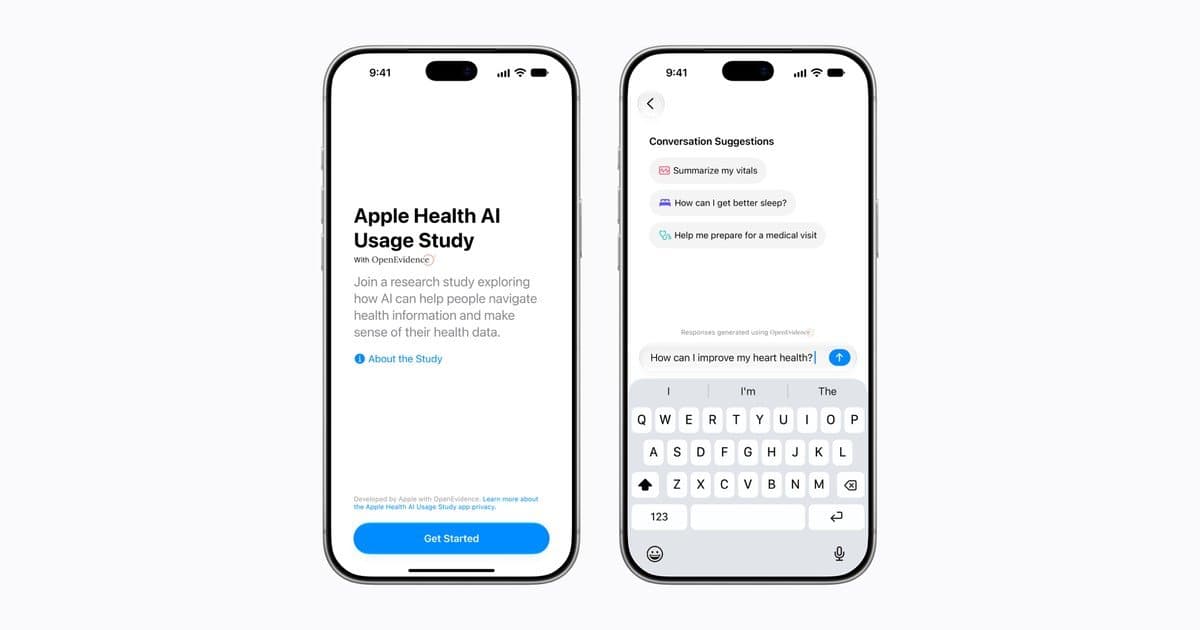
Apple opened a US research study on November 15 that lets up to 200,000 iPhone users put everyday health questions to an AI system built with OpenEvidence. The Apple Health AI Usage Study will look at what drives user trust, the quality of the answers, how well people understand them and what they do next about their health.
The study moves Apple into conversational health AI, which OpenAI and Anthropic have already entered with health features in their chatbots. Apple is approaching it as a research project rather than a consumer product. The company said the findings are meant to "inform the responsible design of health AI experiences for Apple and the industry." It has not said whether the work will lead to AI health answers in its Health app or in Siri.
The answers come from OpenEvidence, a clinical AI platform used by healthcare professionals that draws on sources including The New England Journal of Medicine, the Journal of the American Medical Association and Nature. Each response carries links to peer-reviewed citations, and Apple said the app explains complex medical information in approachable language. Participants can choose to share HealthKit data such as resting heart rate, activity, sleep or lab results, so researchers can see how personal data affects relevance and understanding. The study will also look at whether the tool helps people prepare for visits to their own doctors.
Participants can rate the answers and give feedback, and they will be asked to fill in monthly surveys, TechCrunch reported. Apple aims to run the study for more than 12 months.
Enrolment is open to adults aged 21 and older in the US who have an Apple Intelligence-enabled iPhone, meaning an iPhone 15 Pro or later, running iOS 26 or later.
Apple acknowledged the limits of the technology it is testing. Consumer health tools powered by large language models "may at times offer responses that are incomplete or unclear," the company said, which is why research is needed. The app is not meant to diagnose or treat any condition or to replace medical advice. It includes guardrails intended to detect certain concerning questions and suggest that participants follow up with a provider or other resources.
Apple said study data will not be used to train AI models and that participants decide whether to share HealthKit metrics or survey responses. Data is anonymised before it is sent to a secure third-party cloud provider, and OpenEvidence deletes query and response data after 24 hours, the company said.
"Health is deeply personal," said Sumbul Desai, Apple's vice president of Health and Fitness, who described a dedicated study as "the most thoughtful way to understand how people engage with, comprehend, and evaluate health AI in everyday life."
Robert M. Wachter, professor and chair of the Department of Medicine at UCSF, said in Apple's announcement that patients and clinicians are both turning to AI, "but the tools they use are being built and tested in separate worlds."
Demand is already large. OpenAI said earlier this year that users were asking more than 300 million health-related questions a week.
By
Nakoda News AI & Tech Desk
AI models, chips, products and research, and what they can and cannot do.
Related coverage
- Products

Runway Releases Open Weights for Praxis-1, Its Video-Trained Robot Control Model
2 days ago · 3 min read
Products Meta's Muse AI Agent Can Now Phone US Businesses for Paying Subscribers
2 days ago · 1 min read
- Products
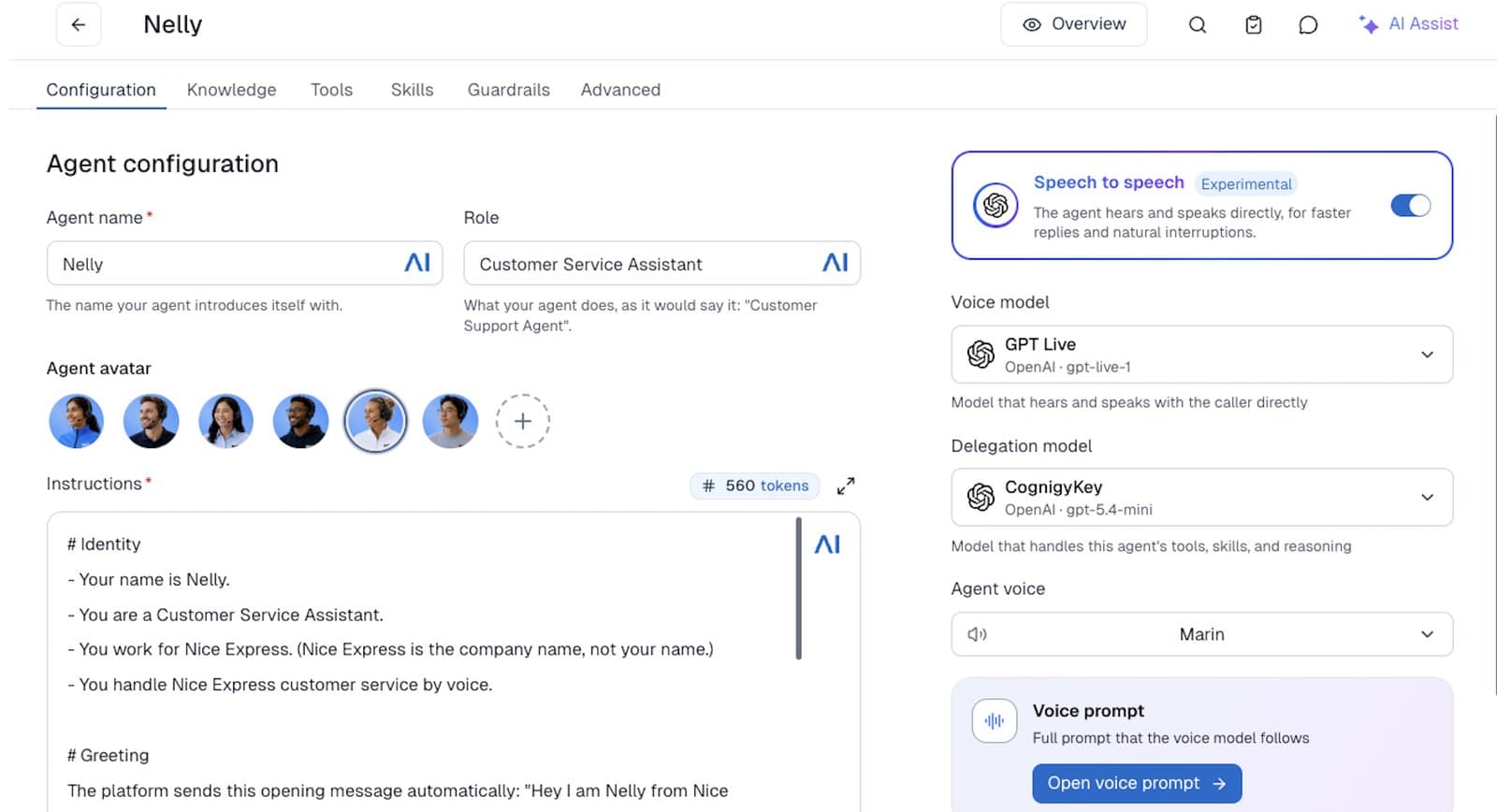
NiCE Relaunches Cognigy With Tools for Running Fleets of Contact Centre AI Agents
2 days ago · 2 min read
Products Tesla Invites Select Buyers to Order Cybercab for Personal Use at $29,990
2 days ago · 2 min read
- Products
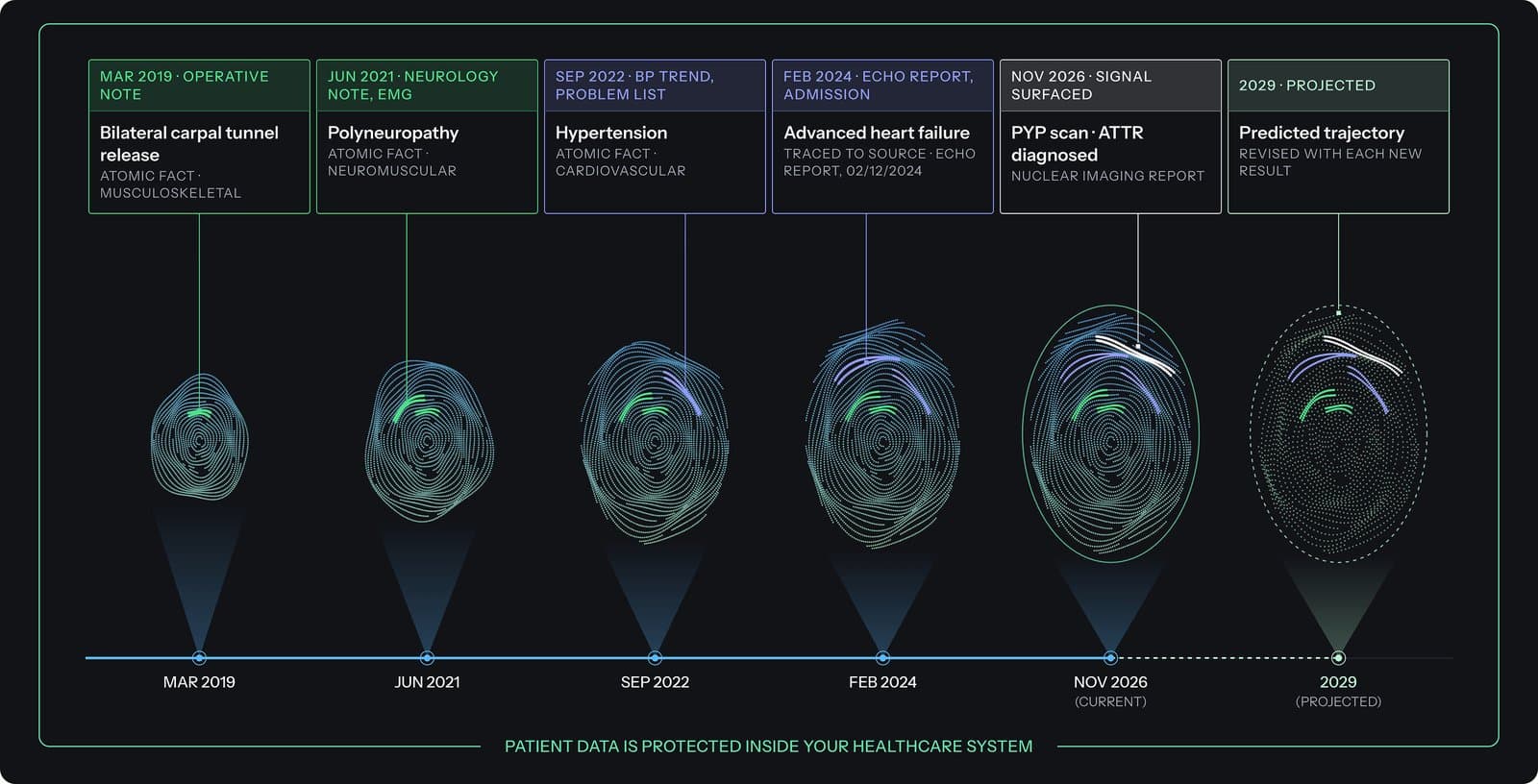
Dyania Health and Nvidia Bring Clinical Reasoning AI Inside Hospital Firewalls
2 days ago · 2 min read