Runway Releases Open Weights for Praxis-1, Its Video-Trained Robot Control Model
The 27-billion-parameter model is available under Apache 2.0 for commercial use and tops Nvidia's RoboLab-120 leaderboard among world action models, by Runway's own testing.
By Nakoda News Desk
·3 min read
Prefer Nakoda News on Google
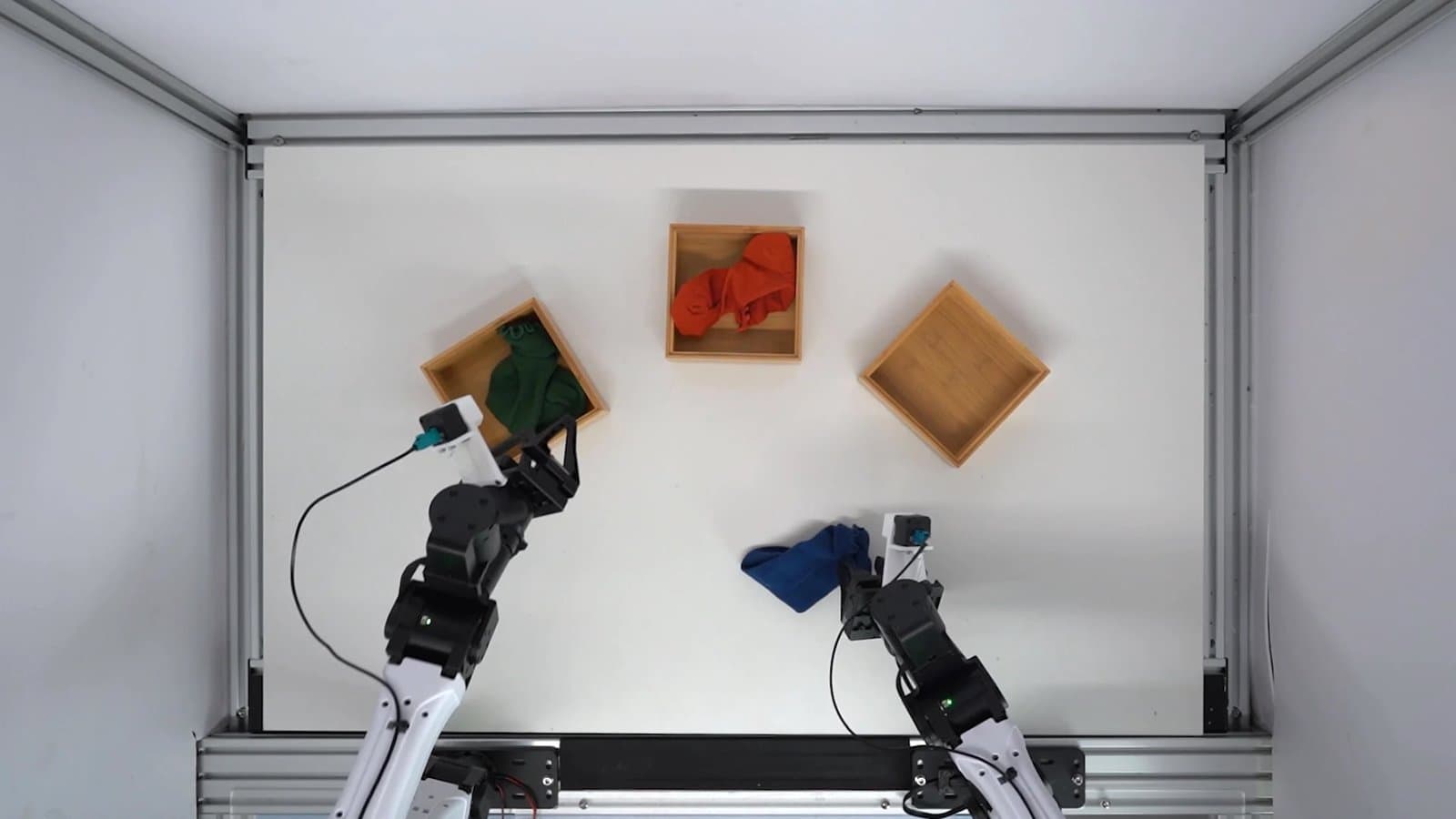
Runway, the New York company best known for its generative video models, has released the weights and code of Praxis-1, its model for controlling robots, under the Apache 2.0 licence. The licence allows commercial use.
The company introduced Praxis-1 in late September but at first gave access only to select partners. Its release post, dated November 11, says the open licence covers the model weights as well as the inference and fine-tuning code, and that the weights are on Hugging Face and the code on GitHub. Runway also published a research report with new benchmark results.
The release matters because Praxis-1 is an attempt to carry what video models learn from ordinary footage into robotics, where training data has traditionally been expensive to collect. Making it open lets robot makers run and modify it on their own hardware rather than through an API. "Open weights give hardware developers the flexibility to run, inspect and adapt a world action model on their own terms," Runway said.
Runway describes Praxis-1 as a 27-billion-parameter mixture-of-experts diffusion transformer that predicts video and robot actions together, a design it calls a world action model. The model takes in camera images, text instructions and the robot's position, predicts how the scene will change, and works out the movements needed. It keeps adjusting as new camera frames arrive.
The model started as a video model trained on everyday footage and was then fine-tuned on videos of human actions and on robot data. It still needs some robot-specific data. To adapt it to a Franka robot arm, Runway used about 277 hours of recordings from the public DROID research dataset, according to its report, and between 1,400 and 2,600 hours for a dual-arm robot. Whether the approach needs less robot data overall than models without general video pretraining is still unclear.
On Nvidia's RoboLab-120 leaderboard, which tests sorting, grasping and stacking across 120 simulated tasks, Runway reports a 46.2% success rate for Praxis-1. That compares with 42.9% for FLUX 3 Action, 36.8% for Cosmos3 Nano and 28.0% for π0.5. The result puts Praxis-1 first among world action models but fifth on the overall leaderboard. On a real Franka arm, Praxis-1 succeeded in 88 of 100 attempts across ten tasks, against 80 for FLUX 3 Action. After fine-tuning on about 95 hours of data from the mobile robot Google used to build RT-1, which was not in Praxis-1's earlier training, it reached 80% success in simulation, compared with 52.4% for Google's original RT-1 policy. All of these tests were run by Runway and have not been independently verified.
Since September, robotics companies Noble Machines, Standard Bots and Ultra have been testing the model on a legged humanoid, a six-axis industrial arm and a dual-arm warehouse robot. Runway says it runs on Nvidia hardware ranging from H100 and B200 data centre GPUs to RTX 5090 workstation cards and the Jetson Thor module mounted on robots. It supports full fine-tuning and LoRA, and it is also offered through vLLM-Omni and hosted inference on Reactor. The GitHub documentation says the standard version needs a GPU with 80 GB of memory. A compressed version should fit within the RTX 5090's 32 GB, according to Runway's estimates, though peak memory use has not yet been measured.
Runway's report also lists the model's limits. Praxis-1 sometimes confuses objects that look alike, struggles with vague instructions and cannot reliably plan long sequences of actions by itself. Runway positions it as a fast executor of movements that could in future work under general-purpose AI models that break complex jobs into individual steps.
Sources
- The Decoder · Runway's open-source Praxis-1 turns video AI into a robot controller
- Runway · Praxis 1 is now available
Produced with AI assistance from the sources above. How we work
By
Nakoda News Desk
Nakoda News covers AI and business. Every story links the sources it draws on; how we work is set out in our editorial standards.
Related coverage
- Products
Dyania Health and Nvidia Bring Clinical Reasoning AI Inside Hospital Firewalls
16 hours ago · 2 min read
Products OpenAI Launches ChatGPT Wallet, Letting Its AI Agents Buy Things for Users
17 hours ago · 2 min read
Products Grok Bot for Mac Can Now Use Apple's Messages, Mail, Notes and Four Other Apps
1 day ago · 1 min read
Products Saudi Firm OmniOps Launches Bunyan Inference Hub for AI Models Hosted in the Kingdom
1 day ago · 2 min read
- Products

Google Releases Gemini 4 Hydrogen, a Cheaper Model That Edges Past Its Flagship Argon
2 days ago · 3 min read