Dyania Health and Nvidia Bring Clinical Reasoning AI Inside Hospital Firewalls
Dyania's Synapsis AI, which reads entire patient records on Nvidia's software stack, ran a Cleveland Clinic study of 7,812 heart valve patients without the data leaving the hospital.
By Nakoda News Desk
·2 min read
Prefer Nakoda News on Google
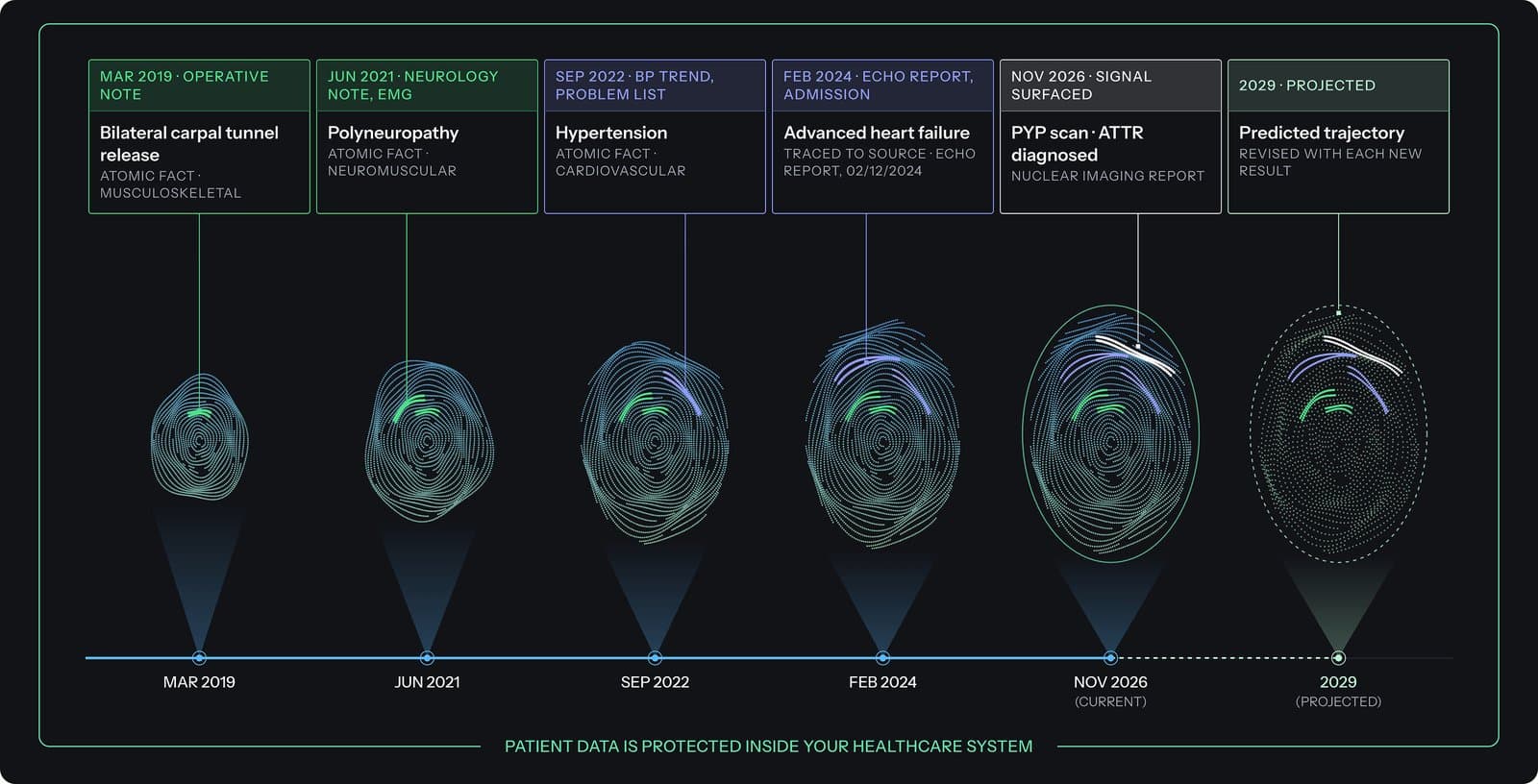
Dyania Health, a New Jersey start-up, said on Thursday that it is working with Nvidia to run its Synapsis AI clinical reasoning system on hospitals' own infrastructure, so that health systems can analyse full patient records without moving them outside their networks.
According to the company's press release, Synapsis AI reads a patient's entire medical history, including years of clinical notes, operative and imaging reports and lab results. It answers clinical questions and cites the supporting evidence in the chart. Running the system behind the hospital firewall addresses one of the main obstacles to clinical AI: health systems are reluctant to send identifiable patient data to outside clouds, and much of the useful information sits in unstructured notes that are slow to review by hand.
Dyania said it uses Nvidia's AI Enterprise software stack end to end. It trains its own clinical models, including with reinforcement learning, on Nvidia's NeMo framework, and runs inference inside hospital networks with TensorRT and TensorRT-LLM. It is also evaluating Nvidia Confidential Computing for training and inference, the Dynamo distributed inference software, Multi-Instance GPU partitioning to share chips across several clinical workloads, and scaling up to many Blackwell Ultra GPUs to deliver results close to real time at the point of care.
The companies plan to offer Synapsis AI on Nvidia infrastructure to health systems in the US and abroad, publish joint case studies and integrate the product with Nvidia's healthcare software.
Dyania pointed to work with Cleveland Clinic as its first example. The system reviewed the records of 7,812 patients who had an aortic valve replacement between 2005 and 2021, covering up to 16 years of care. It answered 88 clinical questions per patient, on the valve, other conditions, lab trends, medications, follow-up ultrasound measurements and later clinical events. The resulting dataset was used to train a machine-learning model that predicts when a replacement valve may fail and the patient may need another procedure.
The company said the study found valve type was the strongest factor in how quickly a valve deteriorated, while age and other conditions affected whether and when a second procedure happened. Follow-up heart ultrasounds substantially improved the model's accuracy. The model estimates risk at three, five and 10 years and updates with each new scan. Dyania said the tool is meant to inform care and still needs external validation by clinicians.
Lars G. Svensson, chief of Cleveland Clinic's Heart, Vascular and Thoracic Institute, called the work "a promising step towards enhanced outcomes and more personalized care for patients". Eirini Schlosser, Dyania's founder and chief executive, said that with the system "for the first time we can reason across all of it at once", referring to the full patient record.
Dyania did not disclose financial terms or name other health systems that have signed up. Its next step is AI agents that continuously train predictive models of this kind on each hospital's own data.
Sources
- PR Newswire · Dyania Health Brings Clinical Reasoning AI Inside the Hospital Firewall to Advance Patient Care with NVIDIA
- Fierce Healthcare · Dyania Health, Nvidia team up to bring clinical reasoning AI inside hospital networks
Produced with AI assistance from the sources above. How we work
By
Nakoda News Desk
Nakoda News covers AI and business. Every story links the sources it draws on; how we work is set out in our editorial standards.
Related coverage
- Products

Google Releases Gemini 4 Hydrogen, a Cheaper Model That Edges Past Its Flagship Argon
1 day ago · 3 min read
- Products

Etisalat UAE Launches Agentic AI Advertising Platform for Small Businesses With Pixis
1 day ago · 2 min read
Products Google and Samsung's Gemini Glasses Go on Preorder From $395, Shipping December 10
1 day ago · 2 min read
Products Meta Brings Its Muse AI Agent to Apple Watch and Wear OS Smartwatches
2 days ago · 2 min read
Products Gopuff Lets Grok Bot Users Order and Pay for Deliveries Without Leaving the Chat
2 days ago · 2 min read