Nvidia Teams With IBM and Fermilab on Quantum Codesign Platform, Ships Faster Decoder
The research platform pairs Nvidia DGX B200 systems with IBM quantum computers, and Nvidia says its new TCBP-JOBS decoder speeds parts of error-correction research by up to 13,000 times.
·2 min read
Prefer Nakoda News on Google
Nvidia said it plans to build a modular quantum computing codesign platform with IBM and the US Department of Energy's Fermi National Accelerator Laboratory, pairing Nvidia DGX B200 systems with IBM quantum computers to study error correction and physics applications.
The platform is meant for research. Scientists will use it to develop and test error-correction codes, decoding algorithms and hybrid quantum-classical applications in high-energy and nuclear physics, Nvidia said in a press release. They will also study how classical systems can scale alongside several linked quantum processors in modular designs. Fermilab's expertise will focus the work on error correction and physics applications, helping to set the requirements for future fault-tolerant quantum computers.
IBM and Nvidia are placing DGX B200 systems alongside IBM quantum computers, including machines powered by IBM Quantum Nighthawk. Nvidia called Nighthawk the fastest quantum processor IBM has delivered. The release did not say where the systems are housed, what the collaboration costs or when the platform will be fully running. Anna Grassellino, Fermilab's chief technology officer and director of its SQMS Center, referred to it in her statement as a "proposed platform".
What the Decoder Does
Quantum processors make errors, which limits how long and how complex their calculations can be. Error correction spreads quantum information across many physical qubits. A classical algorithm called a decoder then reads measurement data to work out which errors probably occurred so they can be fixed. Decoding is one of the computationally intensive parts of error-correction research.
Nvidia's new decoder, TCBP-JOBS, is available now in version 0.9.0 of the company's CUDA-Q QEC library. Nvidia said it decodes up to 13,000 times faster than existing leading algorithms while delivering high accuracy, cutting the computation time for researching new quantum computing designs from 12 weeks to 45 minutes. The speedup applies to research workloads that test candidate codes and decoder settings. Nvidia said the tool should help researchers find designs that use physical qubits more efficiently.
"Making quantum computers useful for science requires advances in error correction, applications and the systems that bring quantum processors and accelerated computing together," said Krysta Svore, Nvidia's vice president of applied research for quantum computing.
Jerry Chow, IBM Fellow and chief technology officer of quantum-centric computing, said the partners plan to use real-world problems to shape "the modular, interconnected architectures that will define the next generation of quantum computers and accelerated classical computing."
Nvidia is also expanding the open source Slurm workload manager with a quantum interface so that centers can schedule quantum processors alongside CPUs and GPUs in supercomputing workflows. IBM is contributing an integration through its Quantum Resource Management Interface.
In related work, IBM and RIKEN combined an IBM quantum computer with ROQUO, RIKEN's JHPC-quantum GPU supercomputer, to calculate binding energies for two protein-ligand complexes. That project is a finalist for the 2026 ACM Gordon Bell Prize.
By
Nakoda News AI & Tech Desk
AI models, chips, products and research, and what they can and cannot do.
Related coverage
Research OpenAI Showcases GPT-6 Astra's Role in Unreviewed Lattice Standard Model Proof
1 day ago · 2 min read
- Research

MBZUAI Uses Glucose, Genome and Retinal Data to Build AI for Earlier Diabetes Detection
3 days ago · 3 min read
- Research
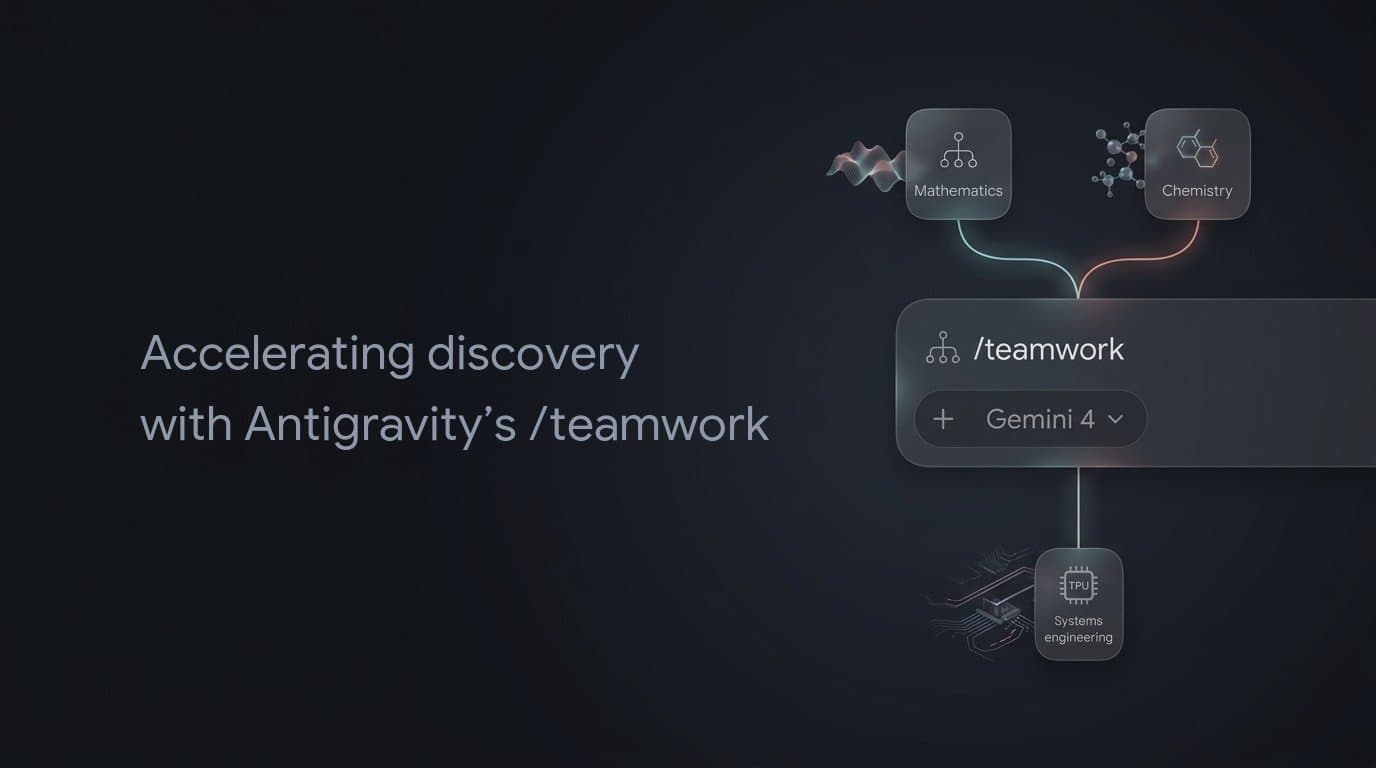
Google Says Its /teamwork AI Agents Solved Long-Open Problems, Opens Them to Researchers
3 days ago · 3 min read
- Research

Google DeepMind Releases AlphaGenome 2 to Predict How DNA Variants Act in Specific Cells
5 days ago · 3 min read
- Research

Arab Satellite 813, Funded by the UAE Space Agency, Passes Its Post-Launch Review
6 days ago · 2 min read