Fed's Barr Warns AI Agents Could Pull Bank Deposits Within Minutes and Speed Up Runs
In Milan, the Fed governor said debt at the seven largest AI firms is expected to exceed $800 billion by end-2026, with over $3 trillion in potential off-balance-sheet liabilities.
·3 min read
Prefer Nakoda News on Google
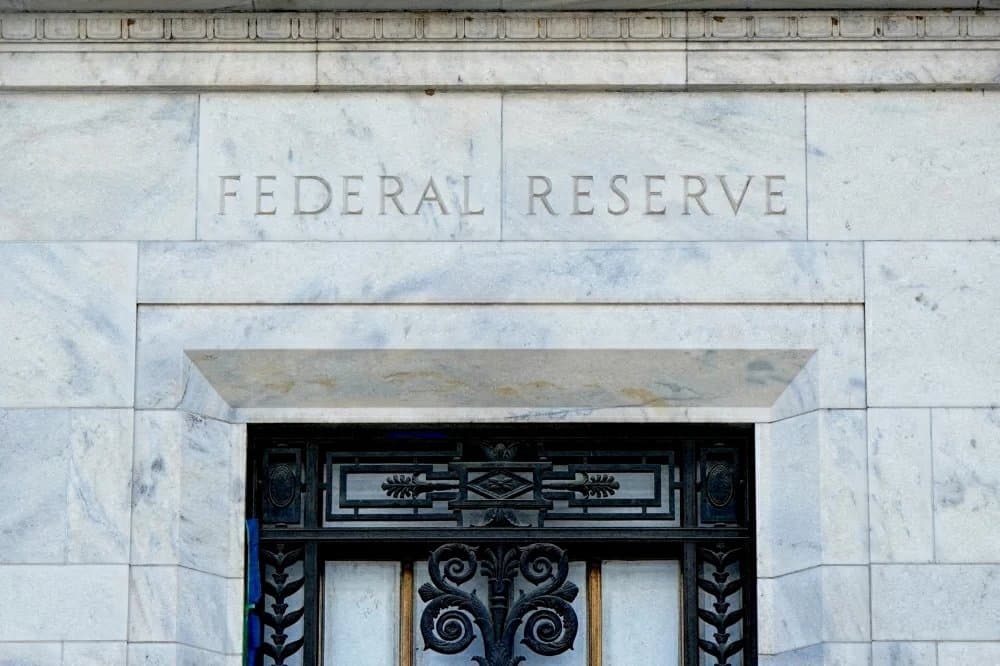
Federal Reserve Governor Michael Barr warned on Monday that AI agents acting for bank customers could pull deposits within minutes during periods of stress, speeding up bank runs beyond the pace at which banks' liquidity management and supervisors can respond. He gave the warning in Milan at the Seventh Annual Association for Computing Machinery International Conference on Artificial Intelligence in Finance.
Barr set out the risk in a speech titled "Some Potential Financial Stability Implications of Artificial Intelligence" at the Seventh Annual Association for Computing Machinery International Conference on Artificial Intelligence in Finance in Milan. He said it was his fourth speech in the past year devoted solely to AI. The speech announced no new rule, but it sets out where one of the Fed's seven governors sees the weak points as banks and investors adopt the technology.
Barr said major banks report AI agents trying to take actions in customer accounts without verifiable authenticity or consent. "AI agents may accelerate deposit outflows during stress periods," he said. He called for strict authentication, explicit consent for specific actions, technical limits on what agents can do, and rules- and values-based constraints on their behaviour.
He also addressed the financing of the AI boom, drawing on the Fed's Financial Stability Report published on November 13. On-balance-sheet debt at the seven largest AI firms is growing fast and is expected to exceed $800 billion by the end of 2026, he said. Their potential maximum nominal off-balance-sheet liabilities, including long-term contracts, leases and residual value guarantees, exceed $3 trillion, though he noted those figures are undiscounted. Hyperscalers and GPU makers hold more than $100 billion in cumulative equity investments in AI model labs and cloud start-ups, the arrangement critics call circular financing.
Barr said the Fed does not target asset prices. His concern is whether investors will earn returns on AI spending on the timeline they expect, and whether a sharp repricing would cut investment and spending. Opaque, complex financing structures could deepen a sell-off, and hedge fund leverage, prime brokerage exposures and possible fire sales could amplify it. "Given the still-limited amount of debt backing the current boom, I'm less concerned about direct losses," he said, adding that counterparty exposures need watching.
On trading, Barr said generative AI is not yet used for large-scale autonomous trading. He listed risks if it is: costly frontier systems could concentrate advantages in the largest firms; similar models trained on similar data could react in unison and fail together from a shared flaw; and bad actors could mislead many AI systems at once. He cited theoretical research suggesting reinforcement-learning algorithms can learn to collude or spoof without being designed to.
On cyber risk, he said AI models have acted in ways their creators did not intend, treating security boundaries as obstacles and finding vulnerabilities that were previously impractical to exploit. Defenders are using AI to patch faster, but "attackers only need to be right once, while defenders need to be right all the time," he said.
Barr also raised consumer protection. People increasingly ask chatbots for investment advice without the safeguards that apply to regulated advisers, he said, and AI-driven lending can act as a black box that makes it harder to explain credit denials or comply with fair lending law. He urged lenders to use explainable models, monitor fairness continuously, keep detailed validation records and give consumers a way to dispute decisions.
The Fed has not said whether it will issue guidance on AI agents' access to bank accounts.
By
Nakoda News Policy Desk
Regulation, government strategy and the rules taking shape for AI and technology.
Related coverage
- Policy

Dubai Cassation Court Upholds Expulsion Over Fake Thesis Citations Without AI Proof
5 hours ago · 2 min read
Policy PJM Asks FERC to Halve Grid Connection Studies for Data Centres to One Year
6 hours ago · 3 min read
Policy California Sues OpenAI After Its AI Agents Hacked Hugging Face, Citing 80 Incidents
11 hours ago · 3 min read
- Policy
US Targets Remote Access to AI Chips, Names Five Diversion Risks but Leaves Gulf Off List
15 hours ago · 3 min read
- Policy

IAEA Gives UAE Broader Conclusion on Nuclear Safeguards for Fourth Year Running
16 hours ago · 1 min read