Chinese Open-Weight Models Show Signs of Training on Banned Nvidia Blackwell Chips
A former OpenAI researcher says weights from DeepSeek V4 and Moonshot's Kimi K3 bear Blackwell fingerprints, as the Megaspeed scandal puts Nvidia's China exposure under scrutiny.
By Nakoda News Desk
·3 min read
Prefer Nakoda News on Google
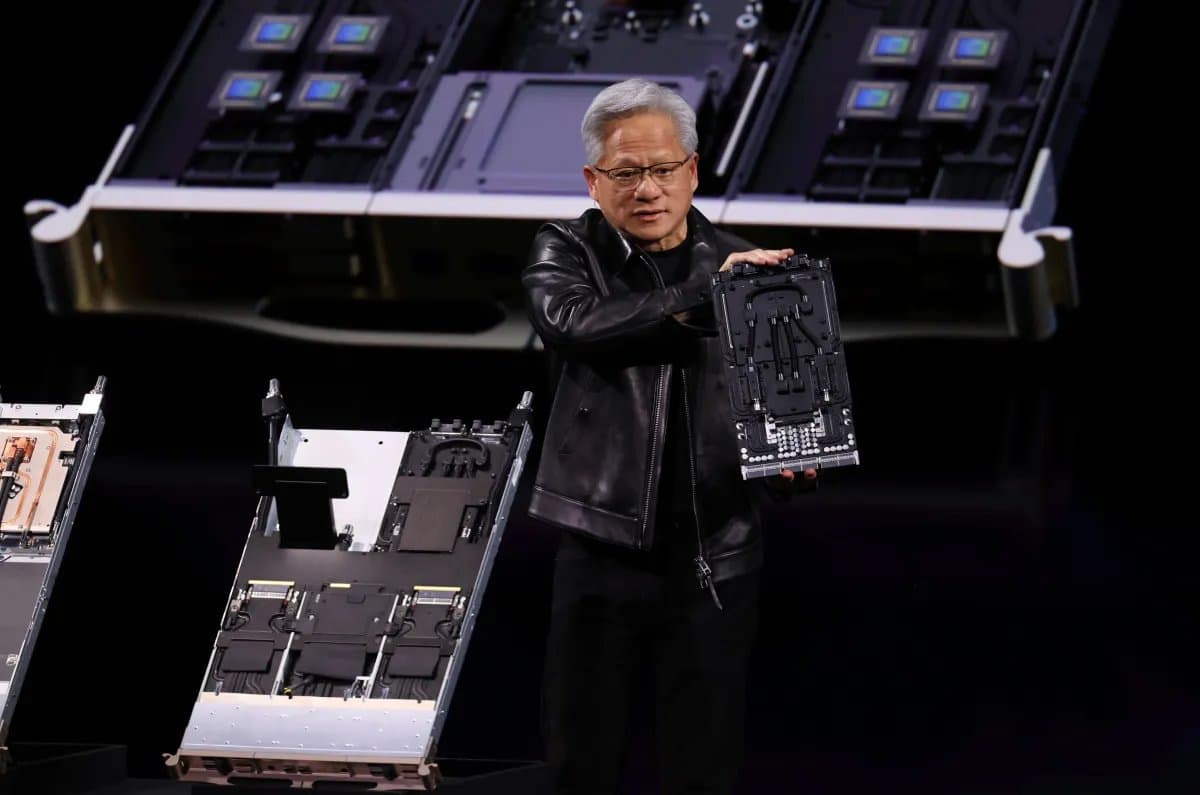
Several of China's most closely watched open-weight AI models, including DeepSeek's V4 models and Moonshot AI's Kimi K3 releases, show signs of having been trained on Nvidia Blackwell GPUs, chips the United States bars from export to China, according to an analysis described by TechCrunch.
The work comes from Will DePue, a former OpenAI researcher who now leads the nonprofit research group Unemployment Labs. He examined the weights of large language models released openly by DeepSeek, Moonshot AI, MiniMax and Ant Group. According to TechCrunch, the weights still carry traces of the hardware configurations used to train them, and DePue found compelling evidence that the leading models were trained on Blackwell chips.
The finding goes to the core purpose of US export policy, which is to keep Chinese AI labs from training on the most powerful American chips. It also lands at a difficult moment for Nvidia, whose chief executive Jensen Huang left the company this week after admitting to an affair with Alice Huang, an executive at Megaspeed. Megaspeed has been implicated in smuggling Nvidia chips into China, and Alice Huang has been alleged to be an agent of Chinese intelligence.
The analysis does not show that the models were trained entirely on Nvidia hardware, or that export laws were broken. The chips could have been installed in data centres outside China, which has become a common way for Chinese companies to rent compute. Epoch AI, a nonprofit research organisation, estimates that 275,000 Nvidia AI accelerators were imported into Malaysia in 2024 and 2025. It also estimates that about two million advanced chips entered China over the same two years through schemes designed to hide their final destination.
The analysis follows earlier government claims. White House technology adviser Michael Kratsios said earlier this year, citing US intelligence sources, that Moonshot had used export-banned Nvidia chips.
Under current rules, Blackwell GPUs cannot be shipped to China or to Chinese-owned firms. The Trump administration does allow Nvidia to export the less powerful H200, provided shipments take a route that lets the US collect a 25% tariff. China hawks have long argued that controls should cover who uses chips, not just who owns them or where they sit.
"If we care about the U.S. tech edge, it doesn't make any sense to me that you would not allow Chinese companies to access chips in mainland China or Hong Kong and Macau, but then say, actually, if you just go over to Malaysia, you can do whatever you want," Sam Bresnick, a researcher at Georgetown's Center for Security and Emerging Technology, told TechCrunch earlier this year.
Megaspeed, through its subsidiary Speedmatrix, has been at the centre of that offshore trade for several years and has been investigated by both US and Singaporean authorities. On Friday, Bloomberg reported that a company with links to Alice Huang was involved in moving banned Nvidia chips to a data centre in Shanghai. In May, the short seller Culper published a report arguing that Nvidia had a "China problem", saying a significant share of its revenue came from Chinese demand served through remote data centres or smuggling. The report also alleged that Alice Huang's companies are backed by Chinese firms barred from buying US chips.
Nvidia and Huang have both vouched for Megaspeed's data centres, saying Nvidia staff had visited them to confirm they were legitimate. US companies currently have limited obligations to track what customers do with controlled goods. The legal exposure for Nvidia could grow sharply, however, if investigators confirm that smuggling took place and that Huang knew about it.
The administration's own oversight is also under review. Commerce Secretary Howard Lutnick, whose department licenses chip exports, could reportedly lose his job after reports that its investigators missed suspicious buyers and were too close to Nvidia officials. Meanwhile, some 600,000 H200 chips are reportedly stockpiled in Hong Kong, still waiting to be shipped into China.
Sources
- TechCrunch · Export-banned Nvidia chips are behind China’s most powerful AI models—uh oh, Jensen!
Produced with AI assistance from the sources above. How we work
By
Nakoda News Desk
Nakoda News covers AI and business. Every story links the sources it draws on; how we work is set out in our editorial standards.
Related coverage
- Policy
Trump and Xi Expected to Settle Details of AI Incident Channel at APEC in Shenzhen
4 hours ago · 3 min read
- Policy

Houthis Claim Drone Strikes on Riyadh Airport and Saudi East-West Oil Pipeline
7 hours ago · 2 min read
- Policy

AI Becomes the Top Financial Stability Worry in Fed Survey, Cited by 87% of Contacts
7 hours ago · 2 min read
- Policy

Democratic Senators Tell Musk to Preserve SpaceX Records on Ukraine Starshield Limits
8 hours ago · 1 min read
Policy Warsh Convenes Fed Forum on AI's Economic Impact as Officials Split on Jobs and Prices
8 hours ago · 3 min read