UK's Sovereign AI Fund Backs Drug Discovery Start-Up Potential Sciences
The London company plans to simulate molecular interactions from physics to build training data for AI models, raising a seed round in the tens of millions of dollars.
By Nakoda News Desk
·2 min read
Prefer Nakoda News on Google
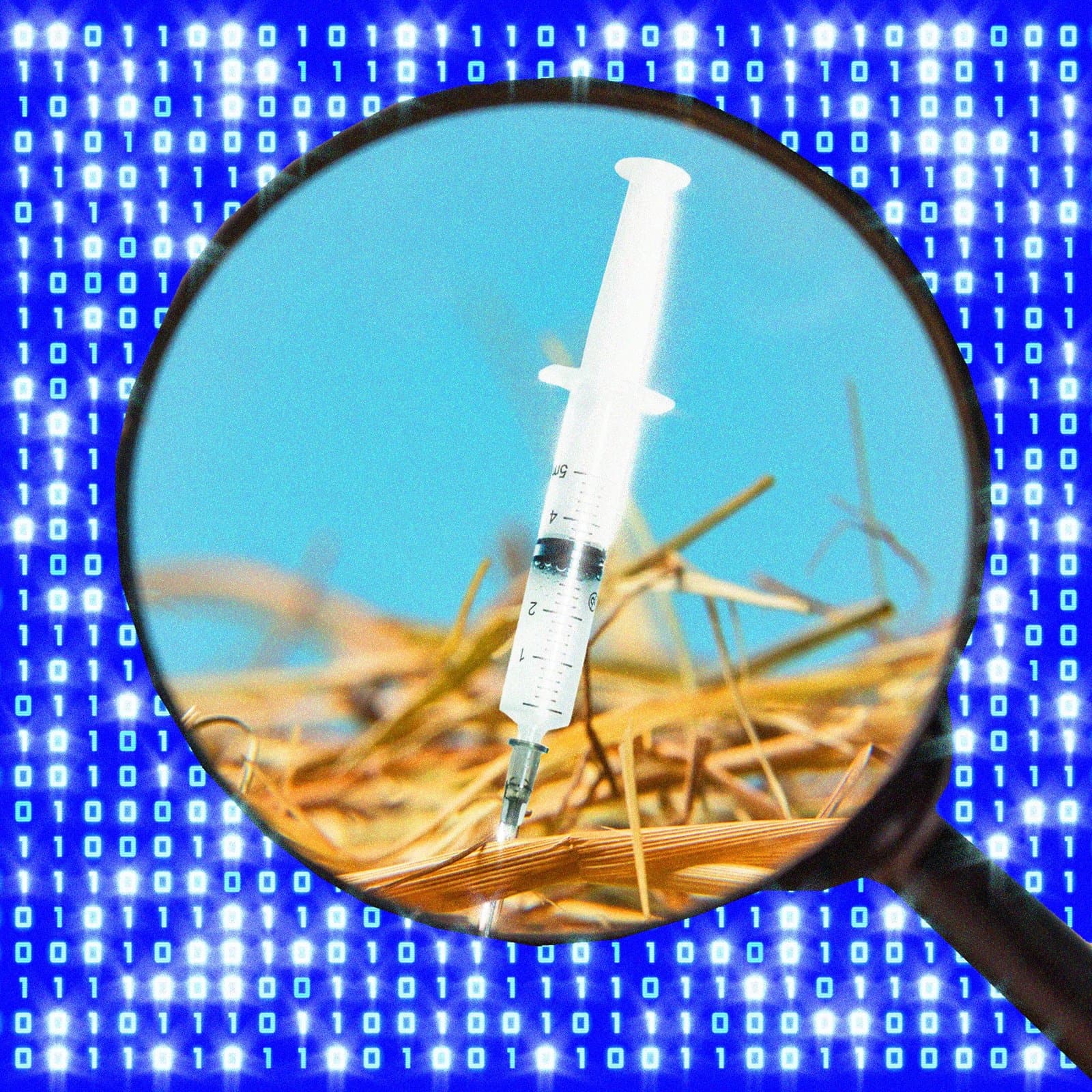
Potential Sciences, a British start-up that wants to replace much of the early laboratory work in drug discovery with physics simulations and AI, launched on November 5 with seed funding in the tens of millions of dollars from SovAI, the UK government's AI venture fund, and Twin Path Ventures, among other investors.
The founders declined to give the exact amount or the company's valuation, founder and chief executive Hatem Helal told Wired. Joséphine Kant, head of ventures at SovAI, has joined the board as part of the investment.
The bet is on data. Many AI drug discovery groups train their models on the Protein Data Bank, a public collection of 3D atomic structures that researchers have built up over decades of experiments. Helal argues that the dataset is too small to train models good enough to reliably speed up the search for drug candidates. Potential Sciences instead plans to generate much larger synthetic datasets by simulating, from basic physical principles, how atoms interact, then small molecules, then amino acids and proteins. It will use that data to train models that predict how well a candidate drug binds to a disease-related protein.
"We want molecules that are never going to work in the clinic to fail fast," Helal told Wired. "That means having better predictors of how they will behave as they interact with human biology."
He describes drug discovery as a search problem across a vast space of possible molecules, and says cheaper experimentation could make it economical for drug makers to pursue treatments for rare diseases that have gone untreated. He also spoke of medicines tailored to an individual's biology.
A State Investor With Compute
The UK set up SovAI earlier this year to invest in British start-ups that could become indispensable parts of the global AI supply chain. According to Wired, it has roughly $800 million to deploy and can give portfolio companies access to the UK's national AI supercomputer. Its other drug and materials discovery holdings include Basecamp Research, Isomorphic Labs and CuspAI.
Kant said the physics-first approach sets the company apart, and that compute access would let it work "at a scale that would be very difficult otherwise for a small startup."
The Limits of Faster Design
Academics quoted by Wired were cautiously supportive. Alan Fersht, an emeritus professor of chemistry at the University of Cambridge, said that accurately calculating the interactions between all molecules in a cell "would indeed revolutionize drug development", and that he was optimistic it would eventually happen.
Peter Wolynes, a chemistry professor at Rice University, expected an improvement but said protein engineering today is "at the level of the Romans, not of the Renaissance." He also noted that design is not the main bottleneck. "The cost of designing a drug is nothing compared to figuring out what it will do to mice; to really sick patients; to normal people," he said. Better candidate selection does not remove the time and expense of safety and efficacy trials.
The company also enters a crowded field of start-ups and academic groups attacking the same problems from different angles. And it faces the dual-use risk common to molecular design tools. "If we can design tools that perfectly minimize toxicity, it's a bit flip to maximize it as well," Helal said.
The company has not said when it expects its first models or drug candidates, or whether it will develop drugs itself or license its predictions to pharmaceutical companies.
Sources
- Wired · Finding New Drugs Is Laborious. This AI Startup Is Skipping The Lab Work
Produced with AI assistance from the sources above. How we work
By
Nakoda News Desk
Nakoda News covers AI and business. Every story links the sources it draws on; how we work is set out in our editorial standards.
Related coverage
- Companies
NMDC Signs Pacts With e&, Borouge and Chinese Petroleum Chamber at ADIPEC
47 minutes ago · 2 min read
Companies Tencent Cloud Teams Up With Saudi Start-Up OmniOps on Sovereign AI Inference
49 minutes ago · 2 min read
Companies AI Chip Demand Lifts Third-Quarter Sales at Syensqo, Air Liquide and Linde
2 hours ago · 1 min read
Companies Maersk Raises 2026 Profit Guidance for a Third Time as Congestion Keeps Freight Rates High
2 hours ago · 3 min read
Companies Kanoo Energy to Double Abu Dhabi Manufacturing With Two New Facilities in KIZAD
2 hours ago · 1 min read