OpenAI Patent Filing Details Earbuds That Turn Silently Mouthed Words Into AI Commands
The provisional was filed in May 2025, the month OpenAI acquired io for about $6.5 billion; the application describes ear-canal sensors but gives no product, price or launch date.
·2 min read
Prefer Nakoda News on Google
OpenAI has filed a US patent application for an earbud that tracks how the ear canal moves when a wearer mouths words without sound, then converts those signals into text or commands for an AI assistant. The application, published on November 19 as US 2026/0369273 A1 and reported by PPC Land, names OpenAI OpCo as applicant and Douglas Stuart Brodie of San Jose and Daniel Boothe of San Francisco as inventors.
The application, titled "In-Ear Silent-Speech Detection System" and published on November 19 as US 2026/0369273 A1, names OpenAI OpCo as applicant and Douglas Stuart Brodie of San Jose and Daniel Boothe of San Francisco as inventors. It claims priority from a provisional application filed on May 14, 2025, with the full application filed a year later. It has not been granted, and its 20 claims may change during examination.
The filing is one of the clearest public descriptions yet of how OpenAI might handle input on a wearable device. It treats the earbud as a way to talk to an assistant, not just a speaker, and aims at situations where speaking aloud is awkward or private.
The two independent claims take different approaches. The first relies on motion sensors such as accelerometers and gyroscopes, sampling at roughly 100 to 1,000 times a second, to detect movement of the ear canal as the jaw and mouth form words. The second uses a soft tip pressed against the canal wall with a deformation sensor, such as a strain gauge, to measure changes in its shape.
The application describes a four-stage process: sensing, cleaning up the signal and extracting features, classifying the result into phonemes or words using a 44-phoneme English set, and passing the output to an application that can display text, read it aloud or run a command. Processing could take place on the earbud or on a connected phone or other device over Bluetooth, Wi-Fi or a cellular link. The description also lists other possible sensors, including electrodes for muscle activity, pressure sensors, microphones and health sensors for heart rate, oxygen, temperature and hydration.
The uses it describes include silent device control such as placing a phone call, composing messages, updating schedules, querying databases, generating documents, feeding language models and agent systems, and live captions, transcription and translation. It also describes two wearers holding a silent two-way conversation, which the filing presents as a privacy benefit.
The document gives no product name, price, launch date or accuracy figures, and it does not mention ChatGPT, Jony Ive or io, the hardware company OpenAI acquired in May 2025 for about $6.5 billion, the same month the provisional was filed. OpenAI has not commented on the application, according to PPC Land. Companies routinely patent ideas they never ship, and the filing contains no evidence on how well silent speech can be recognised from ear-canal motion alone.
OpenAI's hardware effort is also the subject of litigation. Apple sued OpenAI, io Products and two former Apple employees in federal court in San Jose on July 10, alleging trade secret theft. One defendant, Tang Yew Tan, is OpenAI's chief hardware officer. Neither inventor named on the silent-speech application is a party to that suit.
By
Nakoda News AI & Tech Desk
AI models, chips, products and research, and what they can and cannot do.
Related coverage
- Products
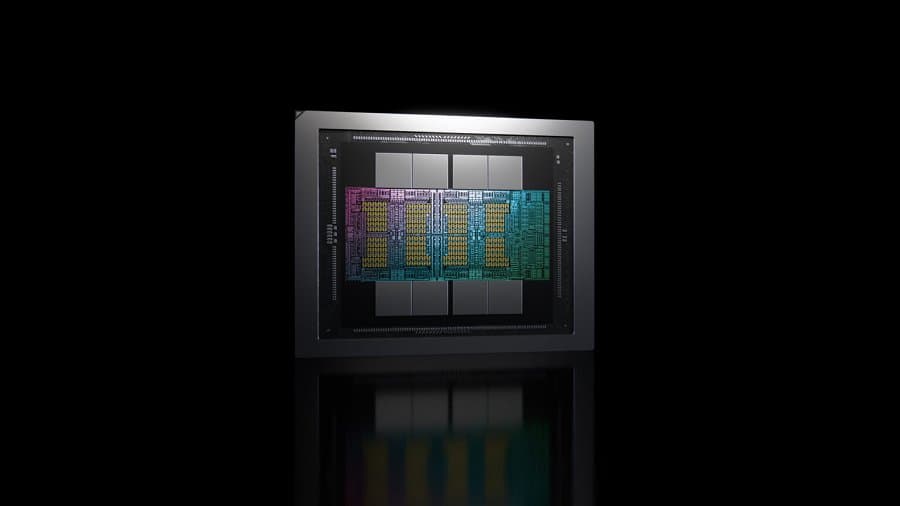
Nvidia Previews Rubin HPC GPU With Over 50,000 CUDA Cores for Science, Shipping 2028
Nov 17, 2026 · 2 min read
Products Grok Bot Routes Work to Claude Without User Choice as Sabre Readies Travel Plug-In
Nov 17, 2026 · 2 min read
Products CVS and Cigna Put OpenAI's Computer-Use Agents to Work in ChatGPT for Healthcare
Nov 17, 2026 · 2 min read
- Products
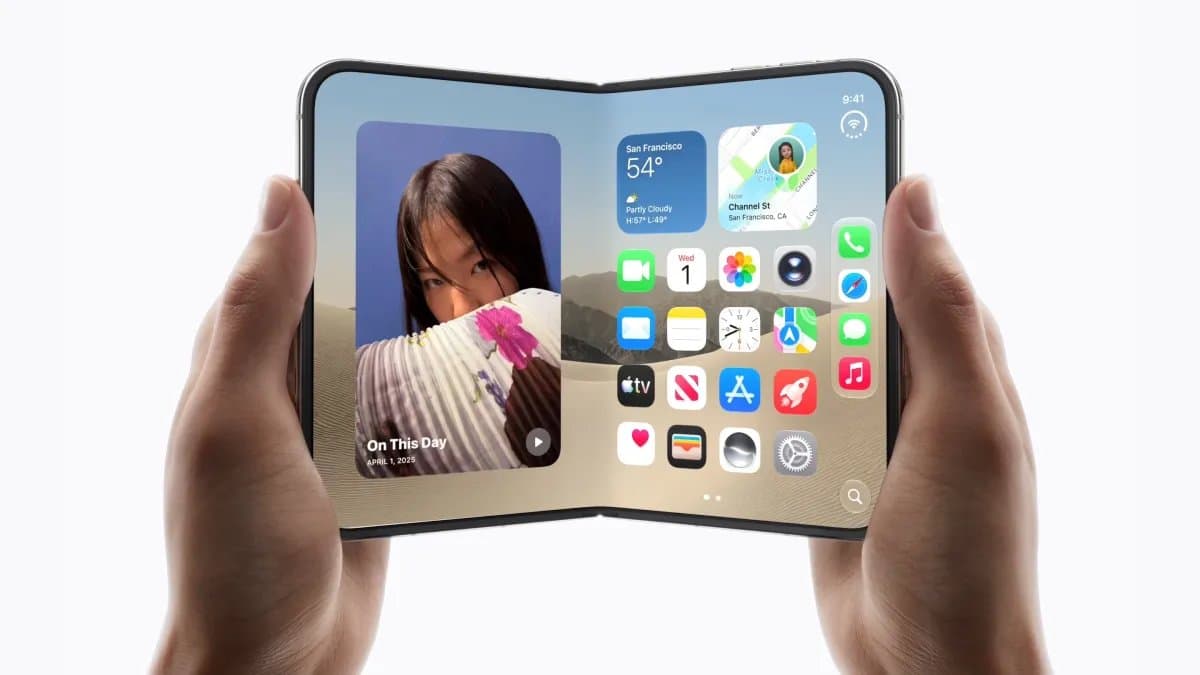
Apple Brings Camera-Based Face Unlock to Foldable iPhone Duo in iOS 27.3 Beta
Nov 16, 2026 · 2 min read
Products Rockwell Builds Nvidia Omniverse Into Emulate3D for Factory-Scale Simulation
Nov 16, 2026 · 2 min read