Nvidia and Jensen Huang Sued by Shareholder Over Ties to Suspected Chinese Spy
The proposed class action was filed in San Jose minutes after a 4.3% share drop, as at least six law firms announced their own investigations.
By Nakoda News Desk
·3 min read
Prefer Nakoda News on Google
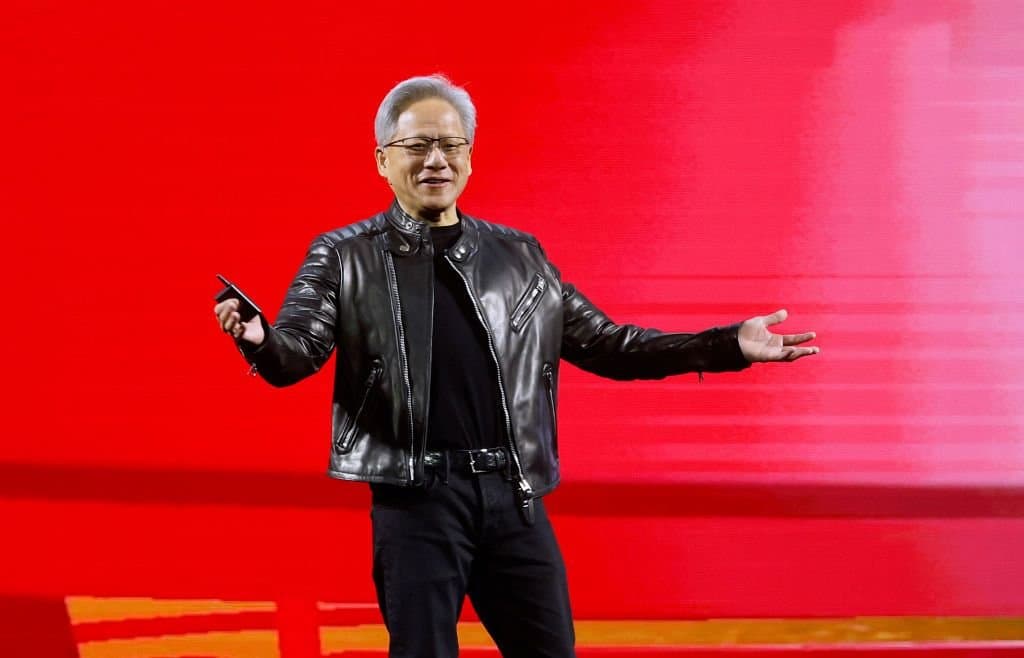
A Nvidia shareholder has filed a proposed class action accusing the chipmaker and its chief executive, Jensen Huang, of defrauding investors by concealing Huang's ties to a woman US authorities suspect of spying for China.
The complaint, brought by shareholder Mark Kistenmacher in federal court in San Jose, California, was filed five minutes after US markets closed on Monday, according to Reuters. It alleges that Nvidia and Huang misled shareholders about Huang's alleged affair with Alice Huang, a former executive at Singapore-based Megaspeed who is not related to him, and failed to disclose that the relationship raised national security concerns that threatened the company's reputation and business prospects. It seeks unspecified damages. Nvidia did not immediately respond to Reuters' request for comment.
The suit arrived on the first trading day after Nvidia's board said on Sunday that it would investigate the matter. Nvidia shares closed down 4.3% on Monday, removing about $190 billion of market value, and that fall gives plaintiffs a measurable loss on which to base damages claims against one of the world's most valuable companies. Nvidia is due to report quarterly earnings on November 17.
Other firms moved within hours. Schall, Brown & Schwartz, a Los Angeles shareholder-rights firm, said on Monday morning that it was investigating whether Nvidia made false or misleading statements or withheld information relevant to investors. Rosen Law Firm, Levi & Korsinsky, Bronstein, Gewirtz & Grossman and the Law Offices of Frank R. Cruz announced inquiries of their own, and Rosen said it was preparing a class action, TechCrunch reported. Such investigation notices are routine after sharp share price falls and do not on their own indicate a strong case.
Speed matters in these cases. Under federal securities law, the first complaint triggers a public notice, after which investors have 60 days to ask the court to be named lead plaintiff. Courts usually choose the investor with the largest loss, so early filers get a head start in signing up big holders.
The legal theory turns on what Nvidia said in public before Huang's admission. When The New York Times first reported Huang's ties to Alice Huang last month, an Nvidia spokesperson told The Hill the relationship was "not unusual or unexpected" and that "meetings with customers are part of a CEO's job." Huang has since acknowledged to the board that the relationship was intimate, and the Times has reported that US intelligence had been monitoring Alice Huang for more than a year. Megaspeed, an Nvidia customer, has been accused of helping restricted Chinese companies obtain Nvidia AI chips.
Robert Bartlett, a Stanford Law School professor who specialises in securities law, told TechCrunch that the company's earlier statement was "clearly a misleading statement," and that because Huang is chief executive, "his knowledge gets imputed to the company." He expects a "classic fraud on the market" claim, in which investors argue they paid prices that reflected incomplete information and lost money when the facts came out.
Bartlett said such cases usually run for a long time and then settle, with the company and its directors-and-officers insurers paying, typically without personal consequences for executives. He also pointed to possible liability for directors if the board lacked reporting lines that would have brought the Megaspeed risk to its attention once press coverage began. A finding by the board's inquiry that Huang knew of the intelligence connection would be "a whole other ball game," he said. The board has said it has no reason to believe national security or Nvidia secrets were compromised.
The Securities and Exchange Commission can seek to bar officers and directors over intentional securities fraud, but Bartlett said he doubted the agency under Chairman Paul Atkins would pursue that, given President Donald Trump's support for Huang. Under the 60-day lead-plaintiff window, investors seeking to lead the case have until early January to come forward.
Sources
- TechCrunch · The race is on to sue Nvidia
- Reuters via Investing.com · Nvidia, CEO Huang sued over disclosures related to suspected Chinese spy
- CNBC · Nvidia's CEO turmoil gives newly empowered Democrats fresh ammunition in pursuit of oversight
Produced with AI assistance from the sources above. How we work
By
Nakoda News Desk
Nakoda News covers AI and business. Every story links the sources it draws on; how we work is set out in our editorial standards.
Related coverage
- Companies
Nvidia's Board Faces Governance Test as Gensler Says Huang Appears to Have Misled Public
3 hours ago · 3 min read
- Companies

Skydance Breaks Down $6 Billion Cost-Savings Plan, Citing AI and Back-Office Cuts
3 hours ago · 2 min read
- Companies
Jensen Huang Pulls Out of ElevenLabs Summit and Anthropic CEO Forum as Nvidia Inquiry Runs
4 hours ago · 2 min read
- Companies
Lead Director Stephen Neal Expected to Play Central Role in Nvidia's Huang Inquiry
4 hours ago · 2 min read
- Companies

Fervo's Contracted Revenue Jumps to $11.9 Billion on 396MW Google Geothermal Deal
4 hours ago · 3 min read