Mercedes-Benz Sets Spring 2027 for Hands-Free Highway Driving, City System Same Year
In an Engadget test drive around San Francisco, the city system needed one intervention in nearly an hour, while the highway system missed a fast-approaching car.
·2 min read
Prefer Nakoda News on Google
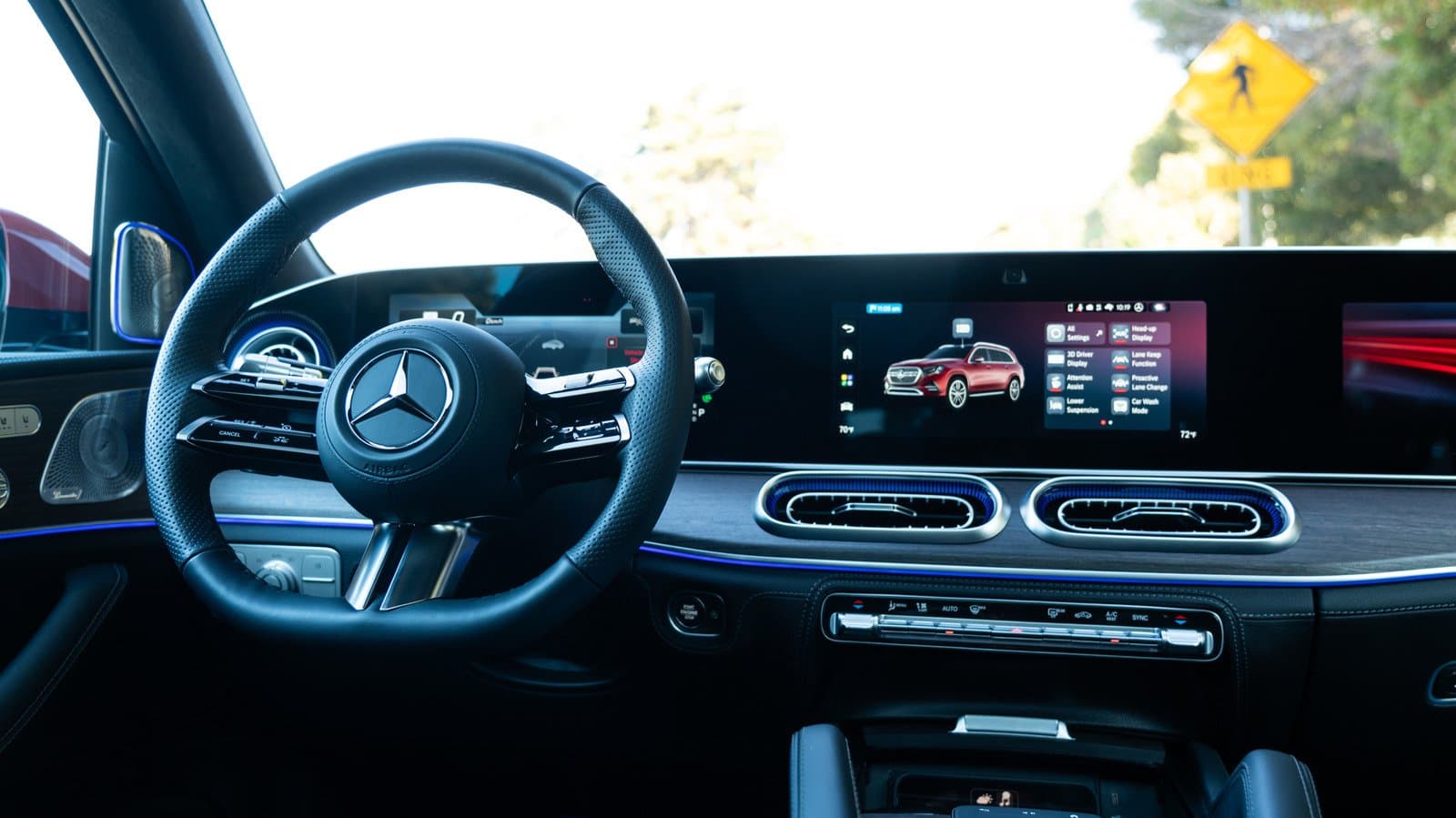
Mercedes-Benz plans to let drivers take their hands off the wheel on designated highways from spring 2027. It will also launch MB.Drive Assist Pro, a supervised point-to-point city driving system, next year, Engadget reported after testing both on roads around San Francisco.
Hands-Free Highway Assist will allow hands-off driving at up to 85 mph on limited, designated, divided highways. An eye-tracking camera checks that the driver is paying attention. It will come on the 2027 S-Class, GLS and AMG GT 4-door Coupe, and as an option on the 2027 CLA, GLB, C-Class, GLC and GLE as part of MB.Drive Assist.
MB.Drive Assist Pro works only off the highway and needs the driver's hands on the wheel. It is due on the 2027 CLA Electric, GLE, GLS and S-Class, with more to come in 2028. Some California customers will be able to join an early access programme later this year. Prices for the features have not been finalised.
Both are driver assistance systems that need the active supervision of the driver, unlike the driverless Waymo and Zoox cars common on San Francisco streets. Engadget judged the highway system well behind competing offerings from BMW, Ford and General Motors.
The highway results were mixed. In a GLS on the 880, the system changed lanes on its own and moved right to set up for the exit. At one point, though, it failed to detect a car approaching fast in the left lane and tried to move into its path. The reviewer had to grab the wheel. After an override it often took 10 to 20 seconds before hands-free driving could resume, whereas GM's Super Cruise and BMW's Highway Assistant in the new iX5 let drivers take the wheel, change lanes and let go again.
The GLS also disengaged frequently, demanding hands back on the wheel when little was happening. In an S-Class over the Bay Bridge it was worse, with at least half a dozen disengagements in a loop of about 45 minutes. The reviewer was told the system is set conservatively at first and hands back control early when it sees a complicated situation ahead. The hands-free indicator was also hard to spot on the head-up display in bright sunlight, and on the gauge cluster it was blocked by the steering wheel.
The city system did better. In a GLC fitted with Drive Assist Pro, which uses 10 cameras and five radar sensors, the car handled pedestrians in and out of crosswalks, cyclists, double-parked vehicles, intersections and roundabouts in downtown San Francisco. It also followed turns from the built-in navigation route. Over nearly an hour, the reviewer intervened once, tapping the accelerator when the car got stuck at an intersection. Its only odd habit was stopping, creeping forward and stopping again at some junctions.
Mercedes is considering letting drivers adjust how assertively the city system drives, according to the report.
By
Nakoda News AI & Tech Desk
AI models, chips, products and research, and what they can and cannot do.
Related coverage
- Products
Apple Brings Camera-Based Face Unlock to Foldable iPhone Duo in iOS 27.3 Beta
6 hours ago · 2 min read
Products Rockwell Builds Nvidia Omniverse Into Emulate3D for Factory-Scale Simulation
9 hours ago · 2 min read
Products Nvidia Releases Nemotron for Science, an Open Model and Chemistry Dataset for Lab Agents
9 hours ago · 2 min read
Products Nvidia Readies 192-CPU Vera Rack for Science Simulation, With DKRZ Signed On
10 hours ago · 2 min read
Products e& Launches AIO Sovereign AI Platform for 20 Markets, Plans 200MW of Data Centre Capacity
10 hours ago · 2 min read