India Blocked 129 Betting Websites on Court Orders That Turned Out to Be Fake
Two forged high court orders went through India's telecoms department this year, and one court has filed a police complaint after Reuters asked questions.
By Nakoda News Desk
·3 min read
Prefer Nakoda News on Google
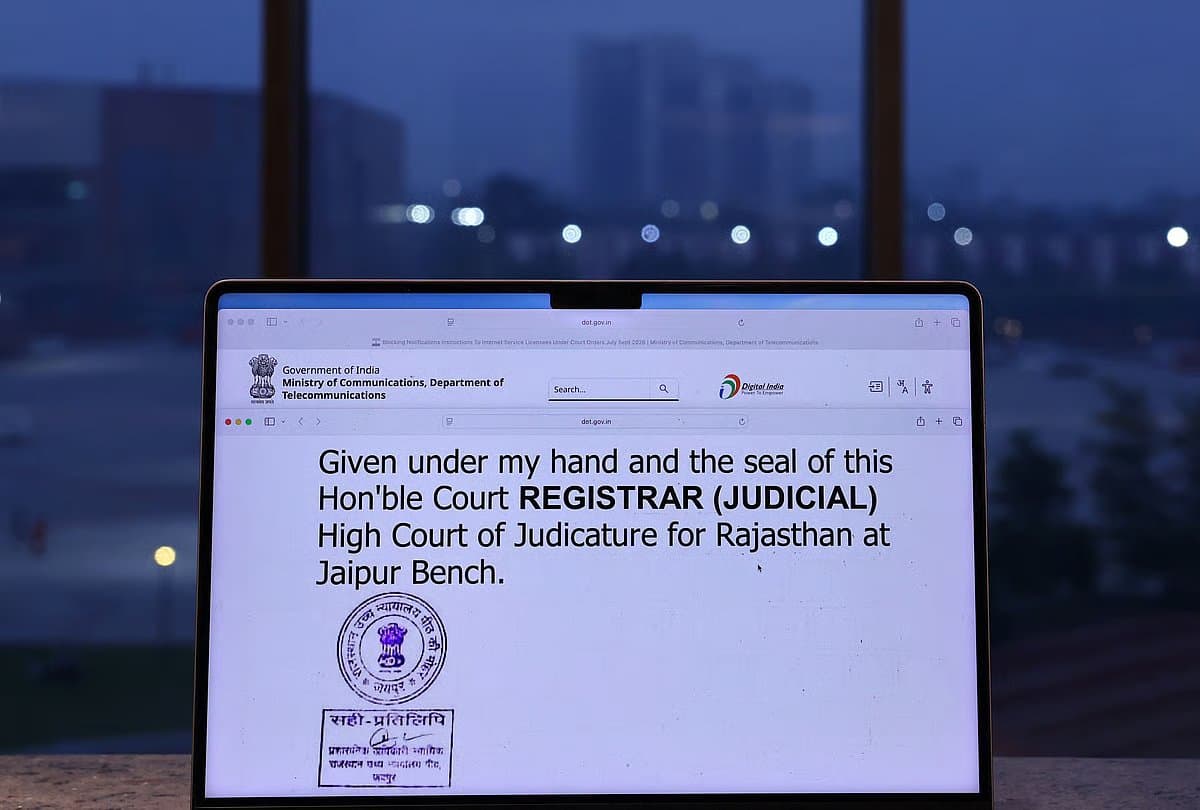
India's Department of Telecommunications told internet providers this year to block 129 illegal betting websites on the strength of two high court orders that were forged. Reuters found the forgeries in an investigation published on Wednesday, and they have already led to a police inquiry.
The case shows how easily fake orders can get through India's official content removal process, one of the strictest in the world. Any organisation with a website in India could be exposed. Courts elsewhere are also dealing with fabricated legal material, including precedents generated by artificial intelligence. Reuters said it could not determine how the two orders were made or whether AI was used.
The department issued the two blocking directions on July 21 and September 2 and published both on its website as part of its routine uploads. Each came with an emailed copy of what looked like a court order: one from the High Court of Rajasthan and one from the Allahabad High Court in Uttar Pradesh. Each order named dozens of websites to be taken down.
Neither order appears in the courts' online registration records, Reuters found. After the news agency asked about it, the Rajasthan High Court's registrar said in an email that the order bearing the court's name "appears to be fraudulent" and did not exist on its server. The Allahabad High Court decided its order was fake and filed a police complaint on November 6. Police case documents show an investigation has been opened against unknown persons for alleged forgery and cheating.
"It is fake. It is not a genuine order from High Court of Allahabad," Ghanshyam Yadav, a senior cybercrime official in Uttar Pradesh, told Reuters. He said no one had been arrested.
The telecoms department did not respond to Reuters' questions. As of Wednesday, both orders were still on its website.
The Rajasthan document reached the department in an email sent at 8:59 p.m. on Sunday, July 19. It was signed by "Aryan Chaudhary", who was described as an advocate-on-record. When Reuters wrote to that email address, the message bounced back as "Recipient not found". The order told officials to act within 24 hours and cited a provision of Indian IT law that allows takedowns in the interest of national security. Two days later, the government told internet service providers to remove 34 betting websites listed in the order.
The Allahabad document was dated August 14 and carried the court's logo, its seal and a QR code that would normally let anyone check whether an order is genuine. In this case the code led to an unrelated webpage showing only a case number, "Writ — A 30480/2026". A man who identified himself as advocate Kartikey Pandey cited that number when he sent the order to officials on August 22. He did not respond to Reuters. Officials exchanged several messages, including a request for an "action taken report". On September 2, an official told internet service providers to block 95 betting websites.
The Allahabad order was signed in the name of "Justice Garima Prashad". According to the police documents, her office confirmed that "no such order has been passed by Her Ladyship."
All the blocked sites offered gambling, which is illegal in India. The episode still raises a wider concern for companies and publishers: a forged order can be enough to get a website blocked. Modi's government has often been criticised for overusing takedown orders against dissent, although it says it orders removals only in the public interest.
This is not the only recent case. Elon Musk's X told an Indian court last week that police directives sent to two free speech groups, warning that their accounts would be removed, had turned out to be fake. In July, India's Supreme Court set aside a tribunal's orders because they relied on judgments that did not exist. Last year, Supreme Court justices said that fabricated orders "bearing forged signatures of Judges strikes at the very foundation of public trust".
It is still unclear who made the two orders and whether the 129 sites will be unblocked. Police in Uttar Pradesh are investigating, and the telecoms department has not said whether it will change how it checks court orders before acting on them.
Sources
- khaleejtimes-english · India ordered website takedowns on fake court orders, Reuters finds; police launch probe
- Reuters · EXCLUSIVE: India ordered website takedowns on fake court orders, Reuters finds; police launch probe
Produced with AI assistance from the sources above. How we work
By
Nakoda News Desk
Nakoda News covers AI and business. Every story links the sources it draws on; how we work is set out in our editorial standards.
Related coverage
- Policy
Bessent Says US and China Have Set Up a Dialogue on Superintelligence Risks
5 hours ago · 2 min read
Policy PLA-Linked Chinese University Bought Nvidia H200 Chips Despite US Blacklist
5 hours ago · 3 min read
- Policy
Bessent Moves to Military Base After Iranian Threats Against His Life
5 hours ago · 2 min read
- Policy

Rubio Tells G7 Trump Has Chosen an Economic Squeeze on Iran Over War or a Deal
11 hours ago · 2 min read
- Policy

Commerce Chief Lutnick Received Classified Warning About Nvidia CEO's Relationship
11 hours ago · 3 min read