Emirates Group Half-Year Profit Falls by Two-Thirds as War Keeps Passengers Away
Pre-tax profit dropped to AED 4.1 billion in the six months to September, with passenger numbers down 22%, while cargo revenue and fuel hedges kept the Dubai group profitable.
By Nakoda News Desk
·3 min read
Prefer Nakoda News on Google
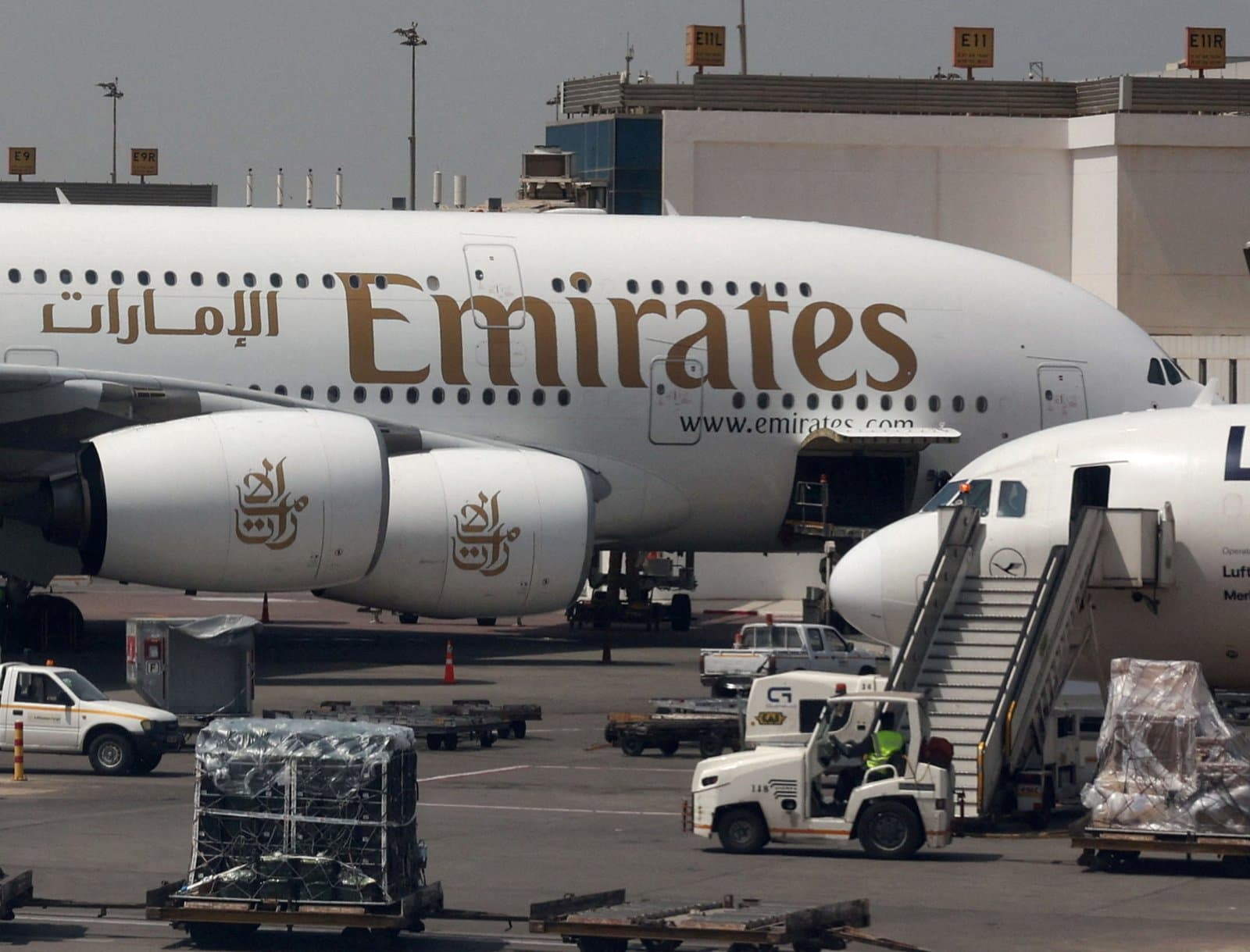
The Emirates Group made a profit before tax of AED 4.1 billion ($1.1 billion) in the six months to September 30, down 66% from a year earlier. The Dubai-owned airline and services group said on Thursday that the result reflected the full six-month effect of the regional conflict and high fuel prices.
The figures put a number on what the Iran war has cost the Gulf's largest airline. Group revenue fell 12% to AED 66.2 billion, from AED 75.4 billion. Profit after tax was AED 3.6 billion, also down 66%, and EBITDA dropped 41% to AED 12.5 billion. Cash fell to AED 54.1 billion from AED 59.6 billion at the end of March.
Emirates airline earned AED 3.7 billion before tax, down 68% from a record AED 11.4 billion a year earlier, on revenue that fell 13% to AED 56.9 billion. It carried 21.8 million passengers, 22% fewer. Passenger traffic measured in revenue passenger kilometres fell 25%, and the seat factor slipped to 72.0% from 79.5%. The airline said its network had recovered to 91% of its pre-disruption size and now serves 150 airports in 78 countries and territories.
The passenger slump hit Dubai's business as a transfer hub. Semafor reported that transit travellers have stayed away from Gulf hubs during the war, and that the closure of the Strait of Hormuz sent jet fuel prices sharply higher.
Cargo and hedging softened the blow. Emirates SkyCargo carried 1.2 million tonnes, 1% less than a year earlier, but cargo revenue rose 52%. The group said its fuel bill before hedging rose 60%, and that AED 7.1 billion of hedging gains cut the net increase to 13%. Fuel now makes up 34% of the airline's operating costs. Total operating costs, including fuel, fell 2%.
"It has been a demanding six months, and once again our business model and our people stood up to the test," Sheikh Ahmed bin Saeed Al Maktoum, chairman and chief executive of Emirates airline and group, said in the results statement. "Customer demand held firm and our cargo operations made a strong contribution," he said, adding: "Throughout this time, we have not paused our investments."
The ground-handling and travel arm dnata did worse in percentage terms. Its pre-tax profit fell 51% to AED 410 million on revenue down 7% at AED 11.0 billion. Its travel business was hit hardest, with revenue down 31% to AED 1.4 billion.
The war has also given Emirates an advantage at home. After drones targeted Dubai International in March, authorities briefly suspended foreign airlines and then limited them to one round trip a day, while Emirates and its sister carrier flydubai ran hundreds of flights, according to Semafor. Some Indian carriers complained that this tilted the field against them. Most foreign rivals have not yet returned, although British Airways resumed its London-Dubai route this week for the first time since the war began, Semafor reported.
Emirates kept spending through the downturn. It took delivery of nine new Airbus A350s and five new Boeing 777 freighters, refurbished 12 aircraft and installed Starlink connectivity on 36 more planes, bringing the total to 57. It plans to spend more than $7.0 billion on its retrofit programme, and work began in May on a $5.1 billion engineering and maintenance facility at Al Maktoum International Airport, due for completion in the mid-2030s. The group paid the remaining AED 2 billion of its AED 3.5 billion dividend for 2025-26 to its owner, the Investment Corporation of Dubai, during the period. Its workforce shrank 2% to 128,237.
The group said it enters the second half of its financial year, which runs to March 31, with "measured optimism". It said it is watching costs and geopolitical developments closely, with fuel prices and the reopening of Gulf airspace and shipping lanes still uncertain.
Sources
- Semafor · War dents Emirates’ profit as transit passengers stay away
- The Emirates Group · Emirates Group announces half-year profit for 2026-27, despite full six-month impact of regional conflict and high fuel costs
- Gulf Today · Emirates Group registers Dhs4.1 billion half-year profit despite regional woes
Produced with AI assistance from the sources above. How we work
By
Nakoda News Desk
Nakoda News covers AI and business. Every story links the sources it draws on; how we work is set out in our editorial standards.
Related coverage
Companies Presight and Quartermaster Agree to Pair Ship-Mounted Sensors With AI for UAE Maritime Security
7 hours ago · 2 min read
Companies TSMC Weighs Move Into 3D DRAM Memory Chips at Nvidia's Request
7 hours ago · 2 min read
Companies Abu Dhabi's TII and France's Naval Group Agree to Explore Joint Underwater Drones
11 hours ago · 2 min read
Companies NMDC Group Runs More Than 70 AI Models Across Its Yards and 170-Vessel Fleet, CEO Says
12 hours ago · 3 min read
- Companies

Amazon Builds New Home Robot Team Around Fauna Deal as Astro Fades
13 hours ago · 3 min read