Battery Backups Checking Their Charge in Sync Cause Minute-by-Minute Grid Dips, Study Finds
Jülich researchers traced a mysterious frequency drop seen on grids from Europe to Australia to storage systems, including data centre UPS units, that all poll themselves on the minute.
By Nakoda News Desk
·3 min read
Prefer Nakoda News on Google
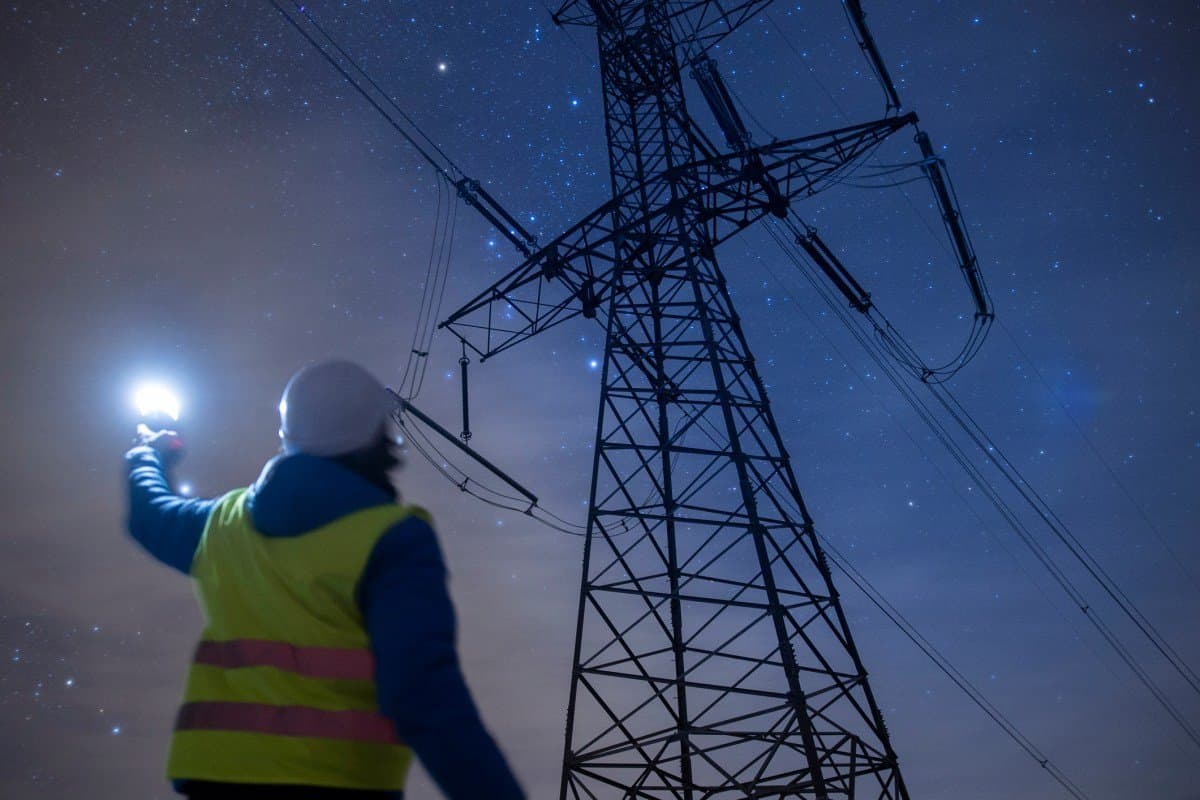
A dip in power grid frequency that recurs every 60 seconds on grids across several continents is caused by large numbers of battery systems checking their state of charge at the start of each minute, according to researchers at Germany's Forschungszentrum Jülich.
The team, led by Dirk Witthaut and working with the University of Cologne and the Karlsruhe Institute of Technology, published its findings at the end of October in Nature Energy. The puzzle was brought to them by Tennet Germany, the country's largest transmission system operator, which had seen the regular drops in the European grid for several years.
The finding matters for data centre operators and grid planners because one of the main culprits is the uninterruptible power supply, the battery backup that every data hall relies on. As AI-driven construction adds data centres and grid-scale batteries, the synchronised pulses get bigger, and the fix lies with equipment makers rather than with grid operators.
From Turbines to Clocks
The dips are small and Jülich says they are not safety-critical, but their regularity was unusual. The researchers first suspected hydropower plants, which have historically caused very low-frequency oscillations, and modelled a hydropower control system on the Scandinavian grid. They could produce a once-a-minute resonance, but could not explain why it persisted minute after minute for years.
That led them to look for something running on a clock. They installed more than 80 power quality meters around the Jülich campus, which has transformers, solar panels, battery storage serving as uninterruptible supplies and a high-performance computer. Readings at the transformer attached to the battery storage system peaked every minute, matching the pattern on the wider grid. One device showed a spike in demand at the start of each minute when it queried its charge.
Because these devices are connected to the internet, their clocks are almost perfectly synchronised. Any single check is imperceptible, but when many units do it at once the effect shows up across a whole interconnected grid. Witthaut told German media there are no binding standards for such queries, and that he suspects manufacturers settled on a 60-second interval timed to the start of each minute, which he presented as a hypothesis rather than a finding.
The Irish Evidence
To test whether backup batteries were driving the effect at grid scale, the team turned to Ireland, where data centres accounted for 18% of grid load by 2022, according to TechCrunch's account of the research. The minute-by-minute drop on the Irish grid quadrupled from 3 millihertz in 2016 to 12 millihertz in 2021, and some recent drops have exceeded 20 millihertz.
Ireland's 50 Hz grid is built to cope with swings of plus or minus 200 millihertz, and its operator prefers to stay within 100 millihertz, so the pulses are small for now. The risk is that they add to frequency sags from other loads at a bad moment. The brief demand peaks also force hydropower turbines to slow and speed up again, which increases wear.
A Software Fix With Few Takers
The researchers say the problem is entirely preventable: manufacturers of UPS units and grid-scale batteries should randomise when their devices check their charge rather than doing it on the minute. "It was really years of detective work," Witthaut said of the investigation, in comments reported in German.
The team also detected periodic power fluctuations in internet-connected devices ranging from a smart oven to Raspberry Pi clusters, and Witthaut has said heat pumps, air conditioners and household appliances could behave the same way. Those also need only a software patch, but TechCrunch cited a study finding that fewer than 3% of IoT devices run the latest firmware. Because each regulator can act only on its own part of an interconnected system, the researchers expect a lasting fix will need standards agreed across countries.
Sources
- TechCrunch · Coordinated disturbances haunt grids worldwide. Here’s how researchers solved the mystery.
- Solarserver · Forscher:innen lösen Rätsel um 60-Sekunden-Schwankung in Stromnetzen
Produced with AI assistance from the sources above. How we work
By
Nakoda News Desk
Nakoda News covers AI and business. Every story links the sources it draws on; how we work is set out in our editorial standards.
Related coverage
Research Anthropic Says Offline 'Dreaming' Lets Claude Correct and Organise Its Own Memory
12 hours ago · 3 min read
Research Unreleased Anthropic Model Helps Prove 2008 Quantum Speedup Conjecture, PSI Says
15 hours ago · 3 min read
- Research

Best AI Coding Agent Fully Completes Only 26.4% of Real User Requests in New Benchmark
15 hours ago · 3 min read
Research DeepSeek's Open Model Nears OpenAI's Restricted Cyber Model on Network Attack Test
17 hours ago · 2 min read
Research MaxxBench Finds Coding Model Scores Diverge When Familiar Benchmark Tasks Are Rewritten
19 hours ago · 3 min read