Dubai's Glydways Driverless Pod Trial Logs 3,000 Rides as RTA Weighs Next Stage
The four-week Bluewaters test ran above 99% availability, but no route, fleet size or start date has been set for a public service.
By Nakoda News Desk
·2 min read
Prefer Nakoda News on Google
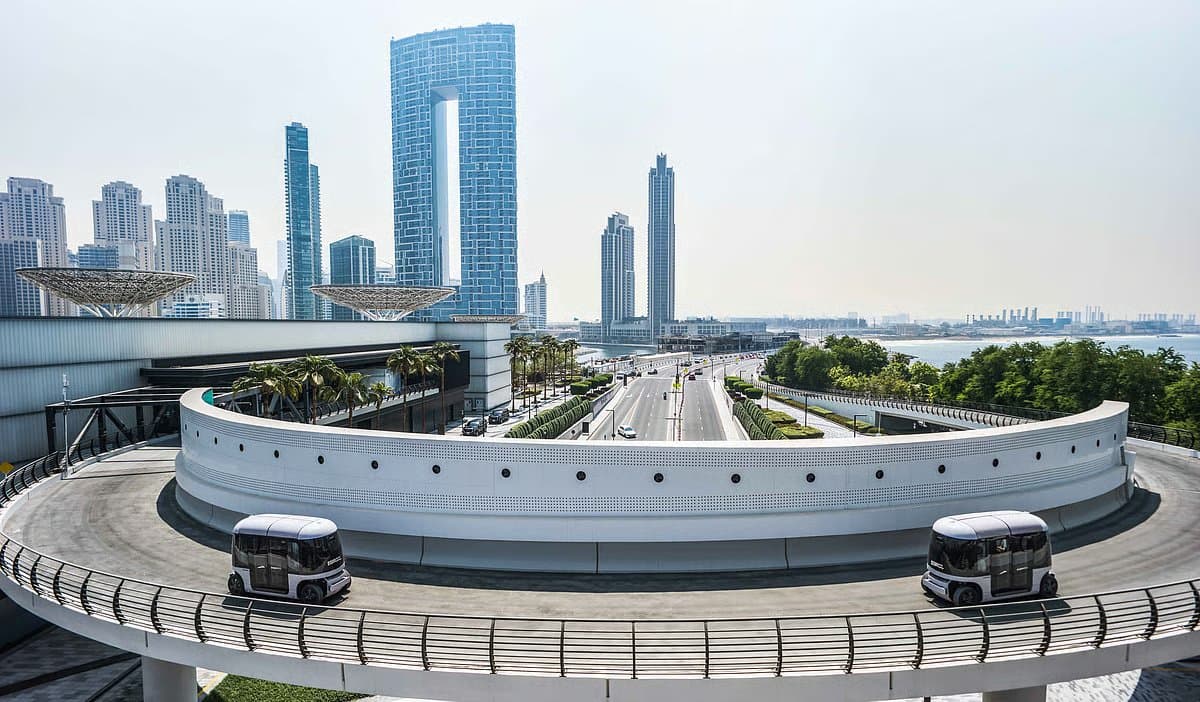
A four-week trial of driverless pods at Dubai's Bluewaters Island carried more than 3,000 passengers and covered more than 3,000 vehicle kilometres, with the system available more than 99% of the time, according to Glydways, the company that supplied the technology.
Mark Seeger, Glydways' co-founder and co-chief executive, gave the figures in an interview with Khaleej Times. He said Dubai's Roads and Transport Authority (RTA) is now reviewing the results to decide what happens next. No date has been set for a public passenger service.
The trial is a test of whether small autonomous vehicles on dedicated lanes can solve a problem Dubai's Metro has not: the gap between stations and the places people actually want to go. The RTA started the Bluewaters demonstration last month to examine whether Glydways' system could close those first- and last-mile gaps, and it has identified a proposed 2.8km route between National Paints Metro Station and Bluewaters Island for further study.
The demonstration used two autonomous electric vehicles, which Glydways calls Glydcars, running between two small stations, called Access Points, on a dedicated stretch of existing infrastructure. Passengers requested rides at a kiosk, and the trial included coordinated operations with both vehicles running together.
Seeger said the point was to test the whole system in local conditions rather than a vehicle on its own. "The trial evaluated how the complete Glydways system performs in Dubai, including the vehicles, autonomous driving, network controls, stations and passenger experience," he said.
The tests covered ride requests, vehicle movements, acceleration and braking, energy use, charging, precise docking at stations, boarding and departure. Engineers also measured cabin temperature and humidity, an obvious question for a small vehicle in Dubai's climate, along with noise, vibration and ride comfort. Seeger said cabin conditions stayed within the thresholds set for the trial, and that docking data could help shape step-free boarding at future stations.
The RTA's review will cover technical performance, safety, reliability and passenger experience. Seeger said the authority will decide whether and how the project goes ahead, and that Glydways' role is to provide operating evidence, engineering and planning.
A commercial service would need a series of decisions that have not yet been made, he said: the exact route, where Access Points go, how many vehicles are needed, how the guideway fits into existing streets, how the service connects with the wider transport network, how it is operated and its commercial model.
The RTA is looking beyond Bluewaters. It is studying possible Glydways routes in Jumeirah Village Circle, Dubai Festival City, Business Bay and Mohammed Bin Rashid City. Seeger said the strongest cases were areas where residents, workers and visitors still face a long gap between a Metro station and their destination.
The next step is the RTA's assessment of the Bluewaters results, which will determine whether the 2.8km National Paints route moves from study to design.
Sources
- khaleejtimes-english · Dubai's driverless pod trial completes 3,000 passenger rides in four weeks
Produced with AI assistance from the sources above. How we work
By
Nakoda News Desk
Nakoda News covers AI and business. Every story links the sources it draws on; how we work is set out in our editorial standards.