Abu Dhabi AI Weather Forecasting Course Trains Officials From 15 Countries to Help Farmers
MBZUAI and the University of Chicago are running the five-day course, part of a Gates-backed effort to get AI forecasts to 100 million smallholder farmers by 2030.
By Nakoda News Desk
·2 min read
Prefer Nakoda News on Google
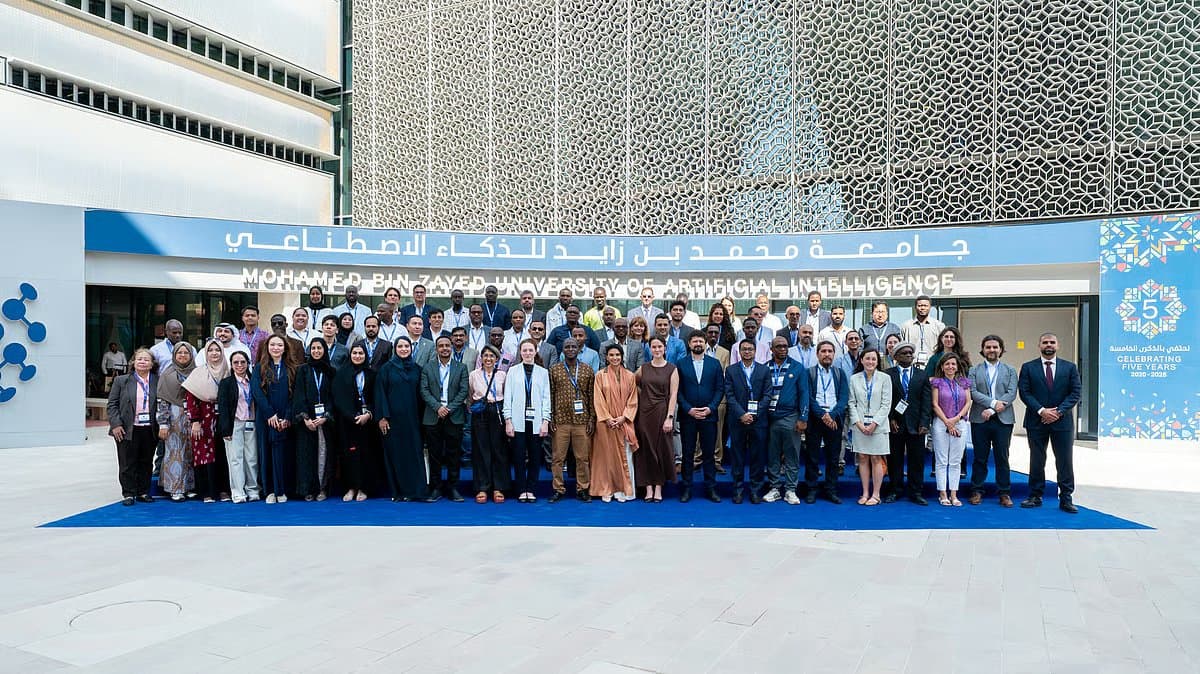
Government weather and agriculture officials from 15 countries are in Abu Dhabi this week for a course on using AI weather models to produce forecasts for smallholder farmers. It is the second year of a UAE-hosted programme that aims to reach 30 countries by 2028.
The five-day course runs from November 9 to 13 and is hosted by the International Affairs Office at the UAE Presidential Court. It is organised by Mohamed bin Zayed University of Artificial Intelligence (MBZUAI) and the University of Chicago with the Agricultural Innovation Mechanism for Scale (AIM for Scale) and the UAE's National Centre of Meteorology. Participants come from national meteorological and hydrological services and from agriculture ministries.
The programme sits within the Abu Dhabi AI Ecosystem for Global Agricultural Development, launched in December 2025. That effort builds on the $200 million partnership between the UAE and the Gates Foundation announced at COP28, and aims to get AI-powered weather information to 100 million smallholder farmers by 2030. AI forecasting models can run on far less computing power than traditional numerical weather prediction, which is part of their appeal to national weather services with small budgets.
The first cohort, in 2025, brought together Bangladesh, Chile, Ethiopia, Kenya and Nigeria. This year Bolivia, Colombia, Indonesia, Pakistan, Peru, the Philippines, Rwanda, Senegal, Sierra Leone and the UAE have joined.
The course has two tracks. One covers deploying AI forecasting models and checking how well they perform. The other covers turning model output into advice farmers can act on, such as crop management guidance and preparation for extreme weather. Each country team is expected to leave with a first roadmap for building AI forecasting into its national weather service.
Nvidia has donated 14 Dell Pro Max GB10 workstations to participating government institutions so they can keep working on the models once officials return home.
Abdulla Ahmed Al Mandous, president of the World Meteorological Organization and director-general of the National Centre of Meteorology, said AI was "creating new opportunities to deliver more accurate, timely, and actionable information", particularly for weather-sensitive sectors such as agriculture.
Fatema AlMulla, head of international relations at the International Affairs Office, said the value of AI lies in turning scientific advances into "practical solutions that make a tangible difference in farmers' lives".
Paul Winters, executive director of AIM for Scale and a professor at the University of Notre Dame's Keough School of Global Affairs, said the real test of the technology is "what these advances mean for farmers".
The course ends on November 13. With 15 countries trained over two cohorts, the programme needs another 15 by 2028 to meet its target.
Sources
- khaleejtimes-english · UAE’s AI weather forecasting programme trains officials from 15 countries
Produced with AI assistance from the sources above. How we work
By
Nakoda News Desk
Nakoda News covers AI and business. Every story links the sources it draws on; how we work is set out in our editorial standards.
Related coverage
AI Security Firm Finds 35,578 Grok-Built Apps Open to Anyone, Some Exposing Passwords
13 hours ago · 3 min read
- AI

United Airlines Bars Third-Party AI Agents From Booking Flights and Managing Accounts
15 hours ago · 2 min read
AI Ras Al Khaimah Government HR Department Wins SAP Award for Its Use of AI
17 hours ago · 1 min read
- AI

Fireworks AI Breach Exposed Notion AI Chat Transcripts, Second Incident in Two Months
17 hours ago · 2 min read
AI HUMAIN Says Full AI Stack With 3 Trillion-Parameter Model Arrives December 15
17 hours ago · 2 min read