OPEC+ Puts Off Capacity Baselines to June 2027 as Iraq Disputes Its Assessment
Baghdad says it can pump 5.2 million barrels per day against an assessment below 5 million, while analysts warn the group, now without the UAE, faces oversupply in 2027.
·2 min read
Prefer Nakoda News on Google
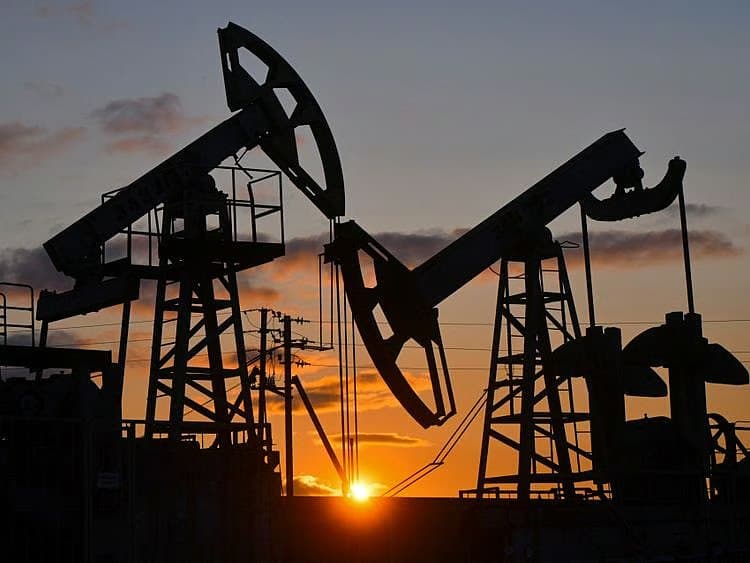
OPEC+ on Sunday put off until June 6, 2027 a decision on new production capacity baselines, the reference levels for each member's output quotas from 2027 onward, AFP reported. The 21-member group, which includes Saudi Arabia and Russia, cited "current market conditions and uncertainty" after an online meeting. Iraq has reportedly rejected the assessment of its own capacity. Details were first published by Gulf News.
The group said the baselines would be decided "on 6 June 2027, or earlier, if market conditions may permit". Its statement added that "some participating countries requested further deliberations", to be concluded by the end of March 2027.
The new capacity levels followed two years of analysis by US consultancy DeGolyer and MacNaughton. OPEC Secretary-General Haitham al-Ghais said in mid-November that for the first time, members' maximum sustainable production capacities had been "assessed and established through an independent and objective process".
The assessment puts Iraq's capacity below 5 million barrels per day. Iraq says it can produce 5.2 million, Bloomberg reported. "We are negotiating with OPEC to raise the production ceiling, and the negotiations are not just a courtesy," Oil Minister Bassem Khudair said on Friday. "Iraq is one of the founding members of OPEC, and it is our right to defend our rights."
Jorge Leon, an analyst at Rystad Energy, called the meeting's outcome "a decision not to decide" and said the group had bought time rather than resolved its problems. He said OPEC+ would enter 2027 producing more than 2 million barrels per day below its quotas while still oversupplying the market by 1.5 million barrels per day. "OPEC+ can postpone its decisions, but it cannot postpone market reality," he said.
The International Energy Agency has forecast a return to surplus in the fourth quarter as supply rises and demand stays subdued. Arne Lohmann Rasmussen of Global Risk Management said before the meeting that a substantial surplus "may necessitate production cuts in 2027". That would leave members to settle who makes them.
The UAE, formerly a key member, left the group earlier this year. "The capacity review was always going to be a political minefield," Leon said. "Having lost the UAE just six months ago, OPEC+ can ill afford another membership crisis."
War has clouded the outlook. The US war against Iran has affected the Strait of Hormuz, and an intensifying war between Russia and Ukraine, including attacks on energy infrastructure, has severely disrupted the oil industry in several key member countries. "Every country with a production shortfall has a credible argument that the shortfall is temporary," Leon said, and such countries could push for higher quotas.
By
Nakoda News Markets Desk
Markets, earnings, valuations and the money moving through AI and technology.
Related coverage
- Markets

Kospi Gain Shrinks From 116% to 17% as Foreigners Pull Record $154 Billion
19 hours ago · 2 min read
- Markets

USD1, Tied to MGX's Binance Deal, Slips as Trump-Backed WLFI Token Halves to Record Low
21 hours ago · 3 min read
Markets Nomura Cuts Nvidia's 2026 Rubin Forecast 19% as SpaceX Lifts 2027 Rack Outlook
21 hours ago · 2 min read
Markets Nvidia Falls 26% in November, Heading for Its Worst Month Since April 2022
22 hours ago · 2 min read
Markets US Goods Trade Deficit Widens to $149.5 Billion as AI-Linked Capital Goods Imports Surge
24 hours ago · 1 min read