Nasdaq Correction Puts AI Trade on Edge Ahead of CPI Data and CoreWeave Results
Investors blame the midterm sweep for fears of tougher data-centre rules, and the selloff is now shifting bets on December rate hikes in the US and Europe.
By Nakoda News Desk
·4 min read
Prefer Nakoda News on Google
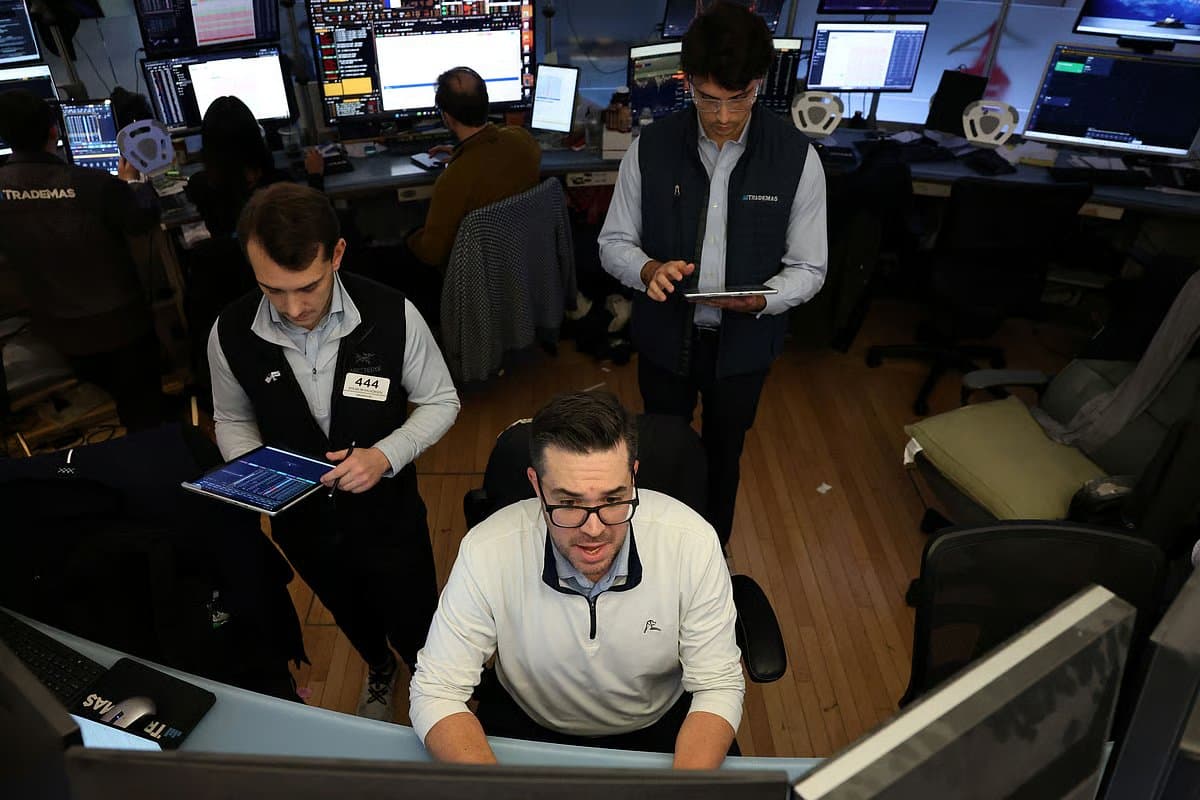
The Nasdaq Composite closed on Thursday nearly 12% below its October 6 all-time high, past the 10% threshold that confirms a correction, after a selloff in artificial intelligence stocks that investors linked to the Democratic sweep in Tuesday's US midterm elections. The coming week brings three tests for the AI trade: the October consumer price index on Tuesday and quarterly results from CoreWeave, Applied Materials and Cisco Systems.
The damage on Thursday was concentrated in the companies most tied to the data-centre build-out. Every S&P 500 sector ended lower, but the index's technology sector fell 7.3% and the Philadelphia SE Semiconductor index dropped more than 12%, the largest one-day declines for both in more than six years. The Cboe Volatility Index hit a seven-month high. Technology shares led a modest rebound on Friday, though the major indexes still posted losses for the week. The S&P 500 is still up nearly 8% in 2026.
The concern is political as much as financial. Democrats won control of Congress and several governors' races in states with heavy data-centre development, including Texas, after a campaign in which public opposition to data centres on environmental and other grounds was a prominent issue. Traders now fear closer scrutiny of AI and limits on data-centre construction, on top of existing worries about the cost of the build-out that has driven much of this year's market rally.
"It is a fragile momentum trade," said Marvin Loh, senior global macro strategist at State Street. "You have got this regulatory, political party overhang, which I think is going to stay with us until we really get a sense of how significant of a slowdown we're thinking about."
Keith Lerner, chief investment officer at Truist Advisory Services, wrote in a note on Thursday that technology had underperformed the S&P 500 over the past month by the widest margin since May 2002. "We are now seeing something of a buyers' strike in tech," he said.
CoreWeave as the Test Case
Of next week's earnings, CoreWeave's is likely to draw the closest reading. The AI cloud provider sits at the centre of questions about how the build-out is being financed, and its shares have fallen sharply in recent weeks. Garrett Melson, portfolio strategist at Natixis Investment Managers Solutions, said a "cautiously optimistic view in terms of being able to find ways to get projects across the finish line" from the company would help ease some of those concerns. Applied Materials, a supplier of chipmaking equipment, and Cisco, which sells networking gear, will offer further readings on AI-related demand.
Rate Bets Start to Move
The selloff is also changing the calculation for central banks that have been raising rates to counter the energy price surge caused by the Iran war. The Federal Reserve raised rates in September for the first time in three years and held steady last month. Estimates of the chance of a hike at its December 8 to 9 meeting vary: one measure of market pricing put it at roughly 70% on Friday, down from more than 80% a week earlier, while LSEG data after Friday's strong jobs report showed about 80%. Investors expect about two more quarter-point increases in total in this cycle.
In Europe, markets price a roughly 60% chance of a December rate increase by the European Central Bank, down from 75% the previous week, with euro zone inflation at a three-year high of 4%. Traders see a 58% probability that the Bank of Japan holds rates next month.
Tim Graf, head of macro strategy for EMEA at State Street, said falling equity and asset values could put the wealth effects behind consumer-led growth "in reverse". Loh warned that a hot inflation reading followed by further tightening would be "something else that investors would have to absorb".
Exposure Beyond Wall Street
The rout has spread to Asia's chip-heavy markets. Taiwan shares posted their worst week since 2001, and South Korea, where the data-centre boom has become increasingly important to exports, investment and the stock market, is particularly exposed. Jin-Wook Kim of Citi expects the Bank of Korea to raise rates by 25 basis points in November and February, but said a sharp fall in memory prices and semiconductor exports could prompt a pause after November.
The International Monetary Fund, which forecasts global growth of 3.1% this year, has said that in one downside scenario a steep drop in AI investment could cut global GDP by 1.1% by 2028. Not every strategist sees that path. Ross Hutchinson, head of euro market strategy and economics at Zurich Insurance, said the selloff raises short-term downside risks but argued that the case for AI rests on productivity gains lifting economic activity and earnings, not on data-centre construction itself.
Tuesday's inflation report is the first of those tests, and the Fed's December decision will show how much weight policymakers give to tighter financial conditions against the energy shock.
Sources
- khaleejtimes-english · Wall St Week Ahead: As tech swoon roils market, US inflation data on tap
- khaleejtimes-english · Trader angst pivots from inflation to growth as tech rout deepens
Produced with AI assistance from the sources above. How we work
By
Nakoda News Desk
Nakoda News covers AI and business. Every story links the sources it draws on; how we work is set out in our editorial standards.
Related coverage
Markets Nvidia and CoreWeave Among 67 Issuers Blocking OKX-ICE Tokenized Stock Venue
20 hours ago · 3 min read
- Markets
OpenAI Takes In $11 Billion at $1.25 Trillion Valuation After Scaling Back Its Round
20 hours ago · 3 min read
Markets Anthropic's Record IPO Faces a Lower Valuation or Delay as AI Stocks Slide
21 hours ago · 3 min read
Markets Nvidia Posts Fifth Straight Weekly Loss, Leaving It About $1.27 Trillion Below Its Peak
1 day ago · 2 min read
Markets IMF's Georgieva Says Central Banks Must Weigh Any Slowdown in AI-Driven Growth
2 days ago · 1 min read