IRENA Chief Says Grids, Not Cost or Finance, Are the Main Brake on Renewables
Francesco La Camera told Arab News at ADIPEC that the Gulf's next task is linking its fast-growing solar and wind capacity across borders.
By Nakoda News Desk
·2 min read
Prefer Nakoda News on Google
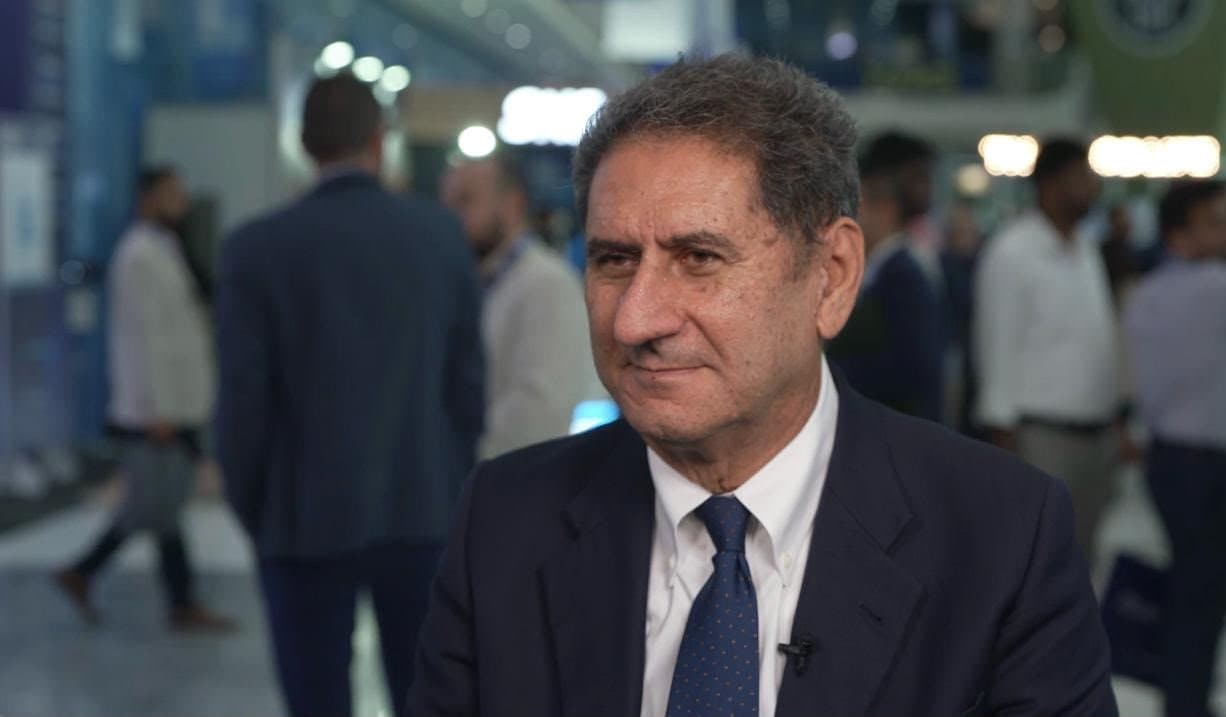
The director-general of the International Renewable Energy Agency has said that grid infrastructure, not cost or financing, is the main obstacle to building renewable power fast enough to meet global climate targets.
Francesco La Camera gave that answer when Arab News asked him, on the sidelines of ADIPEC in Abu Dhabi, which of the three stood most in the way of the roughly 1.2 terawatts of renewable capacity the world needs to add each year. "The main bottleneck for the speed and scale of the transition is the infrastructure that can sustain the system," he said in the interview, adding that IRENA has been warning about the problem for seven years.
The point matters beyond climate policy. Grid connections have also become a constraint on large new loads such as AI data centres, which need firm power, and governments across the Gulf are trying to attract those projects while building out solar and wind.
La Camera's prescription is a power system that operates as a whole: grids that are interconnected, flexible and balanced, supported by storage and by what he called "natural batteries" such as hydropower and geothermal. Without that, he said, the world cannot reach the pace the Paris Agreement requires.
He rejected the argument that the energy transition swaps dependence on oil for dependence on critical minerals. "It's completely different," he said, adding that current technology can recover and recycle 90 to 92% of the minerals in solar panels, storage systems and batteries. He acknowledged that mineral supply carries risks that need policy attention, but said the market is already adjusting, pointing to batteries moving from lithium to sodium. "When the price of one mineral goes up, they find other solutions," he said.
On the Gulf, La Camera said the UAE is investing in renewables at home and in more than 45 countries abroad, and described Saudi Arabia as highly competitive and expanding in wind and solar. He said the region's next test is connecting that capacity across national borders. "Infrastructure is becoming the key, both globally and in this region, to unlock the enormous potential here," he said.
Sources
- Arab News · IRENA: The energy transition’s real bottleneck isn’t money, it’s wires
Produced with AI assistance from the sources above. How we work
By
Nakoda News Desk
Nakoda News covers AI and business. Every story links the sources it draws on; how we work is set out in our editorial standards.
Related coverage
Policy Google Says Gemini's Human Reviewers May See Excerpts of Users' Gmail and Drive Files
2 hours ago · 2 min read
Policy Elvis Presley and Eminem Rights Holders Sue Suno Over AI Training and Voice Imitation
3 hours ago · 3 min read
- Policy
Trump Says Huang Told Him He Had 'No Idea' Woman Was a Spy, Stays Vague on When He Knew
3 hours ago · 2 min read
Policy Huang Spy Allegations Boost Chip Export Bills That Nvidia Opposes in Defence Package
4 hours ago · 2 min read
- Policy
Trump Sees 'Positive Momentum' on Iran Deal After Talks With Qatar's Prime Minister
5 hours ago · 1 min read