UAE Bans Backpacks for Delivery Riders and Sets E-Scooter Permits in 2027 Traffic Rules
A new federal regulation taking effect on January 1 also caps driving at nine hours in 24 and requires two-year professional permits for delivery drivers.
By Nakoda News Desk
·2 min read
Prefer Nakoda News on Google
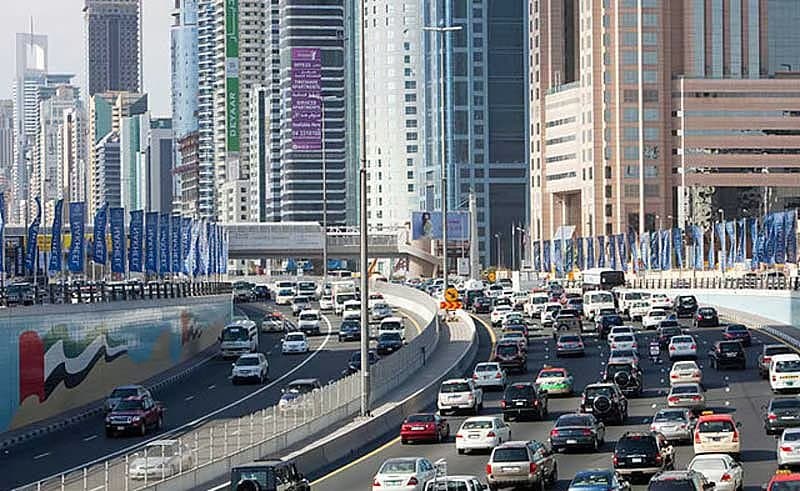
Delivery riders in the UAE will no longer be allowed to carry orders in backpacks, and anyone aged 15 or over will be able to apply for a three-year permit to ride an electric scooter, under federal traffic rules that take effect on January 1, 2027.
The changes are set out in Cabinet Decision No. 174 of 2026, the executive regulation of Federal Decree-Law No. 14 of 2024, according to a Khaleej Times review of the text. The regulation replaces Ministerial Decision No. 130 of 1997, which had governed the detail of UAE traffic law for almost three decades, along with the decisions that implemented it.
For companies that run delivery fleets, scooter rentals and commercial drivers, the rules change day-to-day operating requirements. Article 10 prohibits backpacks for delivering orders and requires that orders be loaded using approved methods. It also bars a passenger from riding behind the driver during deliveries on a motorcycle licensed for that purpose. Article 57 requires professional drivers and delivery-vehicle drivers to carry a valid professional permit, show it on request and not work without one or with an expired one. Professional permits, including those for motorcycle delivery, last two years.
Article 7 limits driving to nine hours within any 24-hour period. The clause does not name a category of driver, such as truck drivers, and does not say how time will be recorded or whether rest breaks are required. The Federal Traffic Council may amend the limit. A separate ban on driving while fatigue affects safety already existed; the numerical ceiling is new.
Under Article 59, permits for electric scooters, electric bicycles and small motorised bikes will be valid for three years, with a minimum applicant age of 15. Riders must hold the permit before riding, register their device with the relevant authority, use designated routes and speed limits, and stay off roads meant for vehicle traffic. The safety rules apply to both private use and commercial rentals.
The regulation does not set a nationwide e-scooter speed limit, and it does not say how it will interact with Dubai's existing scheme. The Roads and Transport Authority currently requires applicants to be at least 16 and issues permits with no expiry, and the federal text does not address how existing permits will be treated. It also names no registration fee or application platform.
Article 4 sets equipment requirements for personal mobility devices: a headlight, a rear light, red brake-linked lighting, a handlebar-mounted horn and brakes on at least the rear wheel. Licensing authorities may add their own requirements.
For other drivers, learner permits may now be valid for up to six months, up from three under the previous regulation. Anyone renewing a licence that has been expired for more than 10 years will need to pass theory and practical tests set by the licensing authority. A 40 km/h maximum remains in place for signed internal residential areas, and children aged four and under must still travel in rear child seats.
The rules arrive weeks after the government postponed a planned cap of five registered vehicles per resident following public feedback. Several practical questions, including how device registration will work and whether emirate-level schemes will be aligned with the federal permit, are left to licensing authorities to settle before January 1.
Sources
- khaleejtimes-english · New UAE traffic rules for 2027: What changes for drivers, e-scooter riders
Produced with AI assistance from the sources above. How we work
By
Nakoda News Desk
Nakoda News covers AI and business. Every story links the sources it draws on; how we work is set out in our editorial standards.
Related coverage
- Policy
Trump Says Huang Told Him He Had 'No Idea' Woman Was a Spy, Stays Vague on When He Knew
2 hours ago · 2 min read
Policy Huang Spy Allegations Boost Chip Export Bills That Nvidia Opposes in Defence Package
3 hours ago · 2 min read
- Policy

Trump Sees 'Positive Momentum' on Iran Deal After Talks With Qatar's Prime Minister
4 hours ago · 1 min read
- Policy

Macron Says AI Should Be Banned Wherever It Endangers Children's Mental Health
4 hours ago · 2 min read
- Policy

Saudi Foreign Minister Joins G7 Session on Frontier AI and Security in Paris
5 hours ago · 1 min read