India Approves $1.5 Billion Scheme to Build 92 GWh of Grid Energy Storage
The Rs 14,500 crore programme pairs pumped hydro and batteries, carries a 40% local content rule and is meant to attract about $10 billion in investment by 2031.
By Nakoda News Desk
·3 min read
Prefer Nakoda News on Google
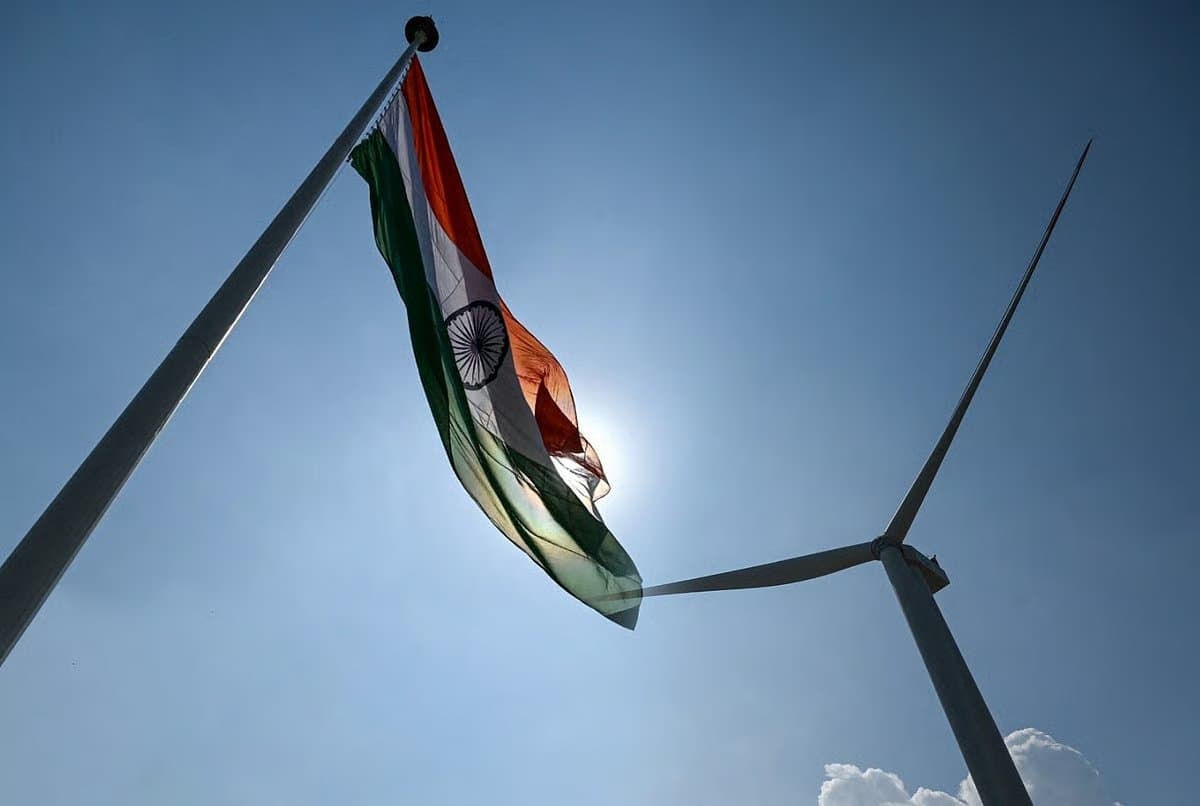
India's cabinet has approved a $1.5 billion programme to support 92 gigawatt-hours of new grid-scale energy storage, as Prime Minister Narendra Modi's government tries to make more use of the country's fast-growing solar fleet and reduce its exposure to imported fuel.
The scheme, worth Rs 14,500 crore, will run from the 2026-27 fiscal year to 2030-31. It is aimed at capacity that has not yet been commissioned and, according to the government, the 92 GWh is equivalent to 170 per cent of India's existing grid-scale storage. Officials expect it to draw about $10 billion of investment over five years.
Storage has become the gap in India's clean energy build-out. Solar output peaks at midday, while demand climbs in the evening. Without somewhere to hold the surplus, renewable power goes unused and utilities fall back on coal plants to meet the evening peak.
Modi announced the decision on X. "The Cabinet has approved a massive Rs 14,500 crore push to develop 92 GWh of energy storage capacity, supporting an estimated investment of almost 1 lakh crore," he wrote, adding that it would mean "more reliable power, greater renewable energy integration and stronger energy security."
Pumped hydro accounts for most of the new capacity, at 60 GWh. Battery storage makes up 30 GWh, and another 2 GWh is set aside for emerging storage technologies. Battery projects must meet a minimum domestic content requirement of 40 per cent. The government said the scheme would give an "impetus to domestic manufacturing of battery energy storage systems, reduce import dependence and enhance the country's long-term energy security".
Separately, the government has approved a $300 million scheme to support four domestic processing plants for lithium and nickel. Both metals are used in electric vehicle batteries, grid storage systems and electronics, and India currently relies heavily on imports of processed critical minerals.
The new money is still small next to the need. The government estimates India will require around 411 GWh of grid-scale storage by 2031-32, made up of 236 GWh of batteries and 175 GWh of pumped hydro. About 9.1 GWh of battery storage was operating by September 2026, according to the Centre for Research on Energy and Clean Air, less than 4 per cent of the battery capacity the country is projected to need by then.
Generation has moved faster. India had about 171 GW of installed solar capacity as of September and roughly 57 GW of large and small hydropower combined, according to the Ministry of New and Renewable Energy's monthly Physical Achievements report. Government data show that more than half of the country's installed power capacity came from non-fossil sources as of July 2026. The target is 500 GW of non-fossil capacity by 2030 and net-zero emissions by 2070.
Security of supply is as much a driver as climate. The fuel crisis that followed the US-Israel war with Iran showed how exposed India's economy and its more than 1.4 billion people are to disruptions in imported energy. India is the world's third-largest greenhouse gas emitter after China and the United States, according to the United Nations Environment Programme, and still leans heavily on coal.
UNEP's Emissions Gap Report 2026 put India's emissions at about 4.5 billion tonnes of carbon dioxide equivalent in 2025, excluding land use and forestry, though per capita emissions of 3.1 tonnes were less than half the global average of 6.4 tonnes. India has also pledged to cut the emissions intensity of its economy by 45 per cent from 2005 levels by 2030.
The programme's first year begins with the 2026-27 fiscal year, and the 40 per cent local content rule will test whether domestic battery manufacturers can scale quickly enough to supply 30 GWh of projects by 2031.
Sources
- khaleejtimes-english · How India plans to boost renewable energy and security with a $1.5 billion scheme
Produced with AI assistance from the sources above. How we work
By
Nakoda News Desk
Nakoda News covers AI and business. Every story links the sources it draws on; how we work is set out in our editorial standards.
Related coverage
Policy Google Says Gemini's Human Reviewers May See Excerpts of Users' Gmail and Drive Files
3 hours ago · 2 min read
Policy Elvis Presley and Eminem Rights Holders Sue Suno Over AI Training and Voice Imitation
4 hours ago · 3 min read
- Policy

Trump Says Huang Told Him He Had 'No Idea' Woman Was a Spy, Stays Vague on When He Knew
4 hours ago · 2 min read
Policy Huang Spy Allegations Boost Chip Export Bills That Nvidia Opposes in Defence Package
5 hours ago · 2 min read
- Policy

Trump Sees 'Positive Momentum' on Iran Deal After Talks With Qatar's Prime Minister
5 hours ago · 1 min read