Dubai to Link Every Traffic Signal to an AI-Managed Control Centre by Early 2027
The RTA expects AI-timed signals to cut congestion at junctions by at least 10% under an updated AI strategy that covers 41 areas of its work.
By Nakoda News Desk
·2 min read
Prefer Nakoda News on Google
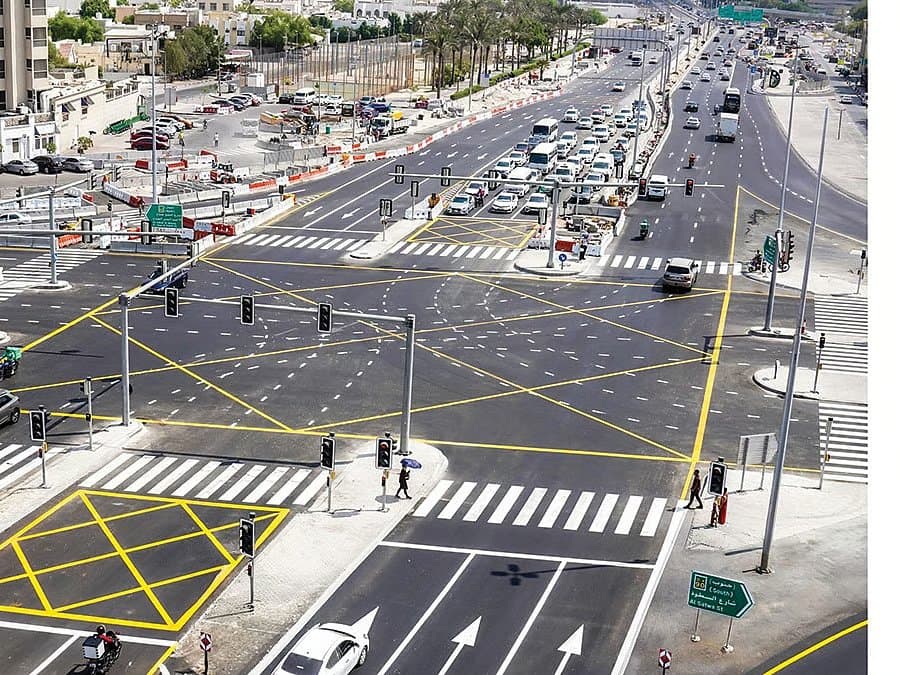
Dubai's Roads and Transport Authority is connecting every traffic signal in the emirate to its control centre in Al Barsha. Once that is done, artificial intelligence will set signal timings based on live conditions. The authority expects the work to be finished in early 2027.
Ahmed Hashem Bahrozyan, chief executive of the RTA's Corporate Technology Support Services Sector, described the project on Noor Dubai Radio. He said the system would use the cameras and traffic management systems already in place to follow vehicle movements and predict where congestion and bottlenecks will form. Signal timings would then change in response, more dynamically than they do now. He expects this to reduce congestion at signals by at least 10 per cent, alongside other projects meant to improve traffic flow.
Traffic is one of the main complaints of Dubai residents and businesses, and adjusting signals is cheaper and faster than building new roads. The connections are being installed now. The Al Barsha centre already manages traffic across the emirate and works continuously with Dubai Police.
The Strategy Behind the Signals
Bahrozyan said signal management is one of the main parts of the RTA's updated AI strategy. The strategy covers 41 areas across the authority, from public services and transport planning to back-office work such as contracts, procurement, finance and human resources. Because the technology changes so quickly, the RTA reviews the strategy every six months, or at most once a year, rather than on a normal multi-year cycle.
The authority wants AI built into all 41 areas within two and a half years. The rollout has six phases. Bahrozyan said the first two are under way and the other four are due over the next two years. He said priorities were chosen by weighing customer convenience against internal efficiency. Planning across buses, marine transport, the Dubai Metro and other public transport is among them.
AI Agents for Fines and Licences
The RTA also plans to move from conventional digital channels to AI assistants for its most common transactions. These include paying traffic fines and renewing vehicle registrations and driving licences. The authority plans to move more than 50 per cent of its operations and services to this AI assistant system over the next two years.
Bahrozyan said asset management is another priority. The RTA oversees assets worth more than Dh150 billion, and the portfolio keeps growing with projects such as the Dubai Metro Blue Line. He said that relying on staff and inspectors to manage assets at this scale would get harder as their number and value rise. AI-based monitoring would let the authority expand coverage to as much as five times current levels.
The RTA expects the strategy as a whole to add more than Dh300 million in value a year through better public services and more efficient operations. The signal network, due to be fully connected in early 2027, will be the first large public test of whether those estimates hold.
Sources
- Gulf News · Dubai to use AI to control all traffic lights, cut congestion by at least 10%
- Emirates 24|7 · Dubai to link all traffic signals to an AI-run control centre by early 2027, aiming to cut congestion by at least 10%
Produced with AI assistance from the sources above. How we work
By
Nakoda News Desk
Nakoda News covers AI and business. Every story links the sources it draws on; how we work is set out in our editorial standards.
Related coverage
AI Apple Explores Turning Siri Into an Autonomous Agent as Soon as Next Year, Gurman Says
11 hours ago · 2 min read
- AI

Game Decompilation Hub Decomp.dev Winds Down, Blaming Low-Effort AI Contributions
12 hours ago · 2 min read
AI METR Says Anthropic May Have Crossed Its Own 2x AI Research Acceleration Warning Line
12 hours ago · 3 min read
- AI

Dubai Media Academy Wins Arab Media AI Award at Cairo ICT for Arabic-Language Initiative
12 hours ago · 2 min read
AI Tencent's Chief AI Scientist Warns AI Is Nearing a Harmful Threshold in Biology
14 hours ago · 2 min read