Commonwealth Fusion Chief Says the UAE Is Well Placed to Adopt Fusion Power
Bob Mumgaard, whose company counts Abu Dhabi's Plynth Energy as an investor, says its US prototype is about 80% built and due to start up in 2027.
By Nakoda News Desk
·2 min read
Prefer Nakoda News on Google
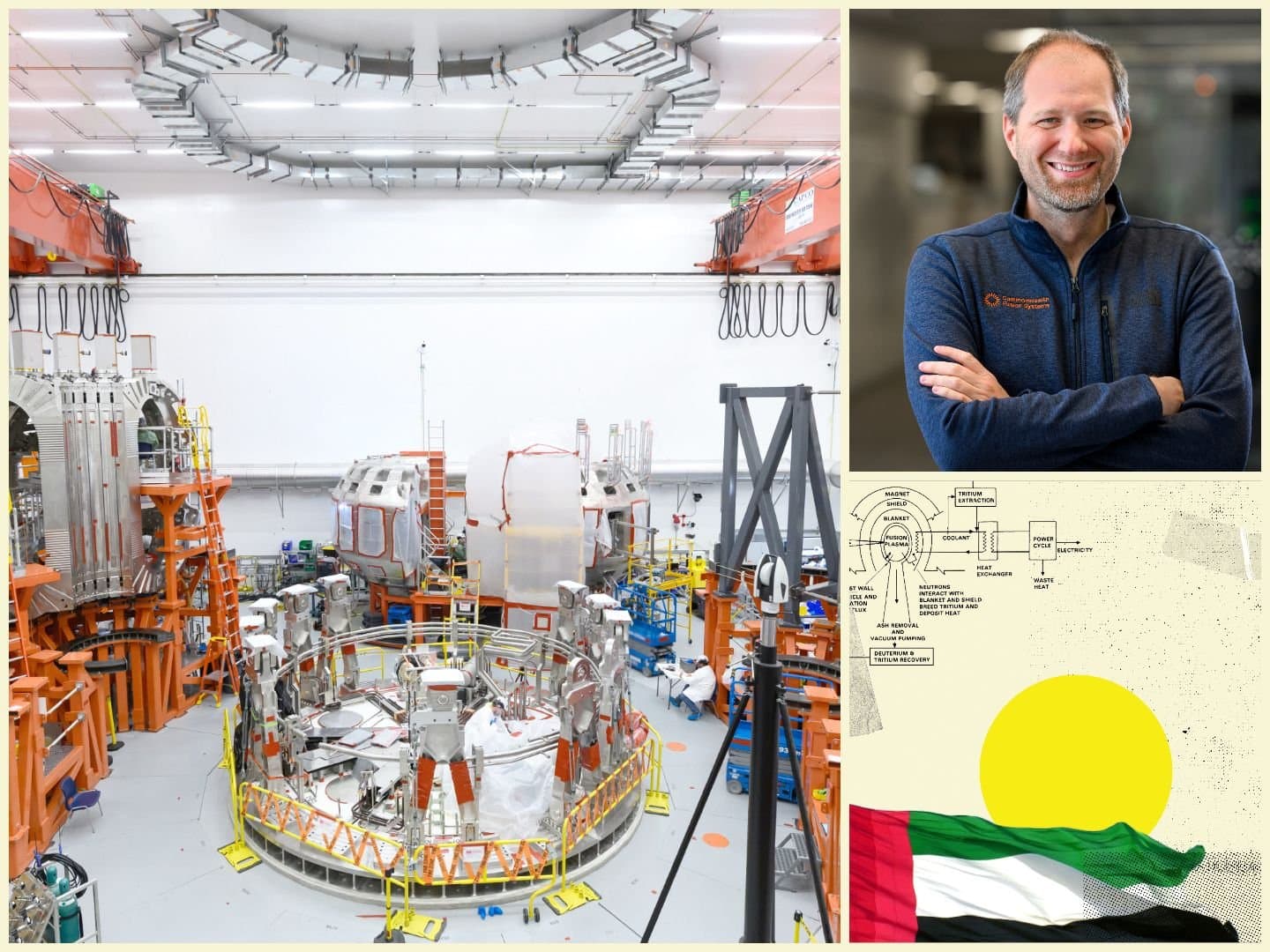
Bob Mumgaard, chief executive of Commonwealth Fusion Systems, said the UAE is well placed to adopt fusion energy because of its oil and gas expertise, its record of building nuclear power plants and its embrace of artificial intelligence, in an interview with Semafor published on Friday.
The Massachusetts company is one of the best-funded fusion developers, and it already has money from Abu Dhabi. Plynth Energy, a government-owned Abu Dhabi fund, took a minority stake this year that Axios reported was worth more than $100 million. Mumgaard's comments set out why the company sees the Gulf as more than a source of capital: as a possible early user of a technology still years from commercial operation, and as a region with industrial skills that fusion needs.
Mumgaard told Semafor that when Commonwealth went looking for companies able to produce large metal components and complex machinery for its prototype, it ended up with suppliers from the oil and gas industry. He said the hydrocarbons sector shares many of the skills and tools fusion developers need. Of the UAE, he said: "They understand what energy leadership and first mover advantage, advanced technologies can bring to their society, their place in the world."
The UAE already operates the Barakah nuclear power plant, and it is building large AI data centre campuses that need steady supplies of electricity, the kind of demand fusion developers hope to serve.
Commonwealth's prototype in Massachusetts uses powerful magnets and the hydrogen isotopes deuterium and tritium to create a reaction hotter than the core of the sun. Mumgaard said the machine is about 80% complete and is due to start up in 2027. Its aim is to show that it can release more energy than it consumes, a threshold no commercial fusion design has yet crossed.
After that, the company plans a 400-megawatt power plant in Virginia, and Mumgaard said it has secured Google and the Italian energy company Eni as buyers of its output. Commonwealth raised $1 billion in July, bringing its total funding to $4 billion. Mumgaard said that is enough to build the prototype and prepare for a larger, utility-scale plant in the early 2030s.
He also argued that the US-Iran conflict, which has disrupted oil and gas shipping around the Strait of Hormuz, strengthens the case for speeding up fusion research and deployment. "Fusion is one of the most secure, resilient energy systems because it doesn't need pipelines or ships, and it doesn't have emissions," he said.
Plynth is not new to the sector. Enterprise AM described the fund as targeting areas including precision manufacturing, advanced materials and diagnostic systems, and it previously invested in Zap Energy, another US fusion start-up, in 2024.
Mumgaard acknowledged that adoption of fusion at global scale is still decades away. The nearer test is the 2027 start-up of the Massachusetts machine, which will show whether Commonwealth's design can produce net energy before the company commits to the Virginia plant.
Sources
- Semafor · Commonwealth Fusion’s CEO sees UAE primed for new energy tech
- Enterprise AM · Plynth Energy takes minority stake in US-based fusion startup
- Zap Energy · US-UAE joint statement on investment in Zap Energy
Produced with AI assistance from the sources above. How we work
By
Nakoda News Desk
Nakoda News covers AI and business. Every story links the sources it draws on; how we work is set out in our editorial standards.
Related coverage
Business PureHealth to Hire 250 Emirati Graduates Under Nafis Healthcare Programme
7 hours ago · 1 min read
Business Damac's Sajwani Says Anthropic Stake Earned Him as Much as 30 Years in Business
8 hours ago · 2 min read
- Business

DIFC Courts' Arbitration Claims Reach AED 3.2 Billion in First Half of 2026
10 hours ago · 1 min read
Business Kalshi in Talks to Raise Money at $65 Billion Valuation, Weeks After a $40 Billion Round
14 hours ago · 2 min read
- Business
LangChain Raises $300 Million at $3 Billion Valuation in Round Led by CapitalG
15 hours ago · 2 min read