Brent Falls Almost 5% to Two-Month Low as Analysts Point to a Weakening Physical Market
Trump's comments on Iran set off the selling, but banks also cite oversupply: rising OPEC output, a 1.4 million barrel-a-day surplus and Dated Brent below futures.
By Nakoda News Desk
·3 min read
Prefer Nakoda News on Google
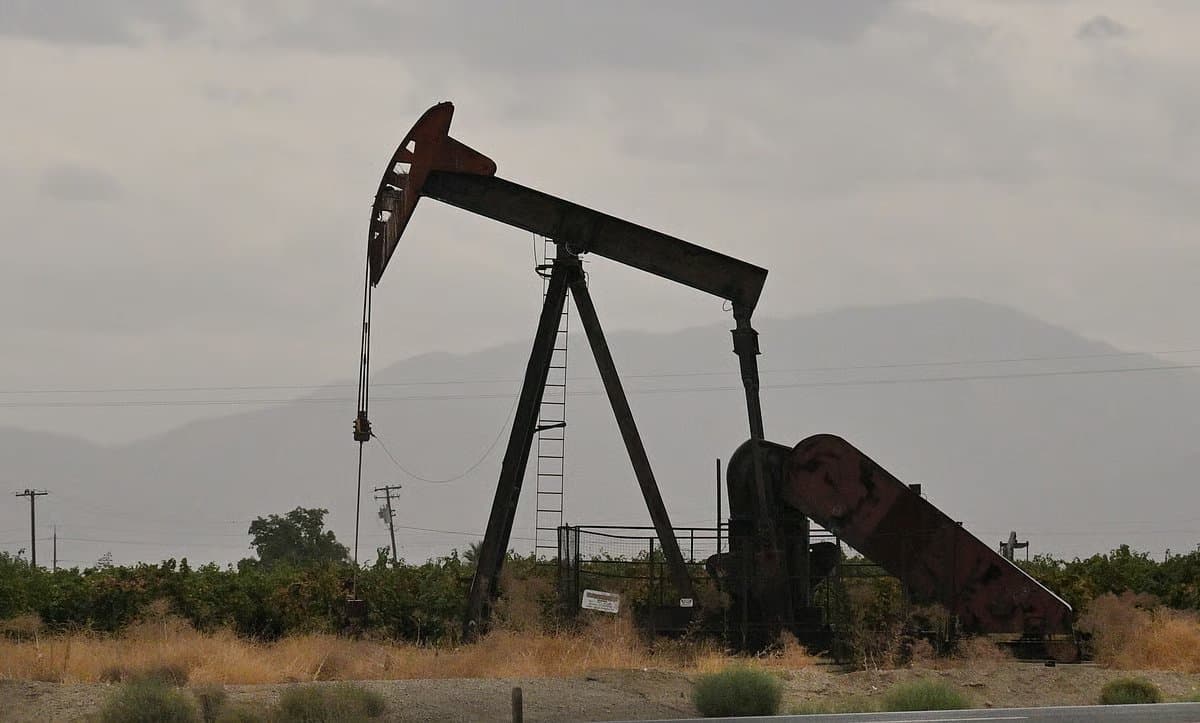
Brent crude fell almost 5% on Monday to below $94 a barrel, its lowest level since early September. Traders priced in a less disruptive end to the war with Iran, and analysts pointed to growing signs that the physical oil market is oversupplied.
Brent futures were down $4.57, or 4.65%, at $93.75 a barrel at 1704 GMT, after touching $92.80 during the session. US West Texas Intermediate fell $3.19, or 3.51%, to $87.64. Most of the selling came during European and US hours. In early Gulf trading, Brent had been almost unchanged at $98.08.
Monday's drop followed a fall of 16% last week, the benchmark's steepest weekly decline since the start of the Covid-19 pandemic. AGBI put last week's fall at 17%. A fall of this size matters for Gulf budgets: The National noted on Monday that lower oil revenue during the war has added to financial pressure on Saudi Arabia.
The immediate trigger was US President Donald Trump. He told CNN on Sunday that further military action against Iran would be highly unlikely if negotiations produced a strong agreement, while warning that Washington had identified more infrastructure targets should fighting resume. Last week he had hinted that attacks could resume, but there has been no sign of a large-scale US operation.
"This seems to have encouraged sellers on the prospects for peace even while the actual fighting is not slowing down," analysts at TACenergy wrote in a note. Saxo Bank's Ole Hansen said oil was trading lower "on hopes of a US-Iran peace deal rather than concrete signs of progress."
Signs of Oversupply
Several analysts said falling prices also reflect the market's fundamentals as well as diplomacy. Morgan Stanley said in a report on Monday that Dated Brent, the price used for physical cargoes around the world, has slipped to a discount to the nearby Brent futures contract. That points to weak demand for prompt barrels. "Weakness in the physical market, supported by still-elevated flows out of the Middle East, is one factor weighing on prices," said UBS analyst Giovanni Staunovo.
JPMorgan estimated last week that global supply exceeded demand by 1.1 million barrels a day in September and by 1.4 million barrels a day in October. It said recovering Middle Eastern flows, higher output elsewhere and weak demand caused by high prices were behind the surplus. A Reuters survey found that output from the 11 OPEC members subject to the survey rose by 1.38 million barrels a day in October to 22.87 million barrels a day, with Saudi Arabia, Kuwait and Iraq adding the most despite continued export constraints.
More Iraqi crude may follow. Iraq's foreign minister, Fuad Hussein, told Al Jazeera on Sunday that Baghdad had reached understandings with Washington to export oil through the Strait of Hormuz via a shipping lane near Oman. "Crude futures are under selling pressure once again as oil volumes continue strong through the Strait of Hormuz," said Dennis Kissler, senior vice president of trading at BOK Financial.
Attacks Have Not Stopped
The sell-off came despite continuing attacks on Gulf energy infrastructure and shipping. Saudi Arabia's energy ministry said debris from an attempted attack on Sunday damaged a Saudi Aramco office building in Riyadh's financial district. Yemen's Houthis claimed responsibility. On Monday, state media cited a ministry source as saying a fire on the kingdom's East-West pipeline had been put out, with no casualties and no effect on operations. Iran's Revolutionary Guards navy said three tankers caught fire after striking mines on an unauthorised route through the strait. The US military said it had disabled a commercial vessel in the Gulf of Oman that tried to breach its blockade of Iranian ports.
"Fresh tanker incidents and an attack on Saudi Aramco's offices show that shipping and regional security risks remain unresolved as traders price in a less disruptive outcome," Gelber & Associates said.
US crude reserves are also thin. The Strategic Petroleum Reserve fell to 279.5 million barrels last week, its lowest since October 1982, according to Department of Energy data.
The diplomatic picture remains unclear. Trump was due to meet Qatar's prime minister and foreign minister, Sheikh Mohammed bin Abdulrahman Al-Thani, at the White House on Monday, with Doha mediating between Washington and Tehran. US Secretary of State Marco Rubio said on Sunday that negotiations had made little progress. A senior Iranian security official told state media that Tehran would not negotiate unless Washington took practical steps to meet seven conditions set out in a June interim agreement.
Sources
- khaleejtimes-english · Oil falls almost 5% as Trump signals restraint on Iran
- khaleejtimes-english · Oil slides as Trump signals restraint on Iran despite fresh shipping attacks
- AGBI · Oil prices mixed after Trump plays down Iran strikes
- The National · US-Saudi Business Council discusses expanding trade and investment ties
Produced with AI assistance from the sources above. How we work
By
Nakoda News Desk
Nakoda News covers AI and business. Every story links the sources it draws on; how we work is set out in our editorial standards.
Related coverage
Markets Wall Street Rebounds From AI Sell-Off as Oil Falls, While Nvidia Slides on Huang Probe
9 hours ago · 2 min read
Markets Dubai Stocks Hit Highest Level Since July as Emaar Shares Lead Dh11 Billion Gain
9 hours ago · 1 min read
Markets JPMorgan Swaps Alphabet for Meta on Its Focus List, Citing AI-Driven Ad Growth
10 hours ago · 2 min read
- Markets

Emaar Development Shareholders Have Until December 10 to Accept Dh15 Buyout Offer
10 hours ago · 2 min read
Markets Morningstar Values Anthropic at $1.7 Trillion, Above Reported IPO Price Talk
10 hours ago · 2 min read