Anthropic Delays Watermark on Claude Opus 4.6 and Adds Three Older Models From November 16
On all four models in the new wave, the watermark only applies at default sampling settings, so API users can avoid it by changing a single parameter.
By Nakoda News Desk
·2 min read
Prefer Nakoda News on Google
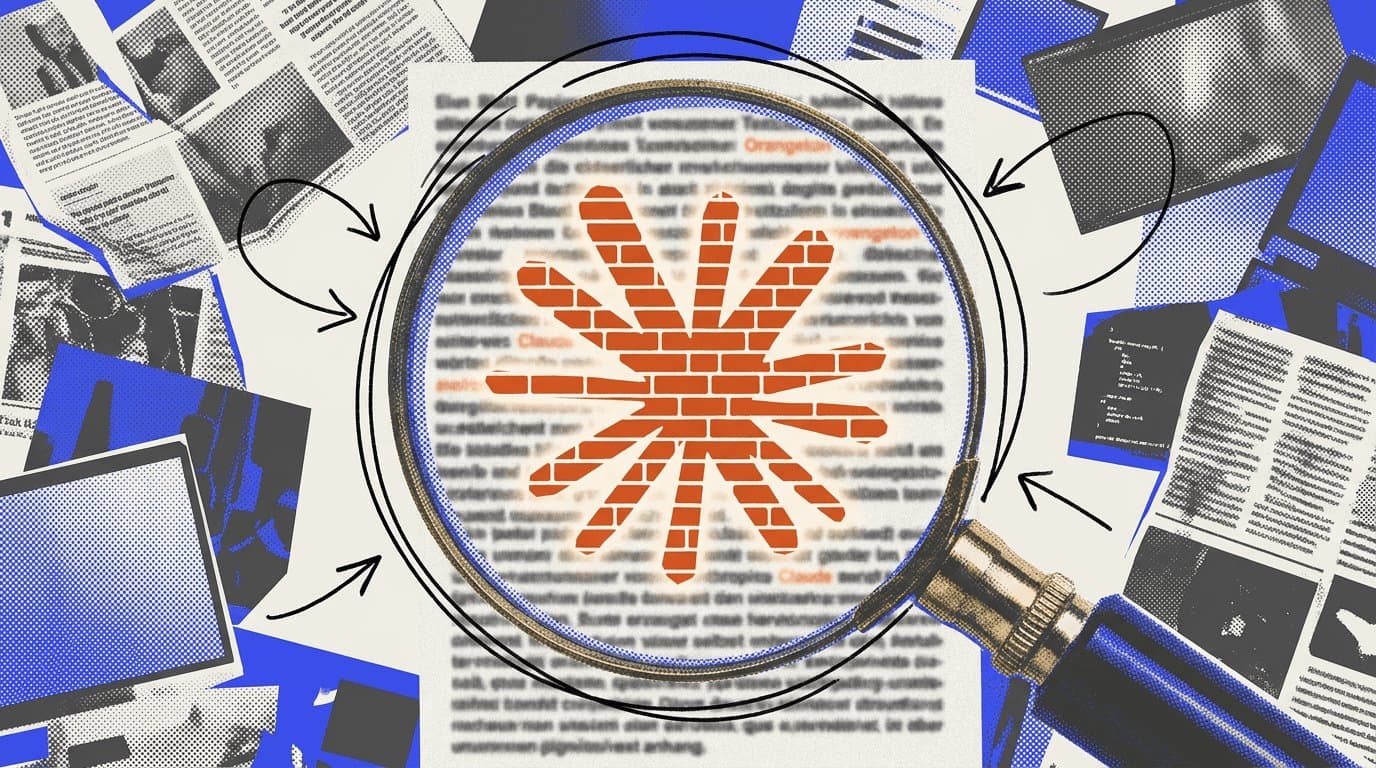
Anthropic has told API customers that it will add its text watermark to four older Claude models from November 16: Claude Opus 4.6, Claude Opus 4.5, Claude Sonnet 4.5 and Claude Haiku 4.5. The details come from an email to customers described by The Decoder. Rollout on Amazon Bedrock may take a few days longer.
Opus 4.6 had been due to get the watermark on November 3. Anthropic confirmed the delay to November 16 in the email but gave no reason. Opus 4.5, Sonnet 4.5 and Haiku 4.5 were not in the company's earlier announcement.
The watermark has a limit that matters for compliance. On all four models in this wave, Anthropic says it is applied only when developers leave three sampling parameters (temperature, top_p and top_k) at their default values. Changing any one of them is enough to produce unmarked text. In the first wave, announced at the end of October, that restriction applied to only two of the four models, Opus 4.6 and Sonnet 4.6. Anthropic told customers then: "If you rely on the watermark for your own compliance, keep these settings at their defaults."
The first wave also covered Claude Mythos 5 and Claude Opus 4.7, which carried no such caveat. Neither appears in the new email, which suggests their rollout went ahead on November 3 as planned, according to The Decoder. Anthropic's newer models, including Claude Opus 5.5, already carry the mark.
Anthropic has said it is adding watermarks to older models now because of the EU AI Act's December deadline. Every model it has released since August 2, 2026 has shipped with the watermark. Because the mark is embedded at the model level, it applies wherever the models are hosted, including Amazon Web Services, Google Cloud and Microsoft Foundry, and customers cannot turn it off.
The company describes the watermark as an "imperceptible pattern in word choice" that does not change meaning, quality or readability, adds no characters or tokens, and does not affect pricing or response formats. Anthropic says it "contains no information about the user, their organization, or their conversations with Claude." The approach is a variant of Google DeepMind's SynthID text method, which adjusts the randomness in word selection to leave a pattern that can be detected statistically. Anthropic offers a detection API in private preview.
The main labs are handling the issue differently. OpenAI launched its own textGrain watermark in October, but it is on by default only for ChatGPT and Codex users in the EU, and API customers can switch it on or off, with the default set to off. Google DeepMind has open-sourced SynthID for text and built it into its Gemini models.
The technique has critics. Blogger John Gruber has argued that choosing words partly to fit a watermark key, rather than purely for meaning, must cost some precision. Legal trade outlet Artificial Lawyer has warned that law firms could face problems if clients who have banned AI use find the mark in documents, or if several watermarks end up layered in the same file.
Companies that use Opus 4.6, which The Decoder considers Anthropic's strongest writing model, will see watermarked output from November 16. That applies only as long as their applications keep the default sampling settings.
Sources
- The Decoder · Anthropic's text watermark is easy to bypass on several older Claude models
Produced with AI assistance from the sources above. How we work
By
Nakoda News Desk
Nakoda News covers AI and business. Every story links the sources it draws on; how we work is set out in our editorial standards.
Related coverage
AI Researcher Says Anthropic Left Claude Dispatch Flaw Unfixed Despite Remote Code Risk
3 hours ago · 3 min read
- AI
Moonshot AI Sought Nvidia Blackwell Capacity in European Data Centres, CNBC Says
3 hours ago · 3 min read
AI Visa Study Finds 72% of UAE Shoppers Used AI on Their Latest Purchase
3 hours ago · 2 min read
AI Presight Signs Deal With US Firm Quartermaster to Build AI Maritime Surveillance Tools
4 hours ago · 2 min read
AI AIQ Adds Rock Flow Dynamics' tNavigator to Genesis and Signs Siemens Energy Pact
6 hours ago · 2 min read