US Voters Rejected Data Centres in Almost Every Midterm Ballot Measure
Restrictions won in all but one of the roughly 40 local votes, and Democrats who attacked the AI buildout took races in Ohio and Texas that matter to the industry.
By Nakoda News Desk
·3 min read
Prefer Nakoda News on Google
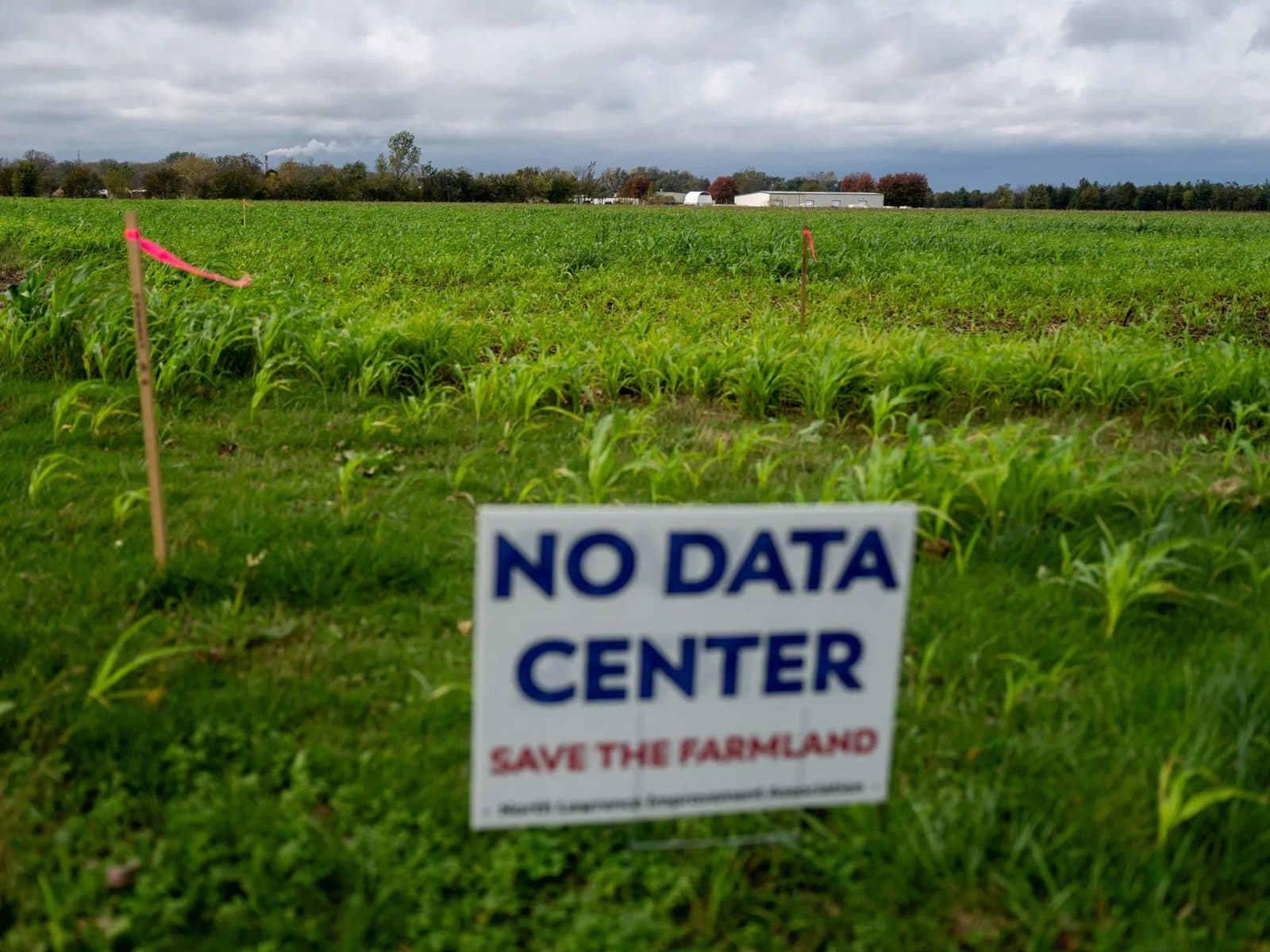
American voters backed restrictions on data centres in almost every local ballot measure on the subject in Tuesday's midterm elections. The result turns local resistance to AI infrastructure into a national political force just as Democrats prepare to take control of Congress.
Redbud Consulting runs Data Centers on the Ballot, a project that tracks these votes. It counted 41 data centre measures across the country and said voters were on track to reject or limit development in all but one. Two contests were still being counted but were expected to go the same way. As of Thursday, restrictions had won in 39 of the 40 measures with complete counts, according to Redbud figures cited by The National.
The only exception was Harwood, North Dakota, a town of fewer than 800 people. Voters there defeated a measure that would have required independent reviews of large industrial projects, including data centres, before construction.
For companies building AI capacity, the results show that opposition crosses party lines. A September poll found that 70% of Democrats and 57% of Republicans supported limiting new data centres in the US. The Pew Research Center estimated in April that the country already had 3,000 data centres, with more than 1,500 more under way.
The Electricity Bill Argument
People interviewed by Al Jazeera put the backlash down mainly to costs. Bhaskar Chakravorti, dean of global business at Tufts University, said voters could see AI "in data centres being built in their back yards" and were seeing the effects "in their energy bills". A 2026 working paper from the Federal Reserve Bank of Dallas estimated that data centres had raised wholesale electricity prices by 6.9% as of last year.
James Mercer, founder of the advisory firm Metro Colo Advisory, said residents objected to "a building down the road that needs as much power as a small city, when they suspect their own electric bill will cover it."
Ohio and Texas
Several winning candidates made data centres central to their campaigns. Ohio had 21 of the 47 data centre referendums and measures held across the US this year, more than any other state. There, Democrat Sherrod Brown flipped a Senate seat after attacking Republican incumbent Jon Husted's support for the projects.
In Texas, Democrat Gina Hinojosa beat Governor Greg Abbott after calling for a moratorium on new data centre approvals until stronger protections for local communities were in place. Goldman Sachs analysts estimate that Texas accounts for 25% of planned US data centre capacity. "Hinojosa is a known anti-data center politician and negative on the AI buildout, which makes worries around the future of the data center buildout in Texas a real issue for tech investors," Dan Ives, managing director at Yorkville Ives, wrote in a note.
Also in Texas, Senator-elect James Talarico flipped a Republican-held seat on a pledge to tighten data centre rules. He proposed closed-loop cooling to cut water use and wants operators to pay for local infrastructure. He carried Corpus Christi, a drought-hit city whose reservoir fell to 8% of capacity earlier this year, by 12 percentage points. In Michigan, Democrat Abdul El-Sayed won a Senate race with more than 52% of the vote after calling for a federal agency to oversee the AI industry.
Investors React to the Results
Markets reacted quickly. On Thursday the Nasdaq Composite fell 5.5%, putting it in correction territory, and the Philadelphia Semiconductor Index dropped 12.2%. Investors weighed whether a Democratic Congress would bring more scrutiny of data centre construction. "We anticipate more congressional hearings on who pays for the power-hungry buildout," Vijay Valecha, chief investment officer at Century Financial, wrote in a note.
Alex Turner, a former researcher who resigned from Google DeepMind, told Al Jazeera that the new Congress makes "real regulation and oversight" more likely. The next test will be in the states and counties now voting on specific projects, where the ballot results give opponents a recent precedent.
Sources
- Al Jazeera · How the US midterm elections reflected resistance to data centres
- The National · Asian stocks plunge after Nasdaq enters correction territory on AI fears
Produced with AI assistance from the sources above. How we work
By
Nakoda News Desk
Nakoda News covers AI and business. Every story links the sources it draws on; how we work is set out in our editorial standards.
Related coverage
Policy Elvis Presley and Eminem Rights Holders Sue Suno Over AI Training and Voice Imitation
2 hours ago · 3 min read
- Policy

Trump Says Huang Told Him He Had 'No Idea' Woman Was a Spy, Stays Vague on When He Knew
2 hours ago · 2 min read
Policy Huang Spy Allegations Boost Chip Export Bills That Nvidia Opposes in Defence Package
3 hours ago · 2 min read
- Policy
Trump Sees 'Positive Momentum' on Iran Deal After Talks With Qatar's Prime Minister
4 hours ago · 1 min read
- Policy

Macron Says AI Should Be Banned Wherever It Endangers Children's Mental Health
4 hours ago · 2 min read