Nine US Data Firms Sell AI Training Environments to Chinese Labs, Researchers Say
An investigation names Mercor, Surge AI and Turing among vendors whose frontier-lab training products reach Alibaba, Tencent and ByteDance, and calls for export controls on dual-use environments.
By Nakoda News Desk
·3 min read
Prefer Nakoda News on Google
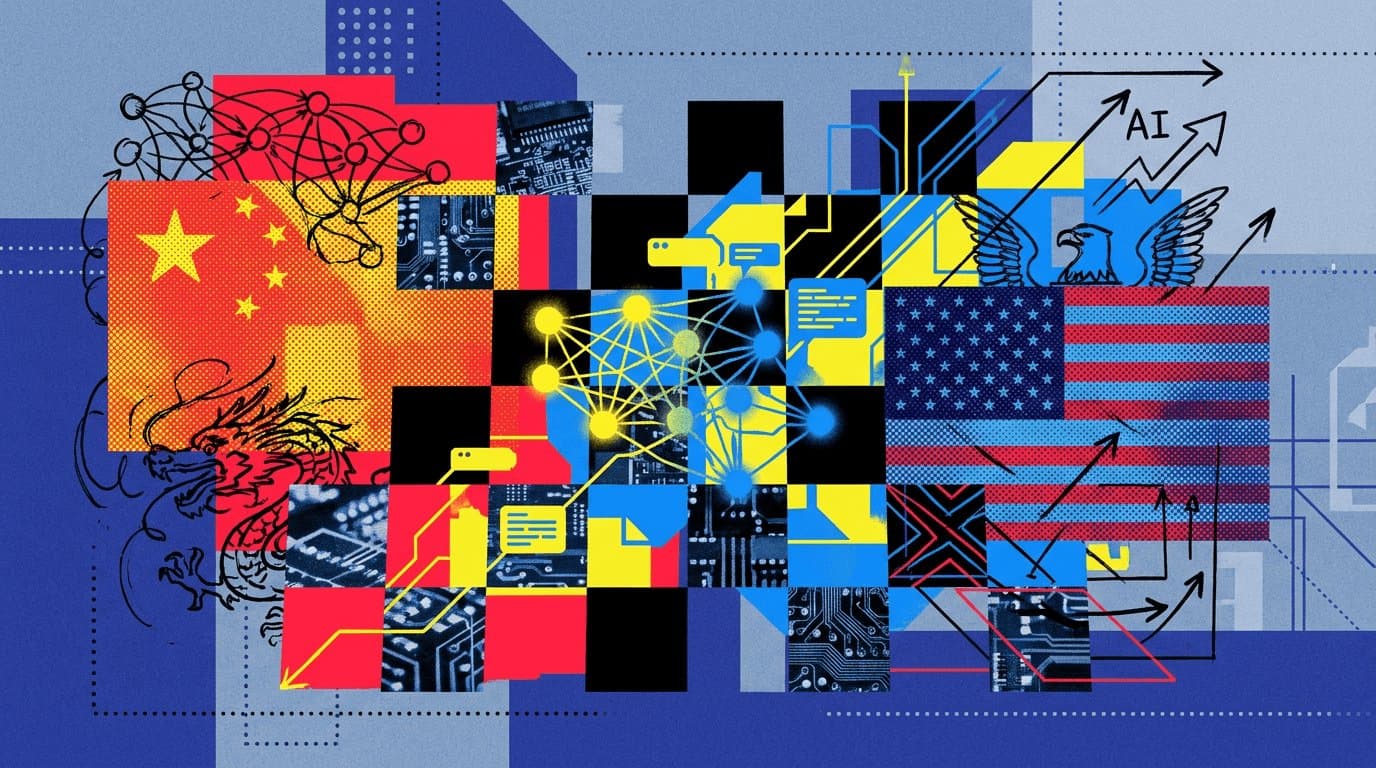
At least nine American data companies are selling reinforcement learning environments and other post-training data to Chinese artificial intelligence labs, including Alibaba, Tencent and ByteDance, according to an investigation published on Wednesday by the China-focused newsletter ChinaTalk.
The report, by Aqib Zakaria and Quinn Ennis, names Mercor, Surge AI, Turing, AfterQuery, Abundant, Pareto, DeccanAI, Eaglepoint and Invisible as vendors with Chinese customers. RL environments are simulated workspaces in which a model practises tasks such as writing code, analysing financial data or using office software, and is rewarded when it gets them right. They have become a central input for reasoning and agent models, and several of the same vendors build them for OpenAI, Anthropic and other US labs.
What Chinese buyers save is compute and time, the authors argue. Buying environments that have already worked at US frontier labs lets Chinese developers skip costly experiments and failed training runs, and that saving matters more because Chinese chips are short of memory. The authors cite a study suggesting that rollouts, the phase in which a model attempts tasks inside an environment, take more than 70% of RL post-training time. Combined with distillation, in which Chinese labs train on the outputs of US models, purchased environments help them keep pace with less computing power of their own. "American companies are helping Chinese labs develop better models, and we were able to find at least nine who do so," they wrote.
Vendors and Their Reported Buyers
The report pairs vendors with buyers. It says Mercor sold software engineering environments to Alibaba, based on data the authors say they accessed. Surge AI reportedly sells to Tencent, Z.ai and Moonshot AI, Turing works with Tencent and Alibaba, according to contractor posts, and Abundant and Eaglepoint sold to ByteDance. DeccanAI sold to Tencent and ByteDance, and Pareto has done human data collection with ByteDance. The report says Eaglepoint, a small vendor operating in the US and East Africa, is majority-owned by Beijing-based Mofy AI. A source at an unnamed Chinese lab told the authors it buys from Invisible.
The authors put the trade at about half a billion dollars, a figure they take from earlier Forbes reporting. Forbes reported that about 2% of Mercor's second-quarter 2026 revenue came from China. The authors also cite TechCrunch reporting that AfterQuery draws half of its roughly $100 million in annual recurring revenue from Chinese business, though they say they could not verify AfterQuery's sales themselves. The report does not include responses from the nine companies.
Much of the evidence came from further down the supply chain. US vendors outsource a large share of environment building and data curation to contractors, many of them in India. Those contractors are supposed to refer to clients by code names but sometimes list them on LinkedIn or in their CVs, the authors said. They also drew on anonymous sources at Chinese labs, Chinese job ads asking for experience managing overseas data suppliers, and vendors' own marketing. Surge AI tells prospective customers that its products are "built by the same experts behind our frontier-lab work." The authors said they withheld some sources on purpose and offered to share them with US officials.
Export Controls for Dual-Use Environments
Most of this trade falls outside existing US rules, the report says, partly because deals often go through offshore entities such as ByteDance's procurement offices in Singapore and San Jose. The authors want the Commerce Department's Bureau of Industry and Security to bring environments for chip design, cyberattacks and biology under existing export controls, and to send "is-informed" letters telling vendors when they need a licence. They also want defence procurement rules changed so that companies with Pentagon contracts cannot sell to Chinese labs of concern.
They stop short of calling the trade a crisis. Chinese labs can only buy environments after US labs have commissioned them, which keeps them months behind, and American frontier labs are building more of their sensitive environments in-house, the authors wrote. They also note that Scale AI, micro1 and fleet say publicly that they do not do business in China, and that Mercor narrowed its list of supported countries in May. Any move by the Bureau of Industry and Security would be the first time the US has applied export rules to this kind of training data.
Sources
- The Decoder · US data brokers are selling half a billion dollars in RL training environments to Chinese AI labs
- ChinaTalk · Piggybacking to the Frontier: The Firms Selling RL Environments to Chinese Labs
Produced with AI assistance from the sources above. How we work
By
Nakoda News Desk
Nakoda News covers AI and business. Every story links the sources it draws on; how we work is set out in our editorial standards.
Related coverage
- AI
Plurai Raises $13 Million to Test AI Agents in Simulated Copies of Company Systems
12 hours ago · 2 min read
- AI

Lawsuit Says Google's AI Mode Coached a 13-Year-Old on Suicide Through Her School Laptop
14 hours ago · 3 min read
AI Indian Court Orders Inquiry Into Tamil Nadu Library's Purchase of Suspected AI-Generated Books
14 hours ago · 2 min read
AI Vodafone Qatar and Digital Delmar Agree to Explore AI Health Monitoring for Older People
14 hours ago · 1 min read
- AI

Saudi German Health Says AI Has Cut Insurance Claim Rejections and Payment Times
14 hours ago · 1 min read