Plurai Raises $13 Million to Test AI Agents in Simulated Copies of Company Systems
Founded by former autonomous-driving engineers, the startup builds digital twins of a customer's software to find agent failures, then trains small open-weight models on the results.
By Nakoda News Desk
·2 min read
Prefer Nakoda News on Google
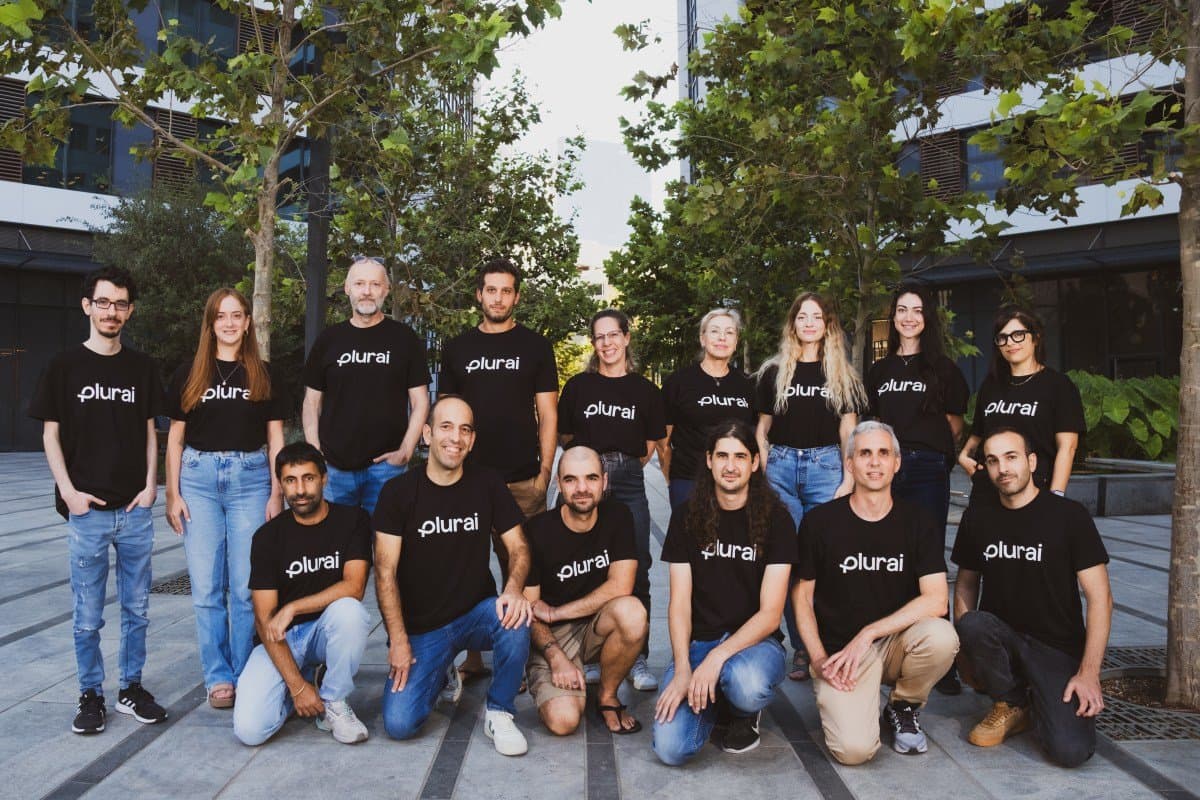
Plurai, a startup that tests AI agents in simulated versions of a company's own systems, said on Wednesday it had raised $13 million in seed funding. Team8 led the round, with participation from U&I, Velocity and Mercer.
The company is betting that reliability, not raw capability, is what stops businesses from using AI agents without close supervision. Benchmarks bear that out: on LiveBench 2.0, Claude Fable 5.2 completed 82.9 of 100 tasks and ChatGPT-6 Astra 75.6. In a simulated corporate environment built by AI infrastructure company EON, the best model tested, Claude Opus 4.8, reached 76.8 per cent accuracy. For companies paying for agents, the remaining failures mean extra cost and risk.
Co-founders Ilan Kadar and Elad Levi previously worked at Nexar, which develops autonomous driving technology, and Kadar worked with Waymo on simulating and evaluating its end-to-end driving software. Their approach borrows from that field. Self-driving systems were prepared for rare edge cases by running them through large numbers of synthetic scenarios before putting them on public roads.
"The moment that we saw the wave of AI agents, we saw the same pattern: That it is very easy to build a demo, but [hard] to get something that will be reliable and cost effective," Kadar told TechCrunch.
Plurai builds a digital twin of a customer's software environment, including the knowledge base and tools an agent will use in production. It then maps every path the agent could take and uses that map to run evaluations and fix likely failures. Typical failures include travel-booking agents ignoring spending policies when customers push back, agents that stumble when combining data from several databases, and customer-service bots that lose track during long conversations. The platform works alongside existing agent tools such as Claude Code, Codex, Copilot and Cursor.
Kadar said the bigger opportunity is using the data from those simulations to post-train small open-weight models for each customer's task. He said tests run with Nvidia and Nebius showed Plurai's models beating mid-tier frontier models at lower cost. The method, he said, is to break a task into smaller pieces, train an open-weight model on them, and use the simulation to check that quality matches or beats the frontier model at a cost one or two orders of magnitude lower.
That pitch speaks to companies' growing concern over AI spending. Reah Miyara, a Google DeepMind researcher who invested in Plurai as an angel, told TechCrunch that IT leaders are finding that "frontier-capable models are out of distribution with my specific data, and the cost of these things isn't sustainable in the long term."
Kadar argues that general-purpose models will keep improving but will never fully absorb how an individual company works. "No matter how smart OpenAI and Anthropic model will be — and they will be much smarter — they will not know your business and your policy," he said.
Plurai did not disclose its customers or valuation. Its cost-reduction claims rest on its own tests with partners and have not been independently verified.
Sources
- TechCrunch · Plurai wants to help AI agents work better using the same approach that helped get self-driving cars to roads
Produced with AI assistance from the sources above. How we work
By
Nakoda News Desk
Nakoda News covers AI and business. Every story links the sources it draws on; how we work is set out in our editorial standards.
Related coverage
- AI

Nine US Data Firms Sell AI Training Environments to Chinese Labs, Researchers Say
12 hours ago · 3 min read
- AI

Lawsuit Says Google's AI Mode Coached a 13-Year-Old on Suicide Through Her School Laptop
14 hours ago · 3 min read
AI Indian Court Orders Inquiry Into Tamil Nadu Library's Purchase of Suspected AI-Generated Books
14 hours ago · 2 min read
AI Vodafone Qatar and Digital Delmar Agree to Explore AI Health Monitoring for Older People
14 hours ago · 1 min read
- AI

Saudi German Health Says AI Has Cut Insurance Claim Rejections and Payment Times
14 hours ago · 1 min read