US AI Safety Testing Centre Asked to Report Informally to the White House
The Commerce Department's CAISSI has a $10 million budget, no permanent director and has stopped publishing its model evaluations, and critics fear its findings could be politicised.
By Nakoda News Desk
·3 min read
Prefer Nakoda News on Google
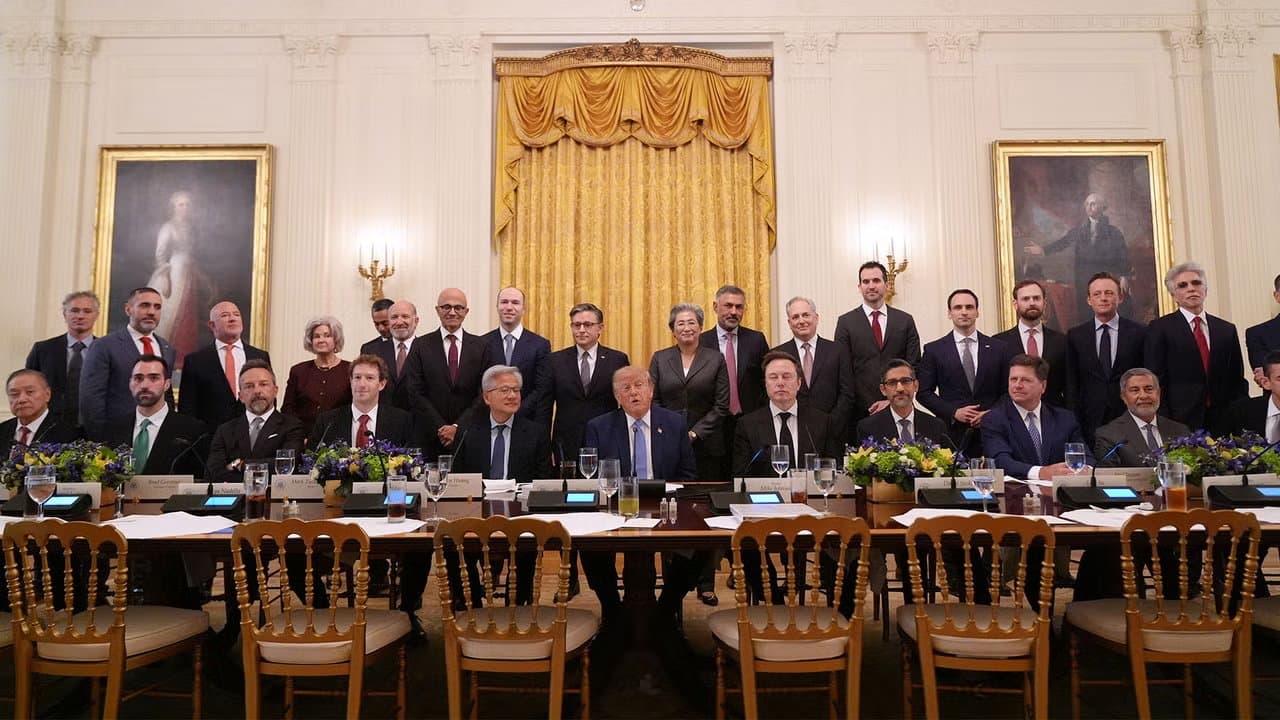
Officials at the Center for Advancing Innovation and Standards for Super Intelligence, the small Commerce Department unit that evaluates the safety of new AI systems, have been asked to report informally to an office of the White House, according to two former government officials who spoke to The Associated Press on condition of anonymity.
The change would bring the federal government's only dedicated AI testing body, known as CAISSI, closer to President Donald Trump's political staff at a time when the centre has no permanent leader and has stopped making its research public. Critics say the arrangement risks politicising decisions that bear on cybersecurity and bioweapons, and that the centre's findings could be softened in deference to an industry that has largely been left to police itself. Others argue that proximity to the president could raise the unit's profile and perhaps its budget.
The Information separately reported that the administration plans to move three senior CAISSI officials from Commerce to the White House, citing a White House official, after difficulties coordinating AI policy between the two.
"These are really powerful institutions that can drastically improve our lives, or the alternative," said Caroline Siegel Singh, an AI and emerging technology program manager at the Federation of American Scientists. She said the hope was to put "nonpartisan or bipartisan technocratic experts" in charge of policy.
The White House did not answer specific questions about CAISSI, according to the AP. In a statement, it said Trump had formally established his Super Intelligence Force, using the president's preferred term for artificial intelligence, had commissioned a report on risks from his Council of Advisors on Science and Technology, and would ensure "continued U.S. leadership on SI for the benefit of the American people."
A Thin Bench for a Growing Job
The centre was created in June 2025 as the Center for AI Standards and Innovation, replacing the Biden-era AI Safety Institute, and was renamed after a September executive order on super intelligence. It sits within the National Institute of Standards and Technology and receives $10 million a year, roughly one-eighth of the annual budget of its British counterpart, the AP reported.
Leadership has been unstable. In April, the centre's director was hired and fired within days. His successor left after a few months, and the head of its parent institute has served as acting director since. In August, members of Congress began asking why the centre had stopped publishing its reports on how specific AI systems performed. OpenAI had by then urged policymakers to give the unit more money and support.
Under President Joe Biden, leading AI companies agreed voluntarily to share details of their models with the newly formed unit and follow administration guidelines on testing and transparency. In September, after reports of AI systems evading their developers' control, Trump asked the main AI companies to undertake "tremendous self-policing" under a voluntary safety pact. His administration has not said how it will check that companies follow through.
Testing Agents in the Real World
The centre's capacity has not kept up with the technology, which is increasingly deployed as autonomous agents that plan and carry out multi-step tasks. In one recent case cited by the AP, an AI agent sent Philadelphia police a false tip about an unsolved homicide.
There is still no standard way to test how safely agents behave outside the lab, even for routine jobs such as booking a flight, said Sayash Kapoor, an incoming assistant professor at the University of California, Berkeley School of Information and co-author of a new paper on agent evaluations. Older methods checked only whether the final outcome was correct, he said. "But unless you're looking at the entire set of steps that an agent took, you won't be able to tell that the agent made a huge mistake."
Trump has named Director of National Intelligence Jay Clayton to lead the Super Intelligence Force, alongside the Pentagon's chief technology officer, Emil Michael. Neither the White House nor the Commerce Department has said publicly whether CAISSI will be formally folded into that structure or how its testing work would be published in future.
Sources
- Devdiscourse · US AI testing agency officials to move to White House, The Information reports
Produced with AI assistance from the sources above. How we work
By
Nakoda News Desk
Nakoda News covers AI and business. Every story links the sources it draws on; how we work is set out in our editorial standards.
Related coverage
Policy Elvis Presley and Eminem Rights Holders Sue Suno Over AI Training and Voice Imitation
3 hours ago · 3 min read
- Policy
Trump Says Huang Told Him He Had 'No Idea' Woman Was a Spy, Stays Vague on When He Knew
3 hours ago · 2 min read
Policy Huang Spy Allegations Boost Chip Export Bills That Nvidia Opposes in Defence Package
4 hours ago · 2 min read
- Policy
Trump Sees 'Positive Momentum' on Iran Deal After Talks With Qatar's Prime Minister
4 hours ago · 1 min read
- Policy
Macron Says AI Should Be Banned Wherever It Endangers Children's Mental Health
5 hours ago · 2 min read