Saudi Arabia Ranks Third in Developing Leading AI Models, SDAIA Says
The authority counts eight Saudi large language models by 2025, five of them world-leading, and says the kingdom is preparing for AGI without tying its plans to a date.
·2 min read
Prefer Nakoda News on Google
Saudi Arabia ranks third in the world for developing leading artificial intelligence models, according to the Saudi Data and AI Authority (SDAIA), Arab News reported.
SDAIA said Saudi Arabia had developed eight large language models by 2025, five of which it considers world-leading. They include national models such as ALLaM, as well as specialised models developed by other Saudi entities. The authority also said 58 AI applications had been developed locally by 2025. The report did not say which ranking or method placed the kingdom third, or which countries hold the first two places.
In international indexes, the kingdom placed 15th of 195 countries in the Oxford Insights Government AI Readiness Index 2025 and 19th in the 2025 AI Index published by Stanford University's Institute for Human-Centered Artificial Intelligence. These measure different things from model development.
The BALSAM index, developed with more than 10 institutions, has been used to evaluate 20 Arabic-language AI models.
On artificial general intelligence, the authority took a cautious line. It said the future of AGI remains uncertain, with experts disagreeing on how to define it and how likely it is to be developed. Recent advances, particularly in generative AI, have fuelled predictions about when AGI might arrive, SDAIA said, but those forecasts are not conclusive evidence that systems matching general human intelligence are imminent. Progress will depend on technological breakthroughs, computing power, investment levels and regulatory frameworks, it said.
The kingdom therefore treats AGI as one of several possible future scenarios that call for early preparation, rather than linking its readiness efforts to a specific timeline. SDAIA said that preparation covers national talent, regulation, international partnerships and wider adoption of AI across sectors, along with infrastructure, data quality and governance, and assessments of how advanced systems could affect the economy, the labour market, security and society.
The authority described Saudi AI governance as gradual. It began with ethical principles and institutional frameworks and has since expanded to adoption and risk-management frameworks that can evolve alongside emerging technologies. SDAIA said advanced AI offers opportunities in healthcare, education and scientific research but also raises challenges around privacy, cybersecurity, bias, misinformation, employment and accountability for decisions made by increasingly autonomous systems.
Building national capabilities remains central to the strategy. SDAIA cited its SAMAI initiative alongside training programmes, boot camps, hackathons and competitions aimed at enlarging the pool of AI specialists.
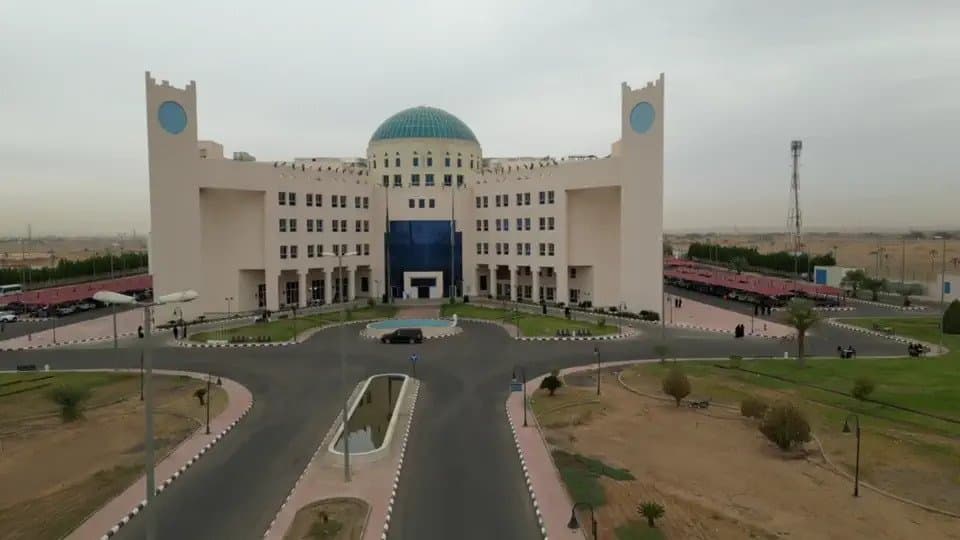
Universities are contributing too. At Fahad Bin Sultan University in Tabuk, the College of Computing has introduced programmes in artificial intelligence, machine learning and data science and requires all undergraduates, whatever their major, to take a general AI course. Its AIMD Lab supports students and researchers in developing algorithms, training machine-learning models, analysing data and testing cybersecurity solutions. The university also operates a quantum computer that its students and researchers can use.
By
Nakoda News Gulf Desk
Business, technology and policy across the UAE, Saudi Arabia and the wider Gulf.
Related coverage
AI China's Star Vision to Build 20-Satellite Space Computing Constellation for Oman
8 hours ago · 2 min read
- AI

Ex-Anthropic Researcher Coxon Says an IPO Roadshow Slide Drove Him to Quit
11 hours ago · 2 min read
- AI

OpenAI Folds Its Robotics Team Into Core Research as GPT-6 Astra Shows Robot Skills
11 hours ago · 2 min read
- AI

Saudi AI Start-Up Shaffra Says Its Digital Employees Saved Clients 800,000 Work Hours
14 hours ago · 2 min read
AI Anthropic Seeks a Natural Gas Chief for Data Centres That Generate Their Own Power
2 days ago · 2 min read