Orbital Matter Says Its Satellite 3D Printed a Rigid Beam in the Vacuum of Space
The German startup says the half-metre boom is a first for a free-flying spacecraft and a step towards building large solar arrays in orbit, such as those future orbital data centres would need.
By Nakoda News Desk
·2 min read
Prefer Nakoda News on Google
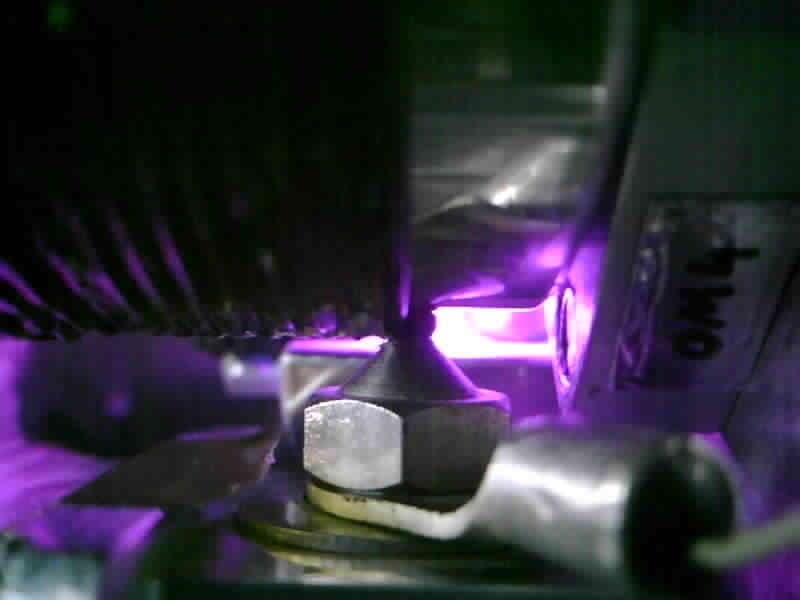
Orbital Matter, a German startup, says its Replicator-2 satellite has 3D printed a rigid beam about half a metre long in orbit. Its executives describe this as the first time a free-flying spacecraft has made a structure in the vacuum of space, TechCrunch reported. Until now, 3D printing in microgravity had only been done inside the pressurised International Space Station.
The small satellite went up on a SpaceX rideshare mission this summer with four of the company's printers on board. Each printer forms a cylindrical beam by extruding coils of custom resin and curing them with ultraviolet light. Two printers were built to deploy a flexible solar array. One of those two failed after an anomaly, but the boom made by the other did deploy the array, the company said.
"Replicator 2 is the first proof that we can simply build the array in space, at whatever size the mission demands," chief executive and co-founder Jakub Stojek told TechCrunch. Chief technology officer Robert Ihnatisin said the team flew several printers so it could "learn in orbit and adapt the software as needed" rather than spend years testing every scenario on the ground.
Why It Matters for Orbital Computing
Today's large space structures, such as solar arrays and telescope mirrors, are folded to fit inside a rocket fairing and unfolded in orbit. That makes it hard to scale the power and heat-radiating surfaces that future spacecraft will need, especially if they are to work as orbital data centres. Printing structures in orbit would get around the fairing limit.
The resin on board limits how long a boom can be, but the company's engineers believe 100-metre booms are possible. TechCrunch noted that the solar arrays on SpaceX's Starlink V2 Mini satellites are 20 metres long. NASA has funded earlier attempts at in-space manufacturing. One was a Redwire mission that printed structural beams in a vacuum chamber in 2023 but never reached orbit.
Orbital Matter was founded in 2022 and has raised a $3 million seed round. It works with the European Space Agency and with Thales Alenia, which collaborated on Replicator-2. Its next demonstration, due to launch in 2028, will test a larger printer on a bigger satellite and aim to deploy a 5kW solar array. The company calls that a stepping stone towards wings of more than 100kW each by 2030. It is also talking to satellite makers about using its printer-assisted deployment system, PADS, to extend solar panels and antennas.
Sources
- TechCrunch · Orbital Matter 3D printed the first rigid beam in the vacuum of space
Produced with AI assistance from the sources above. How we work
By
Nakoda News Desk
Nakoda News covers AI and business. Every story links the sources it draws on; how we work is set out in our editorial standards.
Related coverage
- Research

YC Start-Up Discovered Materials Offers $1 Million for Five Unsolved Materials Science Problems
5 hours ago · 2 min read
Research OpenAI Says GPT-6 Astra Quietly Does Less Work on Safety Research Than on Other Tasks
7 hours ago · 3 min read
Research UAE Rain Enhancement Programme Offers $3 Million for Up to Five Cloud-Seeding Projects
8 hours ago · 2 min read
Research Google Open-Sources Agile Deliberation, a Tool for Building Classifiers for Gray-Area Images
11 hours ago · 2 min read
Research OpenAI Says AI Pipeline Found and Exploited 948 Linux Kernel Privilege-Escalation Flaws
19 hours ago · 3 min read