YC Start-Up Discovered Materials Offers $1 Million for Five Unsolved Materials Science Problems
The San Francisco company, which uses AI to search for new chip materials, says frontier models made little headway on the problems after days of autonomous work.
By Nakoda News Desk
·2 min read
Prefer Nakoda News on Google
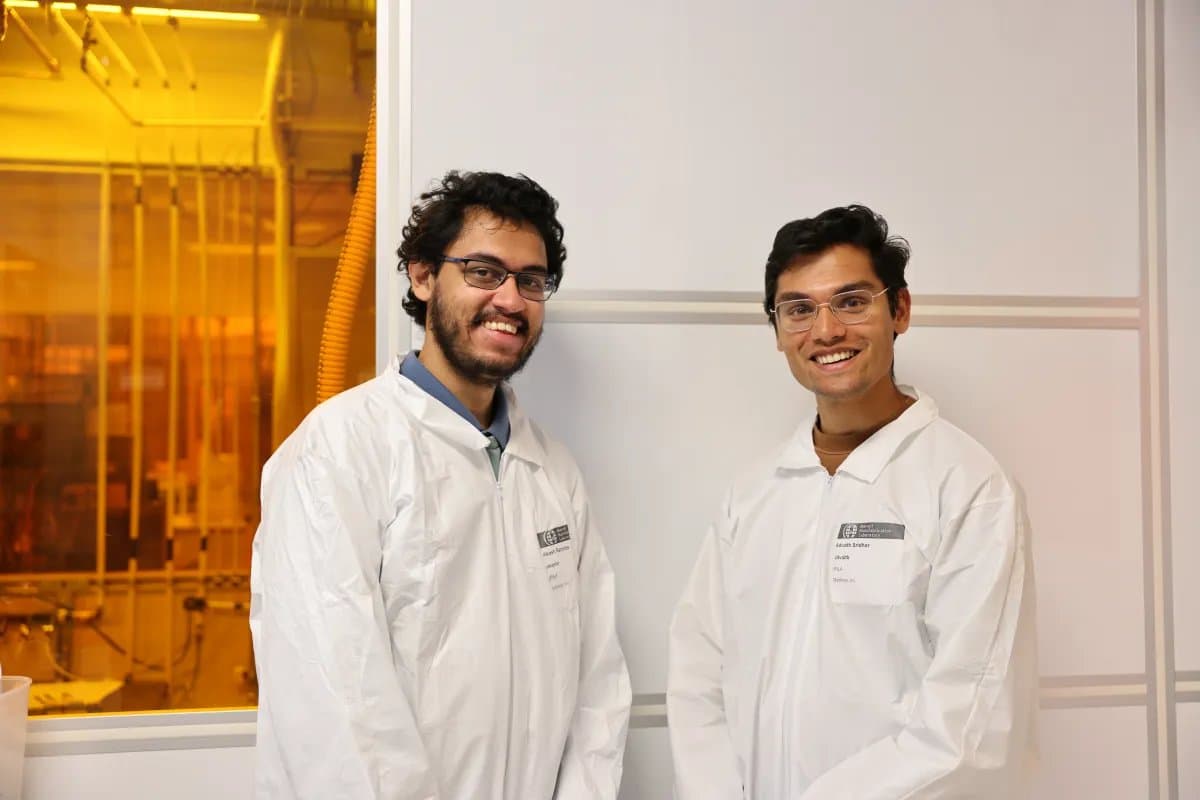
Discovered Materials, a San Francisco start-up that uses AI models to look for new materials for advanced chips, has put up $1 million in prize money for solutions to five open problems in materials science, which it wants to serve as markers of whether AI is making real progress in the field.
The problems were drawn up with an advisory group of academics from universities around the world. Two call for theories: one to explain cuprate superconductivity, in which certain materials lose all electrical resistance at very low temperatures, and one to predict why shining light on materials can change their behaviour, particularly around superconductivity. The other three call for numerical methods: to predict the structure of interfaces between silicon and silicon dioxide, a pairing found in almost every semiconductor; to map a material's grain structure to its thermal properties, which would help in designing better heat-dissipation materials; and to improve density functional theory, a standard technique for modelling the structure of atoms and molecules.
The challenge matters because frontier AI systems have recently cracked a series of hard mathematics problems and made gains in the life sciences, but materials physics has proved harder to test. Unlike mathematics, where an answer can be checked as right or wrong, problems in materials science are difficult to specify precisely, co-founder Advaith Sridhar told TechCrunch. "We came to this discussion [wondering], what are the grand challenges in this field? How do we know AI is making progress?" he said.
Before announcing the prizes, the company set agents built on frontier lab models to work on the problems, giving them internet access and other resources to run on their own for several days per problem. According to TechCrunch, the models made little progress.
Sridhar said the company did not mind who found the answers, whether a professor, another company or one of the big labs. "The reason we're putting out these challenges is because we want them to serve as the goalposts," he said, adding that tracking attempts would show "whether the models are climbing in this domain." He described the approach as setting the verification and the questions first and letting others supply explanations.
Felipe Jornada, a Stanford professor who helped develop the problems, said in a statement that there are phenomena across materials science "that we observe but cannot explain," and that answers "would directly shape how we build electronics, store energy, and manufacture the materials of the future."
Discovered Materials went through Y Combinator's spring 2026 batch and was founded by Sridhar and Akash Ramdas, both alumni of IIT Madras. In August it announced a $9 million seed round led by Lightspeed India Partners, with Y Combinator and Peak XV Partners taking part, according to reports at the time. The company works on research projects with large chipmakers while funding its own science, and its first focus is managing heat from high-performance AI chips. It has also released Material Discovery Bench, a benchmark for agentic materials discovery built around semiconductor problems.
When it raised its seed round, Sridhar said he hoped the company would produce a useful material within a year. He now says that timeline has shortened. "I'm more confident now that we will be able to find these industrially useful materials in a timeline shorter than a year," he said.
Sources
- TechCrunch · A YC startup is putting $1M behind five unsolved materials science problems for AI
- Pulse 2.0 · Discovered Materials Raises $9 Million Seed Funding To Accelerate AI-Powered Semiconductor Materials Discovery
Produced with AI assistance from the sources above. How we work
By
Nakoda News Desk
Nakoda News covers AI and business. Every story links the sources it draws on; how we work is set out in our editorial standards.
Related coverage
Research UAE Rain Enhancement Programme Offers $3 Million for Up to Five Cloud-Seeding Projects
6 hours ago · 2 min read
Research Google Open-Sources Agile Deliberation, a Tool for Building Classifiers for Gray-Area Images
9 hours ago · 2 min read
Research OpenAI Says AI Pipeline Found and Exploited 948 Linux Kernel Privilege-Escalation Flaws
17 hours ago · 3 min read
Research Anthropic Says Claude Helped Solve First 3D Structure of a Bacterial-Type Vault Particle
19 hours ago · 3 min read
- Research

CloudOpsBench Finds Top AI Agents Fail Many Real Cloud Operations Tasks
23 hours ago · 2 min read