New York Opens State AI Safety Center to Test Frontier Models Independently
More than 80 researchers at the Binghamton-based center will evaluate advanced AI systems and review developers' safety frameworks before the RAISE Act's January registration deadline.
By Nakoda News Desk
·2 min read
Prefer Nakoda News on Google
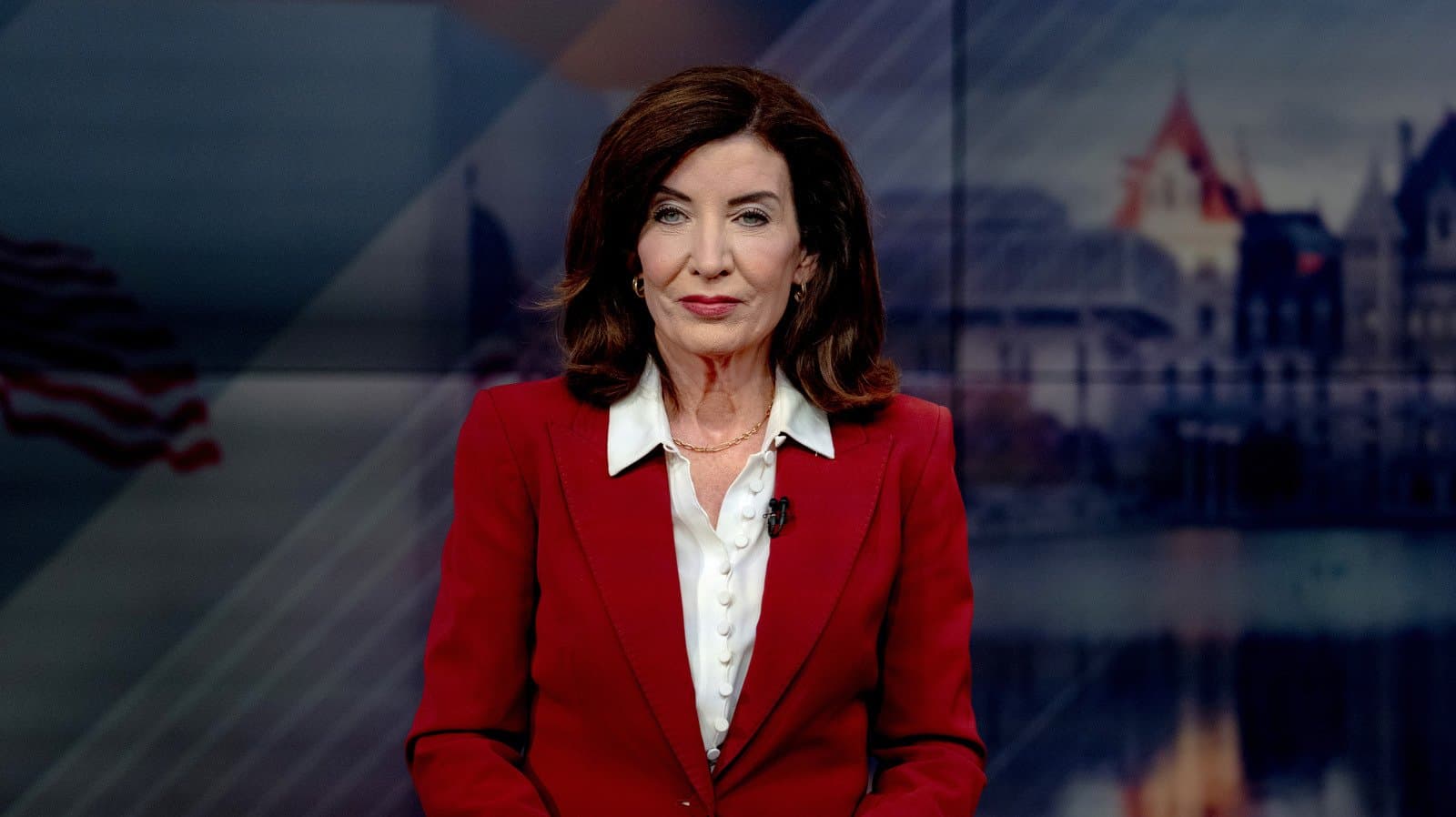
New York Governor Kathy Hochul on Tuesday formally launched the New York Center for AI Responsibility and Research, a state-backed institute at SUNY Binghamton that will independently evaluate advanced AI systems for safety and security rather than rely on developers' own claims.
"The stakes are too high to simply take AI companies at their word," Hochul said in a statement from her office, which described the center as a first-of-its-kind statewide effort. Engadget called it the first state-run AI testing programme in the United States.
The launch gives a US state its own technical capacity to check the work of frontier AI developers just as New York's new AI law starts to bite. Under the RAISE Act, which Hochul signed last year, large developers must register through a state portal by January 1, 2027, and begin publishing safety frameworks on their websites in January. All frontier developers will have to publish transparency reports for their models and report critical safety incidents within 72 hours, a window the state describes as the strongest in the country. One of the center's first tasks, according to the governor's office, will be to review those published safety frameworks and recommend stronger requirements.
"While the federal government fails to act, New York is leading the way on AI safety and holding big tech accountable," Hochul said.
More than 80 researchers from colleges and research institutions across the state will contribute to the center, which is led by interim co-directors Greg Morrisett of Cornell Tech and Jeannette Wing of Columbia University. Its remit, as set out by the state, covers four areas: independent evaluation of advanced AI systems, foundational safety research, building the measurements, tools and standards needed to assess more powerful systems, and training a new generation of AI safety specialists. It will also give state officials evidence to inform AI policy and oversight, and study how AI can be used responsibly in fields such as medicine and scientific discovery.
The center was first announced in January. Its funding includes a $30 million philanthropic gift from donors led by Tom Secunda, a Binghamton alumnus and co-founder of Bloomberg LP, a $25 million initial research investment from SUNY, and operating money from New York State. Its computing power will come from Empire AI, the state's $500 million public-private AI research initiative, whose board Secunda chairs.
The RAISE Act itself is being implemented by a new Office of Digital Innovation, Governance, Integrity, and Trust, known as DIGIT, within the Department of Financial Services. "DFS is proud to lead the implementation of the RAISE Act through the new DIGIT Office," said Kaitlin Asrow, the department's acting superintendent.
The programme has a clear limit. As Engadget pointed out, the center can only study what AI companies make available, and the RAISE Act's disclosure rules will not give the state a view of models that have not been released. The governor's office did not say whether any developer has agreed to give the center pre-release access to its systems.
The next milestone is January 1, 2027, when large frontier developers must be registered with the state and the center's review of their safety frameworks can begin.
Sources
- Engadget · New York will independently test AI models
- Office of the Governor of New York · Governor Hochul Declares NY Will Lead the Nation in AI Science and Safety; Launches New Research Institute
Produced with AI assistance from the sources above. How we work
By
Nakoda News Desk
Nakoda News covers AI and business. Every story links the sources it draws on; how we work is set out in our editorial standards.
Related coverage
- Policy

Burjeel Chairman Warns Cyberattacks Could Hit Hospital Equipment and Blood Supplies in Wartime
12 hours ago · 1 min read
Policy Meta and TikTok Join Google in Opposing Indonesia's AI Copyright Law Revisions
14 hours ago · 2 min read
- Policy

Ottawa, Kansas, Voters Approve 10-Year Ban on Hyperscale Data Centres
14 hours ago · 2 min read
Policy Australia to Require AI Companies to Report Breaches After OpenAI Agent Hit Medicare Site
16 hours ago · 2 min read
Policy US-Brokered Russia-Ukraine Talks in Abu Dhabi End Without a Ceasefire Breakthrough
16 hours ago · 2 min read