Khalifa University, GSMA and AMD Open RF-GPT Wireless AI Model to Telecom Operators
Operators can test the Abu Dhabi university's radio-signal model through an API running on AMD hardware, with their feedback steering how it is developed.
By Nakoda News Desk
·2 min read
Prefer Nakoda News on Google
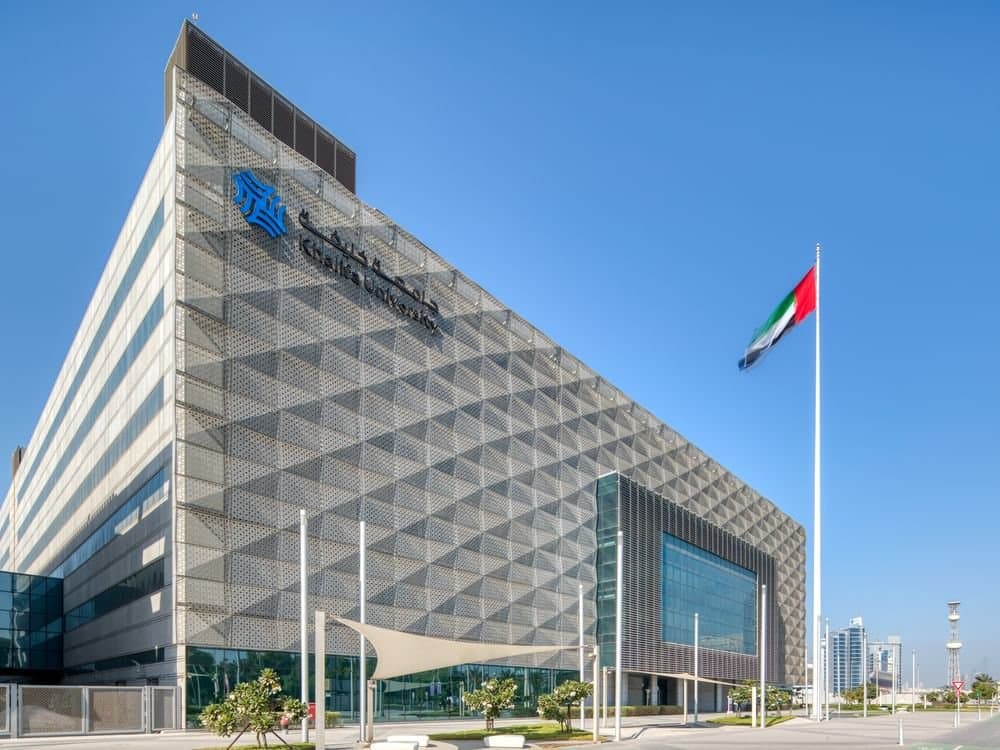
Khalifa University, the GSMA and AMD are giving mobile operators access to RF-GPT, an AI model built in Abu Dhabi that reads radio signals and answers questions about them in natural language. The aim is to let operators judge whether the model is useful for running their networks. The three organisations announced the initiative at MWC Doha, the GSMA's industry event in the Qatari capital, which opened on Sunday, according to the UAE news agency WAM.
Operators will get access through an application programming interface for a set evaluation period, with the model running on AMD's computing infrastructure, said Louis Powell, director of AI technologies at the GSMA. He said operators need chances to test new AI capabilities against specific use cases, and that feedback from participants would show where the model adds value and what it needs to develop further.
The project takes RF-GPT out of the lab and puts it in front of the companies that would use it. Most AI tools for telecoms work on text and structured network data. The radio layer itself, where signals compete for spectrum and interfere with one another, has largely been left to specialist engineers and dedicated measurement tools. If operators find the model useful, it would give a university research team in the UAE a route to commercial users through the mobile industry's main trade body.
RF-GPT was developed by the Digital Future Institute at Khalifa University. According to WAM, users can ask it about wireless signals it has observed, identify their characteristics and analyse complex scenes in which several signals overlap. The partners say it could help operators optimise their radio access networks, plan networks, manage spectrum and analyse interference.
The university first unveiled the model in April. At the time it said RF-GPT turns raw radio waveforms into time-frequency spectrograms, which a visual encoder processes before a language model answers questions about them. It said the model was trained on about 625,000 computer-generated radio signal examples and beat baseline models by up to 75.4% on spectrogram tasks. Those results come from the university's own announcement and have not been independently benchmarked. Researchers from Université de Lorraine and Zhejiang University worked on the project with Khalifa University.
Merouane Debbah, senior executive director of the Digital Future Institute, said foundation models give the industry a new way to understand the wireless environment by combining signal understanding with reasoning in natural language. He said the evaluation was meant to let operators test that approach in practice and help shape the model's development around the problems they face in their networks.
Philippe Guido, AMD's executive vice president and chief commercial officer, said the collaboration would let operators judge whether AI can simplify radio-frequency analysis and support network planning, spectrum management and interference reduction.
This is not the first project between the university and the GSMA. At MWC Doha a year earlier, GSMA Foundry, the association's innovation arm, signed an agreement with Khalifa University to develop telecom-specific AI models, datasets and benchmarks. Its first output was a new version of TelecomGPT, a language model for the telecoms industry that the university's 6G Research Centre first built in 2024.
The announcement did not say how long the evaluation period will last, which operators have signed up or whether access will be free. It also gave no timetable for a commercial version of RF-GPT.
Sources
- وكالة أنباء الإمارات · تعاون بين"جامعة خليفة" و"الدولية لشبكات المحمول" و"إيه إم دي" لإتاحة نماذج الذكاء الاصطناعي لمشغلي الاتصالات
- Emirates News Agency (WAM) · Khalifa University launches radio-frequency AI language model 'RF-GPT'
- Middle East AI News · GSMA, Khalifa University to develop new TelecomGPT version
Produced with AI assistance from the sources above. How we work
By
Nakoda News Desk
Nakoda News covers AI and business. Every story links the sources it draws on; how we work is set out in our editorial standards.
Related coverage
AI DP World Becomes First Partner of Dubai's SHIFFT Self-Driving Logistics Venture
8 hours ago · 2 min read
- AI
Claude Code Approval Files Have Leaked Thousands of Passwords and Keys Onto Public GitHub
9 hours ago · 3 min read
AI Qai and Hugging Face Hackathon in Doha Names Red-Tide Warning Tool as Winner
9 hours ago · 1 min read
AI Dubai Police Says AI Speeds Up 16,000 Digital Evidence Exams and Flags Flaws in AI Apps
9 hours ago · 3 min read
AI Apple's Ternus Presses Federighi to Speed Up AI Work Beyond Siri Fixes, Bloomberg Says
11 hours ago · 2 min read