Iraq Trucks Crude to Syria's Baniyas Port as Hormuz Disruption Revives a Desert Route
Qatar's UCC Holding is moving 120,000 to 150,000 barrels a day of heavy crude by tanker truck, a small but strategic outlet while Gulf shipping remains disrupted.
By Nakoda News Desk
·2 min read
Prefer Nakoda News on Google
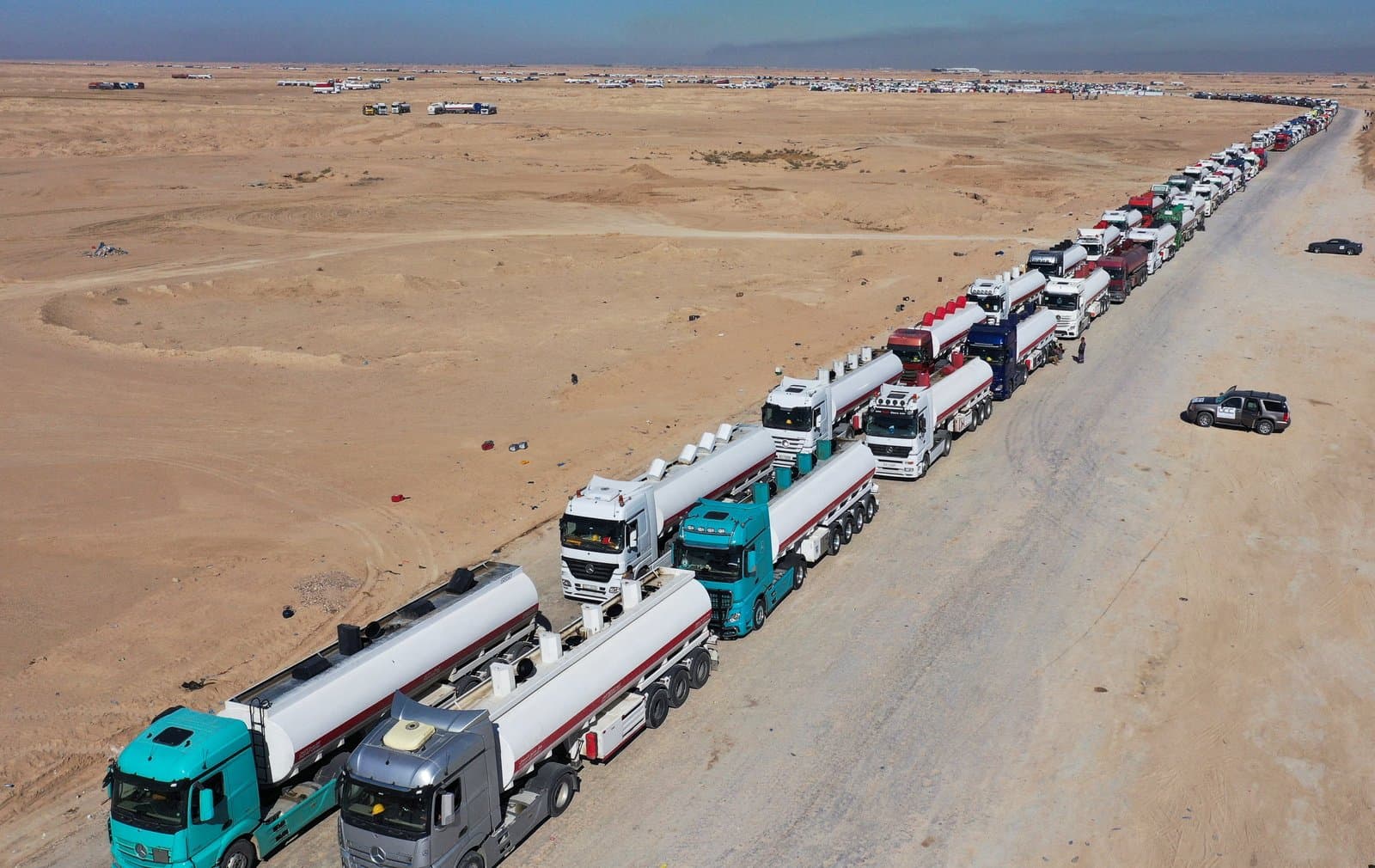
Iraq has started exporting crude oil by tanker truck across the desert to the Syrian port of Baniyas, reviving an overland route that had gone largely unused for decades. Its usual outlet through the Strait of Hormuz remains disrupted by the Iran war.
Qatari energy group UCC Holding has been trucking Iraqi crude to Baniyas since last month under a contract with SOMO, the state oil marketer, Bassem Abdul Karim, director general of the state-run Basra Oil Company, told Reuters. He said UCC began moving 120,000 to 150,000 barrels per day, with the volume depending on how many trucks were available. UCC and SOMO did not respond to Reuters' requests for comment.
The volumes are small next to Iraq's output, but the route gives OPEC's second-largest producer an export path that does not depend on Hormuz. Iraq produced nearly 4.5 million barrels per day in October, about half a million more than the month before, according to secondary sources cited by OPEC in its latest monthly report. Most of its crude still leaves from Gulf terminals.
The crude comes from Iraq's southern oilfields and is loaded at the Tuba storage facility near Basra. Luay Jawad, the facility's manager, said UCC had loaded about 1.6 million barrels since the deal took effect on October 26. A driver, Ishaq Mohammed, said the round trip from Tuba to Baniyas and back takes up to five days.
A document reviewed by Reuters showed that UCC plans to load between 5 million and 14 million barrels of heavy crude over three months starting October 14, at a discount of $38 per barrel. Under the deal UCC is entitled to about $12 per barrel to cover trucking and other transport costs through Syria.
A person familiar with the deal told Reuters that UCC already runs a fleet of 6,000 trucks, is expanding it to 10,000 for the route and has around 10,000 drivers. About 150,000 barrels are unloaded each day, the person said. From Baniyas the oil is shipped to Mediterranean refineries in Greece, Italy and Turkiye, among other destinations.
The economics are poor compared with seaborne exports from Basra. The steep discount and the trucking fee together take a large share of each barrel's value. Two people close to the matter told Reuters that the route has become attractive again despite the higher costs, partly because years of conflict in Syria have ended and the corridor is usable again.
The route also has hard limits. The person familiar with the deal said volumes are unlikely to rise above current levels in the near term because of bottlenecks in truck supply and other constraints. That leaves the Syrian corridor as a hedge rather than a replacement for Iraq's Gulf terminals.
The first contract window runs for three months from mid-October. Whether SOMO extends the arrangement beyond mid-January will show how long Baghdad expects the disruption around Hormuz to last.
Sources
- Arab News · Iraq turns to trucks to export oil in overland Syrian route revival
- Reuters · EXCLUSIVE: Iraq turns to trucks to export oil in overland Syrian route revival
- Al Arabiya English · Iraq turns to trucks to export oil in overland Syrian route revival
Produced with AI assistance from the sources above. How we work
By
Nakoda News Desk
Nakoda News covers AI and business. Every story links the sources it draws on; how we work is set out in our editorial standards.
Related coverage
- Business

Commonwealth Fusion Chief Says the UAE Is Well Placed to Adopt Fusion Power
11 hours ago · 2 min read
Business ADNOC Calls Inpex Executive's January Date for Its Second Crude Pipeline Inaccurate
12 hours ago · 2 min read
- Business

Ooredoo's Syntys Breaks Ground on a 20MW AI-Ready Data Centre in Doha
12 hours ago · 2 min read
Business PureHealth to Hire 250 Emirati Graduates Under Nafis Healthcare Programme
16 hours ago · 1 min read
Business Damac's Sajwani Says Anthropic Stake Earned Him as Much as 30 Years in Business
17 hours ago · 2 min read