Indian AI Start-Ups Check Land Titles and Spot Potholes but Cannot Get Enough GPUs
Indian AI start-ups raised over $1 billion in nine months, up 265%, but founders say GPU shortages and customers who cannot cover the cost of building keep many stuck at pilot stage.
·3 min read
Prefer Nakoda News on Google
Indian start-ups are using AI to verify land titles, send pothole data to city officials and summarise lab reports in Mumbai's public hospitals. Their founders say a shortage of GPUs, and customers who will not pay what it costs to build the products, are keeping many of them at the pilot stage, the BBC reported. Details were first published by BBC News.
The money is there. Indian AI start-ups raised more than $1 billion in the first nine months of this year, up 265% from a year earlier, according to the start-up data platform Inc42, while fundraising across the wider start-up sector has been subdued. Unlike the US and China, which dominate frontier language models, India's AI activity sits downstream, in data centre infrastructure and consumer applications rather than research.
Landeed was built by Sanjay Mandava after he flew from Chicago to Chennai in 2020 to resolve a family land dispute and spent months going between government offices to collect the records proving the property was his family's. India follows presumptive titling, under which the buyer rather than the state has to establish ownership, and a sale deed only records a transaction. Proof can require building certificates, property tax receipts and survey maps. Property disputes make up the bulk of India's civil litigation, and about 80% of household wealth is held in real estate.
Landeed works across 24 states, drawing on data from state land revenue departments, registration offices, survey records and municipal databases. It links registered properties to their survey numbers and ownership records, and an AI layer reads titles and flags inconsistencies in minutes, a check that takes lawyers and brokers several days. Its repository of 1.8 billion documents is the largest collection of title data in the country, and millions of individual and business customers use the app.
Other founders are working with city governments. Gaurav Sen, a Bengaluru YouTube teacher, built an app that detects potholes using a dash-cam, satellite navigation and an AI vision model, then sends the data to the officials responsible for repairs. At least half a dozen similar products are on offer.
In Mumbai, Fractal Analytics, one of the few listed Indian AI companies, has put a tool called Vaidya into hospitals run by the city authority. It gives patients simplified summaries of lab reports in several languages and gives doctors patients' medical histories and medication details before consultations. Administrators get a public health dashboard built from anonymised lab data that shows disease trends.
Turning pilots into businesses is harder. "The cost of building in India is sometimes much higher than what Indian customers are willing to pay," said Fractal co-founder Srikanth Velamakanni. He said the computing power needed to run a model is the same whether it is built in India or the US, but American customers can pay far more.
Compute is the tightest constraint. "I am starved for GPUs," Mandava said, adding that he has "a hellish time" acquiring them. The government's AI mission has promised start-ups 38,000 GPUs, but demand far exceeds that supply. Cumbersome regulation and bureaucracy are other obstacles, along with a lack of experienced talent and the struggle to turn pilots into recurring government contracts.
Sen was frank about how far his product has to go. "Someone like a Google will probably laugh if I tell them of my pilot," he said, adding that it would have to become much more sophisticated to be hard to copy. Experts warn that unless these basic problems are addressed, many Indian AI companies risk building shallow products that the next generation of founders will quickly make redundant.
By
Nakoda News Startups Desk
Founders, funding rounds, investors and the companies they back.
Related coverage
AI OpenAI Signs Four Outside Safety Evaluators, Paying Two and Keeping the Right to Redact
11 hours ago · 2 min read
- AI

Israeli Military Uploaded 3.5 Million Photos to Amazon Cloud for Facial Recognition, Guardian Reports
12 hours ago · 2 min read
- AI
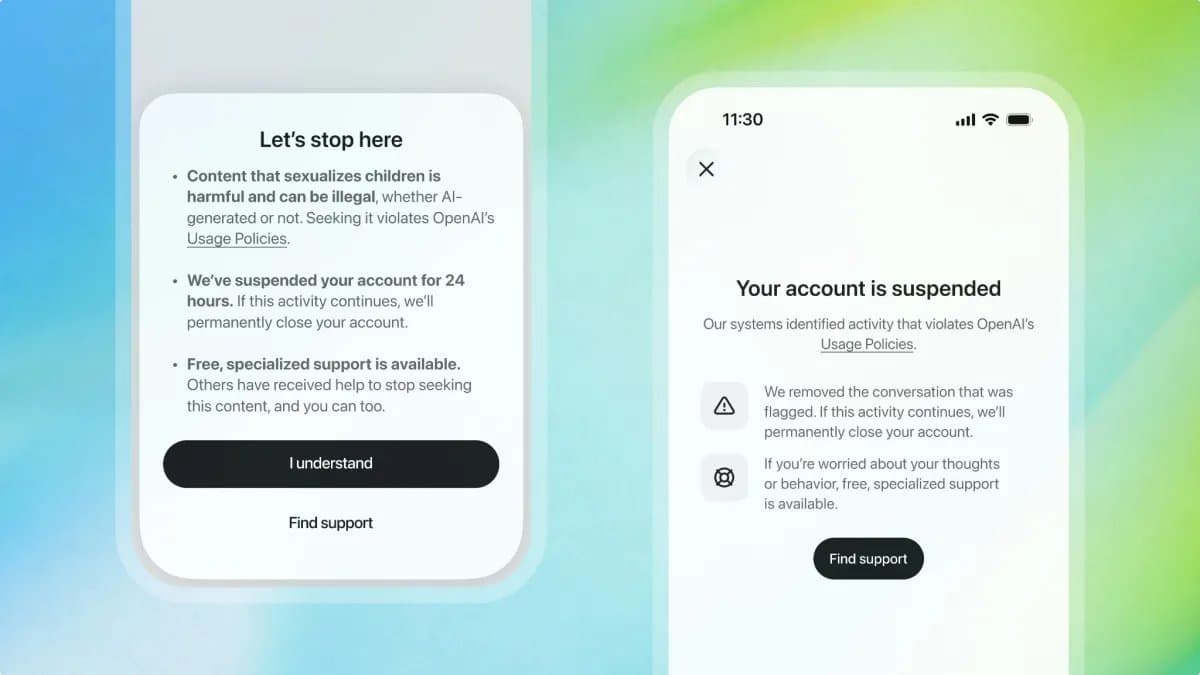
OpenAI Releases Free CSAM Classifier Built With NCMEC, Adds 24-Hour ChatGPT Suspensions
12 hours ago · 2 min read
AI Dubai Police Shows AI Security Map, One-Button Haddad Boat at World Police Summit
13 hours ago · 2 min read
- AI

Sharjah Targets 30 Participants for Three-Day Agentic AI Government Challenge
14 hours ago · 1 min read