Each GCC State Will Fund Its Own Section of Gulf Railway as Cost Estimates Are Revised
Bahrain's transport minister said no single public-private model or foreign financing partner has been agreed, and that the announced 50% progress figure is an average across members.
By Nakoda News Desk
·2 min read
Prefer Nakoda News on Google
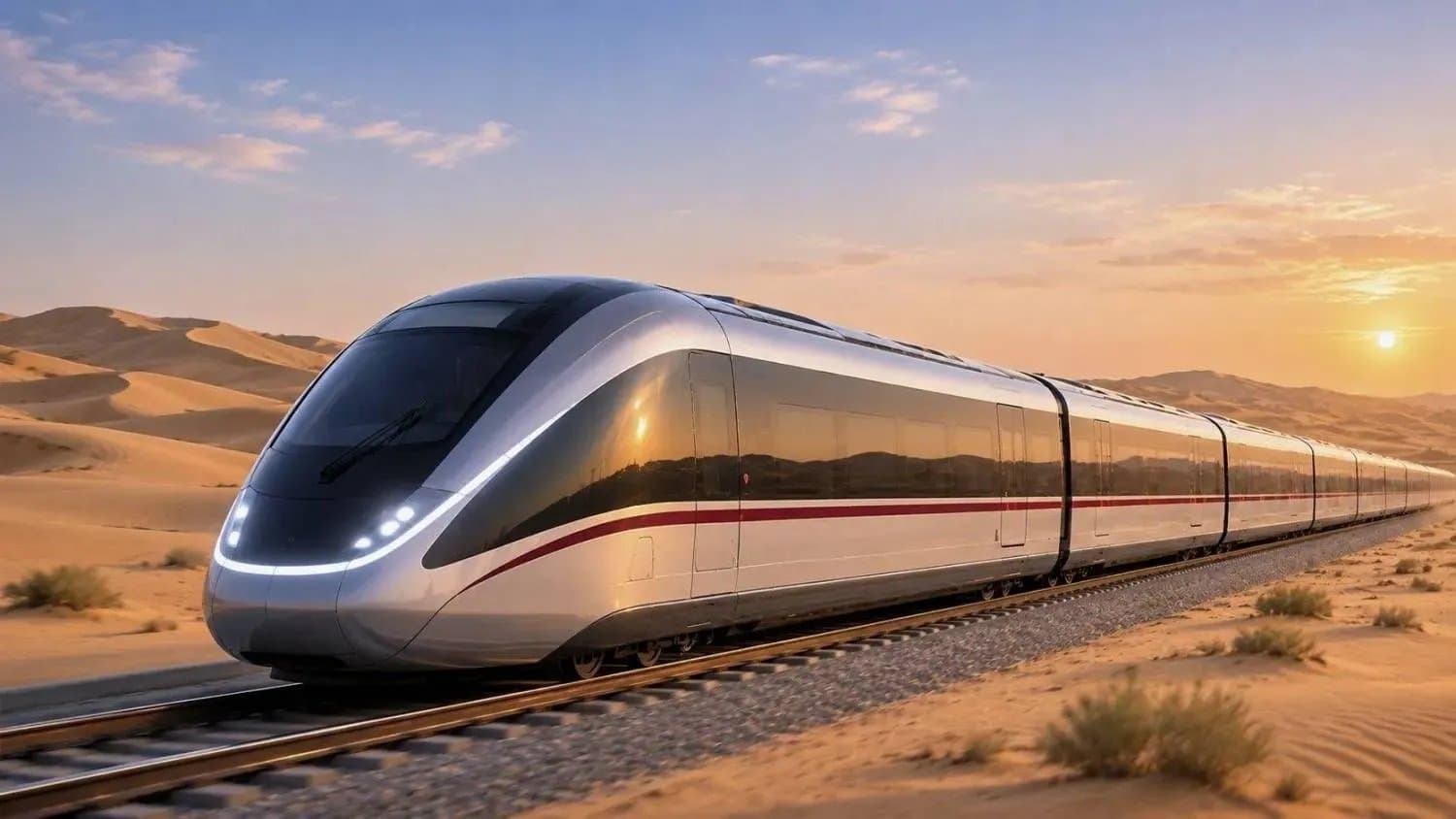
Each Gulf Cooperation Council state will pay for and build the stretch of the planned Gulf railway that runs through its own territory, Bahrain's transport minister said. He added that the project's cost estimates are being revised and that no updated total has been set.
Sheikh Abdulla bin Ahmed Al Khalifa, Bahrain's Minister of Transportation and Telecommunications, described the financing arrangements in an interview with Asharq Al-Awsat after the six member states signed the project's general agreement in Bahrain on Sunday. The costs, fees and expenses of the components shared between neighbouring countries will be decided jointly, he said. The agreement sets out a common framework for building and running the network and defines each state's obligations and how they coordinate.
The details matter for contractors, lenders and investors looking for a role in one of the region's largest infrastructure schemes. The minister said there is no single public-private partnership model approved for the whole network, and no existing agreements with specific international partners to finance or build it. Private companies remain one option for financing, building or operating some components, depending on the results of economic and financial studies. Global firms could also bring design, engineering, technology and operating-systems expertise as each phase requires, he said.
He also qualified two figures that have shaped public expectations. The 50 percent completion rate that has been announced is the average progress across member states, he said, not a sign that half of the construction work on the whole network is done. Cost estimates are under review because of economic shifts, higher prices for materials and services, rising construction costs and inflation. He did not give a revised total.
The network covers about 2,117 kilometres, running from Kuwait through Saudi Arabia, Bahrain, Qatar and the UAE to Oman. Full operation is targeted for December 2030. By that date it is meant to carry 6 million passengers and 200 million tons of freight a year, rising to more than 8 million passengers and 271 million tons by 2045. Links between neighbouring countries can open as soon as their sections are finished, without waiting for the rest of the network, the minister said.
He said it was too early to estimate the railway's contribution to gross domestic product or the time and cost savings it would bring, because returns depend on routes, the type of cargo, and where goods start and end their journeys. He expects benefits beyond moving passengers and freight, including more efficient supply chains, more trade among GCC members, and links between industrial centres, economic zones and logistics hubs.
Shipping across the Gulf has been disrupted by the conflict with Iran. Asked about this, the minister said the railway is not intended to replace maritime transport. He described it as a complementary route that adds transport options and makes supply chains more resilient. Links to wider international logistics corridors remain possible but depend on further studies and coordination with other countries, he said.
For Bahrain, the critical piece is the King Hamad Bridge to Saudi Arabia. It will carry road lanes and railway lines and connect Bahrain's planned international passenger station to the Saudi rail network. The minister said the privatisation of the King Fahd Causeway Authority is under way, along with the studies and procedures needed to start building the new bridge. Completing that link is a basic requirement for running trains between Bahrain and Saudi Arabia by the December 2030 target, he said.
Sources
- Arab News · Bahraini transport minister to Asharq Al-Awsat: Each country to finance its share of Gulf railway project
Produced with AI assistance from the sources above. How we work
By
Nakoda News Desk
Nakoda News covers AI and business. Every story links the sources it draws on; how we work is set out in our editorial standards.
Related coverage
Policy Elvis Presley and Eminem Rights Holders Sue Suno Over AI Training and Voice Imitation
3 hours ago · 3 min read
- Policy
Trump Says Huang Told Him He Had 'No Idea' Woman Was a Spy, Stays Vague on When He Knew
3 hours ago · 2 min read
Policy Huang Spy Allegations Boost Chip Export Bills That Nvidia Opposes in Defence Package
4 hours ago · 2 min read
- Policy
Trump Sees 'Positive Momentum' on Iran Deal After Talks With Qatar's Prime Minister
5 hours ago · 1 min read
- Policy
Macron Says AI Should Be Banned Wherever It Endangers Children's Mental Health
5 hours ago · 2 min read