Energy Companies at ADIPEC Brace for New Iran Escalation as the Cost of Resilience Rises
Executives told The National they have stockpiled supplies, rerouted cargo and cut staff to keep operating, but say paying for backup options is getting expensive.
By Nakoda News Desk
·3 min read
Prefer Nakoda News on Google
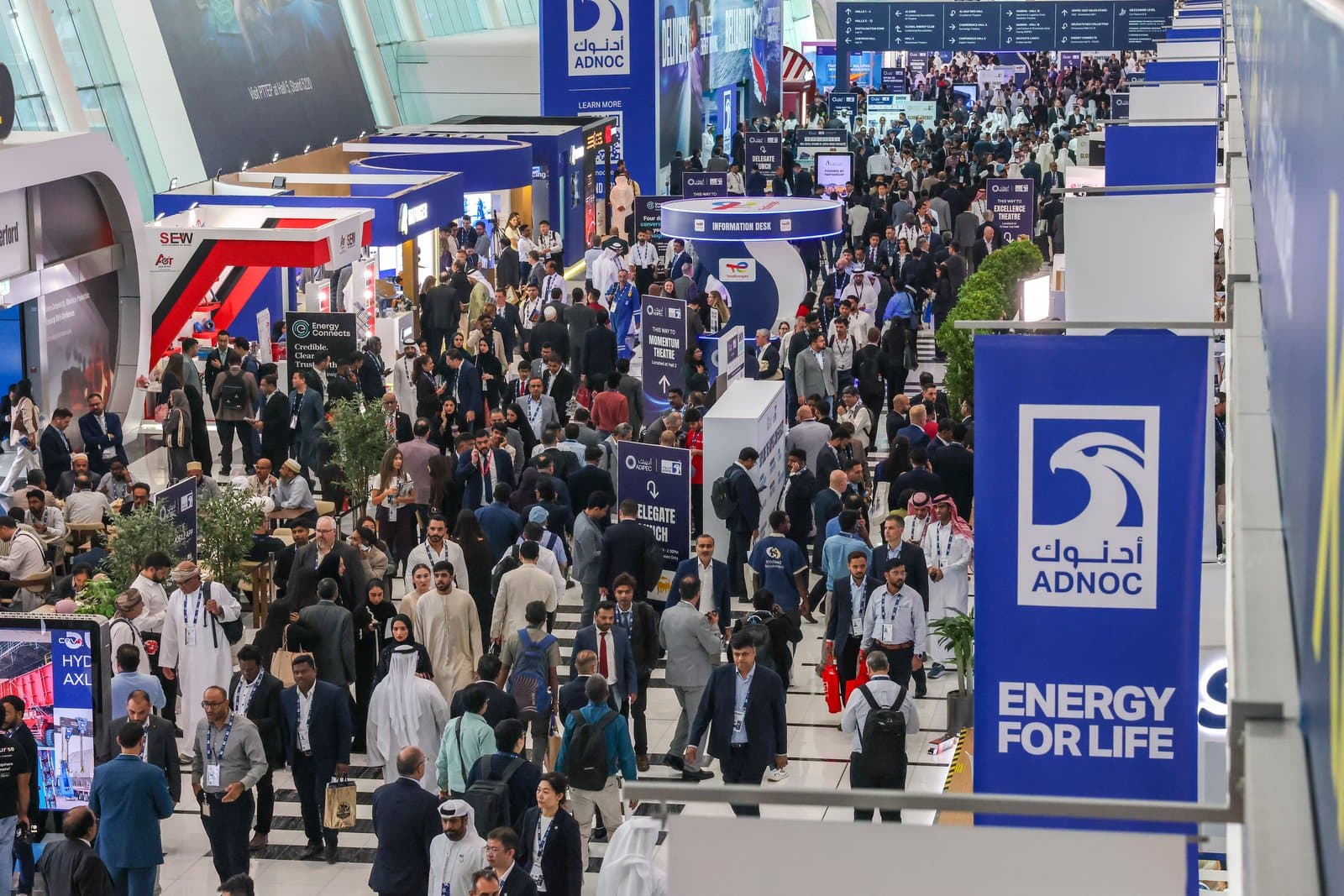
Energy companies working in the Middle East are preparing for a possible new escalation in the Iran war, and executives at ADIPEC in Abu Dhabi say staying operational through the conflict is becoming steadily more expensive, The National reported on Tuesday.
The comments followed a US strike on Iran's Qeshm Island on Monday night. According to the report, the strike targeted a missile launcher after an American drone was brought down near the Strait of Hormuz. It came as Americans voted in midterm elections that could shape Washington's next steps in the conflict.
Executives told the newspaper they are better prepared than they were at the start of the war. After months of disrupted supply chains, companies have built up stocks of critical materials, moved freight onto different routes and reduced headcount. The open question, several said, is how long they can keep going if fighting resumes.
Stockpiles and Local Staff
Sharif Foda, chief executive of energy services company NESR, said his firm kept working throughout the conflict by relying on employees based in the countries where it operates and holding enough supplies to ride out long logistics delays. "We are not going to evacuate. We are staying," he said.
Foda said NESR runs contingency plans on 30, 60 and 90-day horizons, storing spare parts, chemicals and other essentials inside its countries of operation. He described a local workforce as "a must, not as a nice to have."
Others have had to cut back. Youssou Jules Diop, executive director of Senegalese engineering and procurement company Helix SEN, said the conflict had already forced it to reduce its management team by 30 per cent. The company keeps its treasury, board and main decision-making in the UAE, which he described as an important hub for African businesses.
Shipping remains the main pressure point. Bruno Placha, a senior quality and regulatory professional, said work dried up when vessels stopped coming into the region. Companies have since used alternative ports and moved more materials by road, he said, while reducing staff and shifting towards longer-term projects that depend less on regular sailings.
The report cited the International Maritime Organisation as saying on Monday that at least 125 vessels have been attacked in and around the Strait of Hormuz since the war began, including 34 in October, the highest monthly total so far.
The Price of Options
George Alexopoulos, deputy chief executive of Greece's HELLENiQ Energy Holdings, said his company replaced disrupted crude shipments from Basra in Iraq with supplies from the North Sea, the US and West Africa. "Optionality has a cost and especially at times of crisis," he said, pointing to tanker charter rates on Gulf-to-China routes reaching $1 million a day.
Alexopoulos said that even if hostilities ended immediately, damaged infrastructure, refinery disruption and shipping shortages would take several weeks to start easing, and a full recovery could take years. His advice to other companies was to keep paying what he called the "option premium" to cope with this crisis and the ones after it.
Robin Mills, chief executive of Qamar Energy, said the industry had made real progress in rerouting logistics, expanding port capacity and using road and rail, but that this does not amount to long-term resilience. "There's a limit to what can be done in the space of eight months," he said, noting that large infrastructure projects take years to build. He added that demand for maintenance, repairs, security and infrastructure work remains strong.
The remarks echo calls made at ADIPEC on Monday by Dr Sultan Al Jaber, Minister of Industry and Advanced Technology and ADNOC managing director and group chief executive, for stronger energy infrastructure and more diverse supply routes as shipping costs climb.
For Gulf energy companies, contractors and investors, the message from Abu Dhabi is that the war's cost no longer shows up only in disruption. It now sits in a permanent layer of extra inventory, duplicate supply arrangements and higher freight bills, and executives expect to carry that for some time.
Sources
- The National · Energy companies brace for new Iran tension as cost of resilience mounts
Produced with AI assistance from the sources above. How we work
By
Nakoda News Desk
Nakoda News covers AI and business. Every story links the sources it draws on; how we work is set out in our editorial standards.
Related coverage
- Business

Condor Launches Daily Frankfurt to Abu Dhabi Flights Under Etihad Codeshare
3 hours ago · 1 min read
Business Construction Robotics Start-Ups Raise $1.6 Billion in 2026, Triple the Previous Record
4 hours ago · 3 min read
- Business

Dubai Access Club Offers Repeat Tourists a Five-Year Visa for Dh4,032.50
6 hours ago · 2 min read
Business UAE Central Bank Gives Interpolitan Money In-Principle Approval for Stored Value Licence
8 hours ago · 2 min read
Business Dubai Land Department Launches Rent Now, Pay Later Instalments With Emirates NBD
9 hours ago · 2 min read