Emirati Genome Programme Reaches One Million Participants, 900,000 Reports Due in December
Reports covering 214 inherited conditions and health traits go out through TAMM, and nationwide newborn genome screening starts in June 2027 under a 2026-2031 plan approved November 10.
·3 min read
Prefer Nakoda News on Google
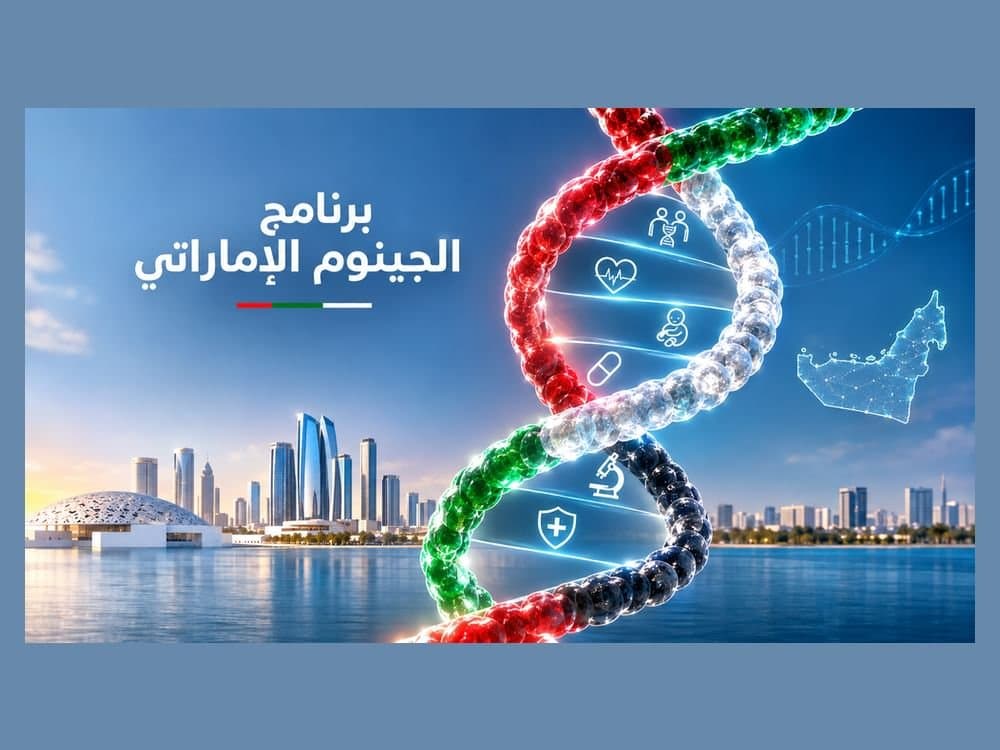
The Emirati Genome Programme has enrolled one million participants and will start making personal genomic reports available to about 900,000 of them from December 2026, state news agency WAM reported on Saturday. The reports go to participants whose clinical data has been fully reviewed and will be delivered through the TAMM government services platform. Details were first published by wam.ae.
They are the first step in a national plan for 2026 to 2031, approved by the UAE Genome Council on November 10, to extend the programme to every Emirati citizen. The plan moves the programme from collecting and analysing samples to using the results in clinics and research. Besides the personal reports, it makes genetic screening of newborns universal, develops a trusted research environment, sets national programmes for prevention, diagnosis and treatment, updates the regulatory and legislative framework, and trains national staff while recruiting experts from abroad.
Each report covers 214 inherited genomic conditions and health traits, with guidance to help participants understand the results. The findings are not a standalone diagnosis. They are meant to help doctors direct preventive checks and follow-up, and to support requests for confirmatory tests where needed.
Newborn screening will apply across the country from June 2027, with the aim of catching treatable genetic disorders early enough to intervene in a child's first weeks. It builds on an Abu Dhabi initiative launched in 2025 with M42 that uses whole-genome analysis to look for more than 815 treatable genetic conditions in children. WAM described it as one of the most comprehensive newborn genetic screening programmes in the world and said it made a difference to more than 100 children over the past year through early detection and timely treatment. Samples are taken with a cheek swab after a parent or legal guardian consents, and access to the child's personal account passes to the participant at 18.
To help people read their results, the programme offers a chat feature built on a sovereign, pre-trained version of a GPT model that complies with the standards of the Department of Health - Abu Dhabi. Core42 hosts it through its Compass API.
The model does not analyse genomic data directly. It interprets a participant's question, identifies the traits listed in that person's report and matches them against an approved knowledge base to write an answer. Participants' data, reports and conversations are not used to train or improve the model.
The data is handled under UAE laws on personal and health data and may be used only for health and research purposes. The programme runs no tests on ancestry, family lineage or ethnic background. M42 carries out the programme as technical partner, and the data is kept in a Trusted Research Environment within the national sovereign cloud, in a technical environment isolated from external networks.
Accredited research bodies and companies can analyse de-identified data there, and results can leave the environment only after review and verification. The Department of Health - Abu Dhabi launched the platform on October 21, 2026, with about 950,000 whole-genome sequences, more than two billion clinical records and insurance claims, and 14.5 million unified clinical records. It lets accredited researchers study links between genetic traits and health conditions, and there are plans to add data from the Abu Dhabi Biobank, medical imaging and wearable devices to support AI-driven discovery and research collaboration in the UAE and abroad.
Precision medicine uses include assessing inherited risk of some cancers, identifying groups that would benefit from early screening, and pharmacogenomics, which helps doctors choose drugs and doses based on a patient's genetic makeup.
Turning the results into everyday practice will require the health system to develop referral pathways, provide confirmatory tests, and prepare laboratories and medical staff, including training family doctors to read genomic reports and fold them into clinical assessments. The longer-term effect on early diagnosis, preventable complications and the operational and financial burden on healthcare will be measured over five to ten years and beyond.
By
Nakoda News Gulf Desk
Business, technology and policy across the UAE, Saudi Arabia and the wider Gulf.
Related coverage
AI UAE and Lebanon Target One Million AI Prompters, Add Prize for Student Government Apps
7 hours ago · 2 min read
AI Indian AI Start-Ups Check Land Titles and Spot Potholes but Cannot Get Enough GPUs
Nov 17, 2026 · 3 min read
AI More Than 2,000 Library Items Undigitised as Board Member Seeks National Project
Nov 16, 2026 · 2 min read
- AI

UAE National Library and Archives Expects 50 Million Items, Puts 30% of Budget Into Tech
Nov 16, 2026 · 2 min read
AI UAE Has Blocked More Than 2,297 Online Drug Sites and Accounts, Anti-Narcotics Body Says
Nov 16, 2026 · 2 min read