Dharma Releases 2B-Parameter Field Extractor That Turns Documents Into Structured JSON
The company says its small specialised model edges out Claude Opus 5 on its own extraction benchmark and costs between 6 and 147 times less to run than frontier models.
By Nakoda News Desk
·2 min read
Prefer Nakoda News on Google
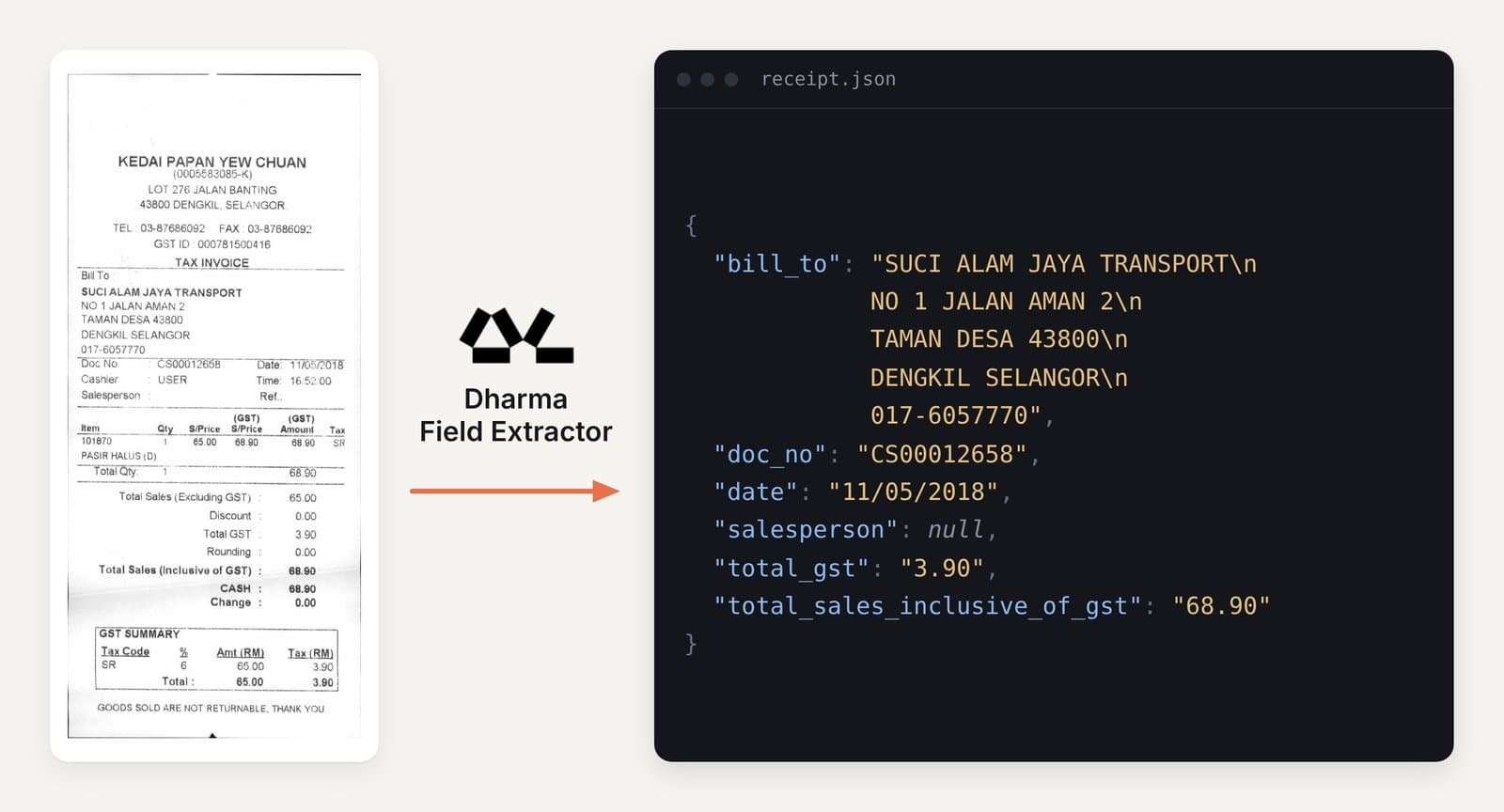
Dharma-AI has released Field Extractor, a 2-billion-parameter model that pulls specified fields out of documents such as invoices, ID cards, forms and contracts and returns them as structured JSON, the company said in a post on Hugging Face.
The model is built on DharmaOCR-LITE v1.1, an updated version of the OCR model the company released in April. Dharma added a LoRA adapter trained on 43,384 examples drawn from three sources: English documents from many domains collected from the public web, Brazilian documents in Portuguese sourced internally, and a smaller multilingual set covering other European and Asian languages.
Two Ways to Ask
Users can send a document with no schema, and the model returns every label-and-value pair or table it finds. Or they can supply a schema that names each field and its type, and the output then follows that schema exactly. Dharma says that when a requested field does not appear in the document, the model returns null instead of making up a value, a common weakness when general-purpose language models are used for extraction.
The company argues that OCR alone leaves engineers to write code that maps each string to the right database field, while prompting frontier models to do that mapping becomes expensive at the volumes that invoice processing, medical scheduling or compliance work require.
Benchmark Claims
On Dharma's own benchmark of 546 documents across three request scenarios, 1,638 cases in all, the Field Extractor scored 0.834, the company said. Claude Opus 5, the closest of four frontier configurations tested, scored 0.816, and GPT-5.6 Luna, the furthest behind, scored 0.741. The score combines field-level F1, how closely the extracted values match, and the share of outputs that are valid JSON.
Dharma estimates the model is roughly 6 times cheaper than GPT-5.6 Luna and roughly 147 times cheaper than GPT-5.6 Sol. Frontier costs were calculated from measured token use at list prices with reasoning set to low. Dharma's cost was based on self-hosted GPU time on a single Nvidia L40S at $2.24 an hour, and the company notes that this is not a sales price and that real costs depend on hardware, volume and latency needs.
The results come from the company and have not been verified independently. The post does not say what licence the Field Extractor is released under. The model can be tried through a web portal that requires a login.
For enterprises that process large numbers of documents, the release is another example of small, specialised models competing with frontier APIs on narrow, well-defined tasks where cost and predictable output matter more than general ability.
Sources
- Hugging Face · Dharma Field Extractor: Any Document In, Structured Fields in JSON Out
Produced with AI assistance from the sources above. How we work
By
Nakoda News Desk
Nakoda News covers AI and business. Every story links the sources it draws on; how we work is set out in our editorial standards.
Related coverage
- Products
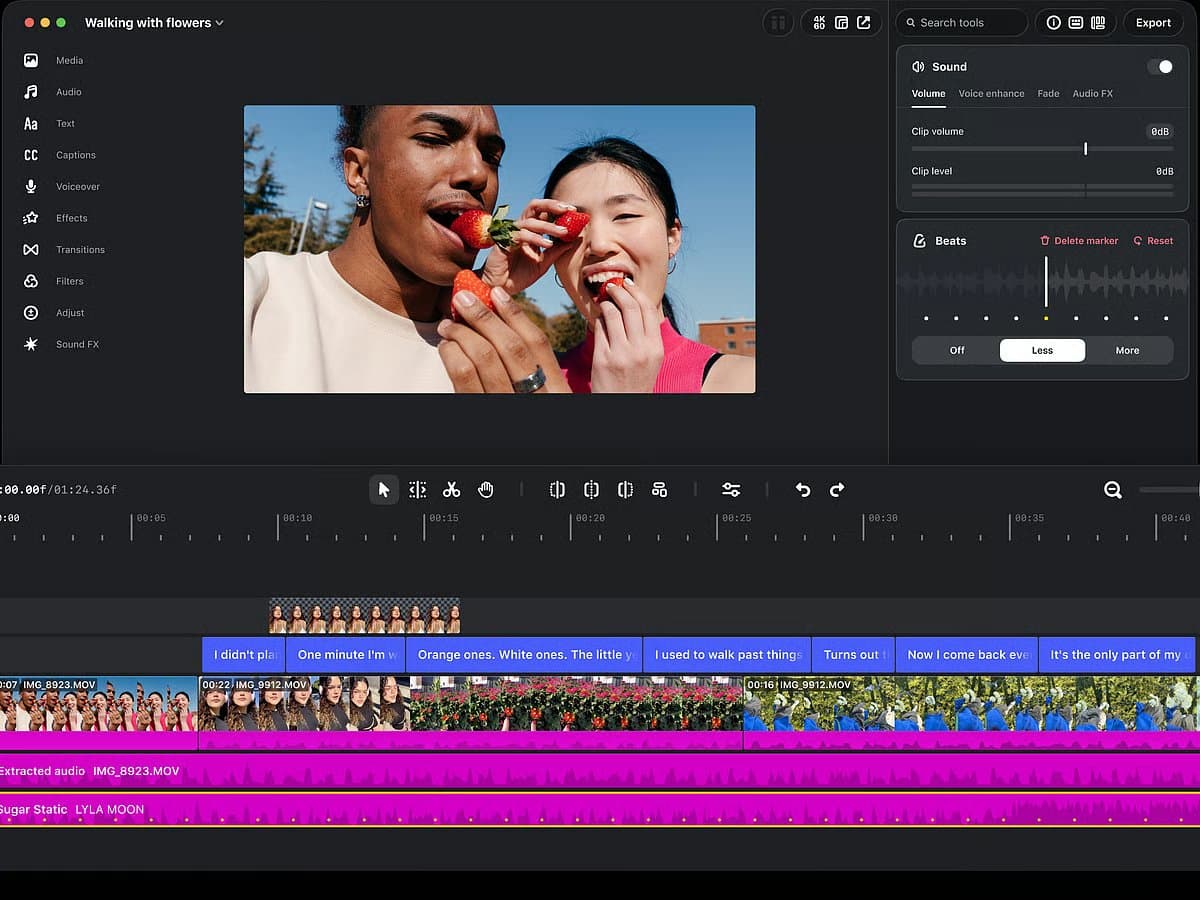
Instagram Releases Free Mac Version of Its Edits Video App to Compete With CapCut
1 hour ago · 2 min read
- Products

Mistral Adds Managed Agents and Apps to Its Studio Enterprise AI Platform
2 hours ago · 3 min read
Products Supermicro, IBM and Nvidia Launch Shared KV Cache Storage to Speed Up AI Inference
3 hours ago · 2 min read
- Products

Aina Opens Pre-Orders for $399 AI Ring With Screen, Joystick and Microphone
3 hours ago · 2 min read
- Products

ElevenLabs Lets Users Publish AI-Generated Music Directly to SoundCloud
3 hours ago · 2 min read