Google Makes Gemini Omni Video Model Generally Available and Cuts Price by 30%
Gemini Omni 1.2 Flash makes native clips of up to 15 seconds, edits them through conversation and costs $0.07 per second of 720p video through the Gemini API.
By Nakoda News Desk
·2 min read
Prefer Nakoda News on Google
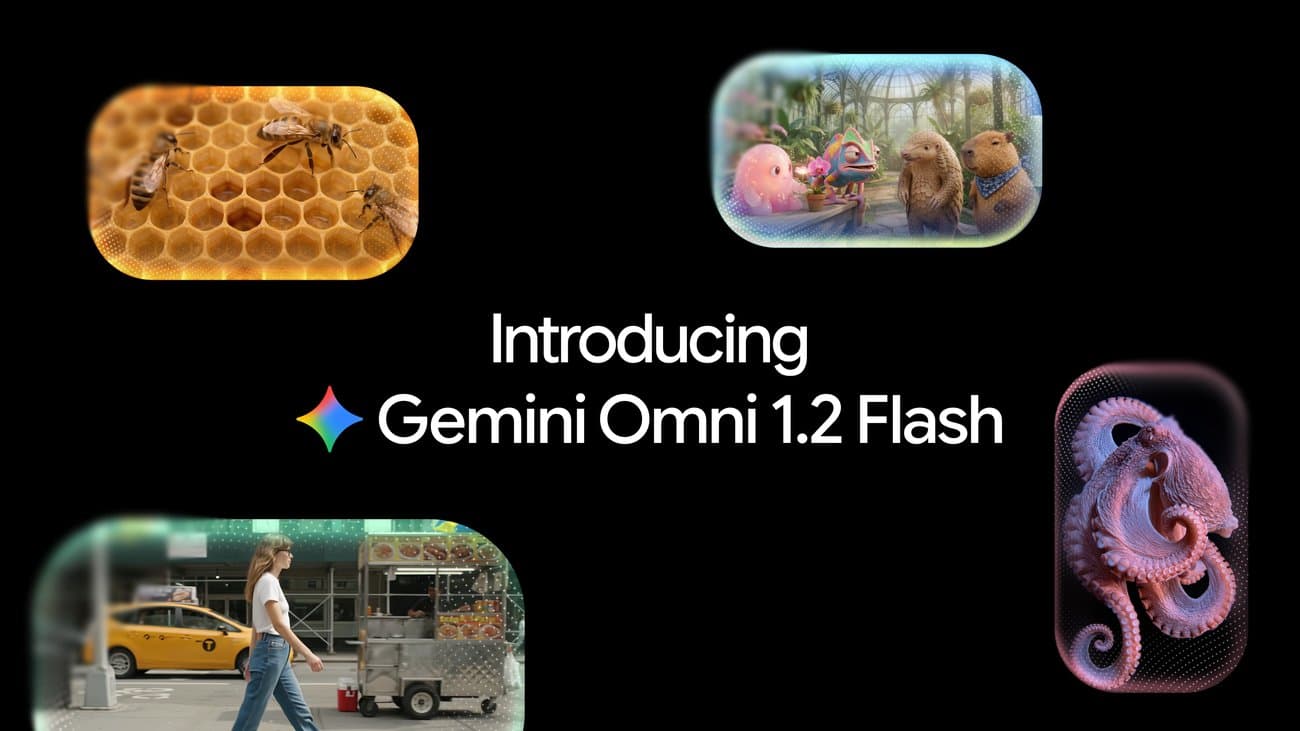
Google has released Gemini Omni 1.2 Flash, a new version of its video generation model, and made the Omni family generally available for the first time through the Gemini API and Gemini for business. The company also cut the price by 30% from Gemini Omni 1.1, to $0.07 per second of 720p video.
In its announcement Google pitched the release at businesses that make video in volume, such as advertisers, retailers and marketing teams, more than at hobbyists. General availability brings the model under Google Cloud's enterprise infrastructure and security, and Provisioned Throughput, which lets companies reserve capacity, is offered, the company said. Every output carries an imperceptible SynthID watermark.
The main technical change is length. Omni 1.2 Flash can generate and edit video natively up to 15 seconds long, compared with 10 seconds for Omni 1.1. Users can set the duration anywhere from 3 to 15 seconds in one-second steps. Google said that is enough for a full social media advert or product explainer in a single generation.
Google also described ways to keep costs down beyond the lower price. Users can draft at 360p or 720p, fix a detail with a follow-up edit rather than regenerating the whole clip, and then upscale the best results to 1080p or 4K. Conversational editing now works across full 15-second clips, so users can swap a product or background, change the lighting or weather, or switch the aspect ratio step by step without starting again. Google suggested this could be used to make versions of one advert for different audiences and placements.
The model follows reference material more closely, the company said. Users can combine character, product or style images, motion clips of up to three seconds and audio cues. Google said faces, clothing, packaging text and brand colours stay consistent across camera angles. One example in its announcement turned a single model photo and front-and-back shots of three outfits into a 15-second virtual try-on sequence. Google also cited fewer unwanted jump cuts during complex camera moves, more natural dialogue with clearer lip-sync, and support for several speakers in one scene.
The company said the model still has weak spots. In its announcement it said work continues on fast sports action, rapid script changes and complex physics. It did not name any customers using the model, saying only that businesses, startups and creatives already use it in their workflows.
The model is rolling out across several Google products. Developers can prototype in Google AI Studio and use the Gemini API, and enterprises can reach it through the Google Cloud console. In Google's consumer and workplace apps, Flow supports scene direction and multi-turn edits, and Google Vids offers 15-second clips at no extra cost with a Google account or Workspace subscription. Fifteen-second videos are rolling out in the Gemini app to Google AI Ultra subscribers, and Google Ads will use the model to help advertisers scale video campaigns, the company said.
The announcement was written by Anish Nangia, a product manager at Google DeepMind. Google did not give prices for its 1080p and 4K upscaling in the announcement and pointed developers to its API pricing documentation.
Sources
- Google (AI blog) · Gemini Omni 1.2 Flash: Fast and cost-effective with longer clips
- Google DeepMind · Gemini Omni 1.2 Flash: Fast and cost-effective with longer clips
Produced with AI assistance from the sources above. How we work
By
Nakoda News Desk
Nakoda News covers AI and business. Every story links the sources it draws on; how we work is set out in our editorial standards.
Related coverage
- Products
Mistral Adds Managed Agents and Apps to Its Studio Enterprise AI Platform
2 hours ago · 3 min read
Products Supermicro, IBM and Nvidia Launch Shared KV Cache Storage to Speed Up AI Inference
3 hours ago · 2 min read
- Products

Aina Opens Pre-Orders for $399 AI Ring With Screen, Joystick and Microphone
4 hours ago · 2 min read
- Products

ElevenLabs Lets Users Publish AI-Generated Music Directly to SoundCloud
4 hours ago · 2 min read
- Products

Box Builds Nvidia's Nemotron Embeddings Into New Retrieval System for AI Agents
5 hours ago · 2 min read