Altman Says Human Control of AI Is Not Up for Debate, Names Energy as Biggest Constraint
Speaking at the opening of ADIPEC in Abu Dhabi, the OpenAI chief called the UAE the most forward-looking country for AI adoption and said an upcoming OpenAI model had solved a famous maths problem, a claim not yet independently verified.
By Nakoda News Desk
·2 min read
Prefer Nakoda News on Google
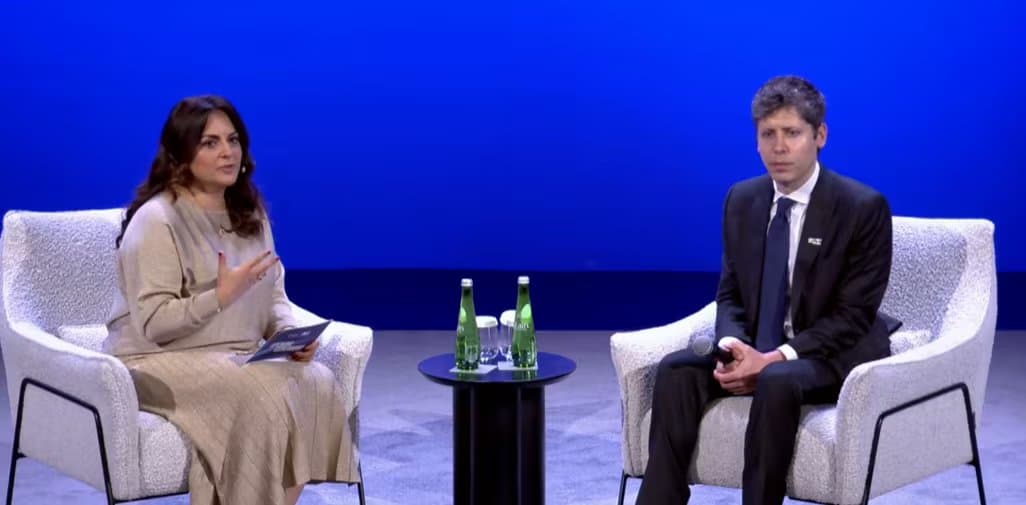
OpenAI chief executive Sam Altman said on Monday that people must remain in charge of artificial intelligence and that there should be no handover of decision-making to the technology. He was speaking at the opening ceremony of ADIPEC 2026 in Abu Dhabi.
"There are a lot of other things we can debate, but on this one, we think there must be no room for debate," Altman said in a conversation with Mina Al-Oraibi, editor-in-chief of The National, according to that newspaper. He said AI "needs to be a tool built for people and needs to serve people, not the other way around". He added that he was surprised this position set OpenAI apart from other AI companies.
Altman spoke on the day OpenAI announced agreements in Abu Dhabi covering energy, investment and government, including a deal for ADNOC and G42 to deploy OpenAI's most advanced models in energy operations. According to the state news agency WAM, he said the partnership between OpenAI, ADNOC and G42 would help shape how the energy sector uses AI.
Capability and Jobs
Altman said AI had passed a threshold this year. "AI was mostly not as smart as our smartest scientists, and now it's mostly smarter than them," he said, as reported by The National. He said the technology could already do "a lot of parts" of many white-collar jobs, and that he expected society to adapt.
He also said the industry would increasingly need to show it could prevent serious safety and alignment incidents as its systems grow more capable.
According to The National, Altman said OpenAI had solved one of the Millennium Prize problems, a set of famous unsolved problems in mathematics. He said the work used 10,000 agents running an upcoming GPT model for about four days. The newspaper noted that the claim could not immediately be verified independently. WAM's account was more measured: it reported Altman as saying that over recent months AI systems had begun tackling mathematical problems people had been unable to solve.
Energy as the Binding Constraint
Asked what challenge he faces today, Altman gave a one-word answer: "Energy." He said the energy needed for each AI query had fallen sharply, but that lower costs were driving much heavier use. Six years ago, he said, OpenAI's heaviest internal user consumed about 100,000 tokens a month. That is now roughly the global per-capita average, and the top user consumes about 500 billion.
He described power as "the very dominant factor" in how much AI the world can use. He said he hoped AI applied in the energy sector would produce enough gains to offset its own consumption and leave a net increase in global energy availability.
Praise for the UAE
Altman called the UAE "consistently the most forward-looking country in the world for AI adoption", according to The National. He said about 80 percent of young people in the country were using ChatGPT. WAM and Gulf News also reported his description of the UAE as the world's most forward-looking country for AI adoption.
The remarks matter for Gulf energy executives. Altman named power supply as the main limit on AI growth at the region's largest energy gathering, in a country that is positioning itself as both a major AI adopter and a supplier of the energy and capital the industry needs.
Sources
- The National · ‘No room for debate’ over human control of AI, says Sam Altman
- khaleejtimes-english · Humans must remain in control of AI, says OpenAI CEO Sam Altman
- Emirates News Agency · UAE world's most forward-looking country for AI adoption: OpenAI CEO
- Gulf News · UAE world's most forward-looking country for AI adoption: OpenAI CEO
Produced with AI assistance from the sources above. How we work
By
Nakoda News Desk
Nakoda News covers AI and business. Every story links the sources it draws on; how we work is set out in our editorial standards.
Related coverage
AI ABB Robotics and Nvidia Plan Physical AI Certificate Built Around Simulation
3 hours ago · 1 min read
- AI
Creator of AI Fake-ID Site OnlyFake Speaks Out After US Sentence and Deportation
3 hours ago · 3 min read
AI Researcher Says Anthropic Left Claude Dispatch Flaw Unfixed Despite Remote Code Risk
4 hours ago · 3 min read
- AI
Moonshot AI Sought Nvidia Blackwell Capacity in European Data Centres, CNBC Says
4 hours ago · 3 min read
AI Visa Study Finds 72% of UAE Shoppers Used AI on Their Latest Purchase
4 hours ago · 2 min read