ADNOC Upstream Chief Says AI Tool Neuron 5 Has Cut Unplanned Shutdowns by Half
Musabbeh Al Kaabi told an ADIPEC panel that AI could compress subsurface workflows that now take two to three years, as partners from OMV and INPEX stressed supply-chain resilience.
By Nakoda News Desk
·2 min read
Prefer Nakoda News on Google
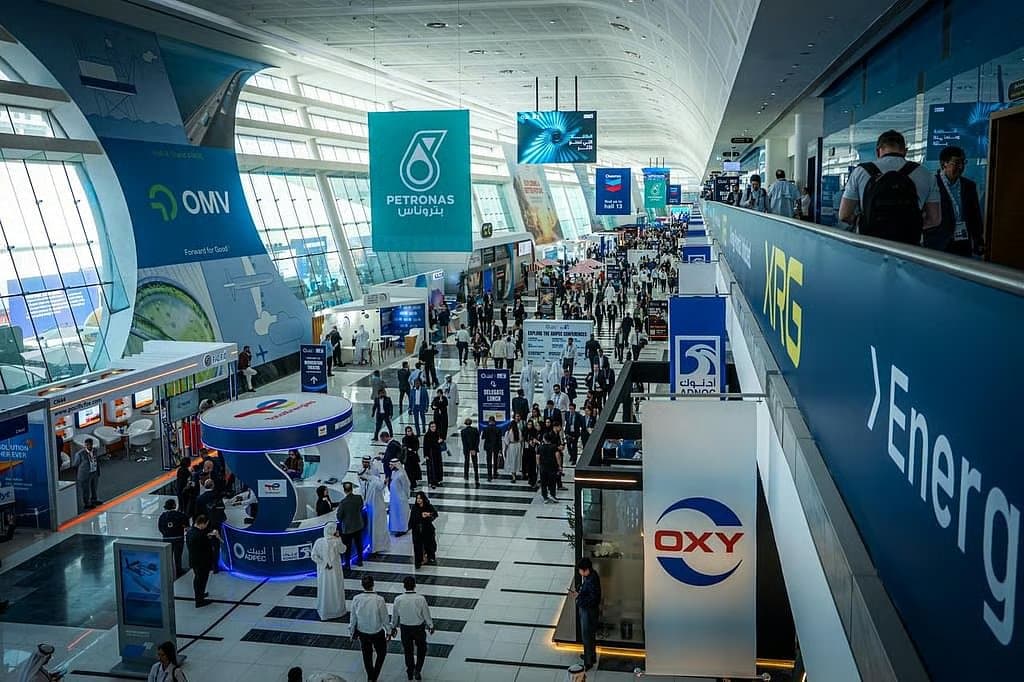
ADNOC has deployed an AI tool called Neuron 5 that has reduced unplanned shutdowns by 50 per cent, according to the company's operational reporting and pilot results, the company's upstream chief said at ADIPEC 2026 in Abu Dhabi, Gulf News reported.
Musabbeh Al Kaabi, CEO, Upstream at ADNOC, told a panel on the conference's Exchange Theatre stage that "minimising shutdown means value", and described AI as a way to speed up subsurface modelling and field development planning, optimise well production and reduce downtime. He said traditional subsurface workflows take two to three years and that AI could collapse processes that are now carried out one after another.
Al Kaabi said ADNOC's goal in applying AI is to produce the lowest-cost energy molecules while lowering carbon intensity. He cited the company's partnership with OpenAI and its Energy in AI work as examples of collaboration that now reaches beyond traditional oil and gas partners. ADNOC this week became the first energy company to use OpenAI's Frontier platform under one of four agreements the AI developer signed in Abu Dhabi.
Resilience Built Into the System
Much of the panel focused on the regional conflict and disruption to the Strait of Hormuz. Al Kaabi described the disruption as beyond what the industry had anticipated even in its most extreme scenarios, but said: "We have prepared ourselves for scenarios like this."
He said ADNOC's response rested on three principles: protecting people, keeping commitments to customers and continuing to invest. Resilience, he argued, can no longer mean only keeping production running through a crisis; it has to be designed into the energy system, the partnerships behind it and the technology used to run it. He pointed to the UAE's airports, ports and expanding rail network as evidence of infrastructure that supports investor confidence.
Al Kaabi also cited an initial production milestone of 345 million standard cubic feet per day from Abu Dhabi's unconventional resources, the figure ADNOC has attached to its Ruwais Diyab gas project.
Partners Weigh In
Emma Delaney, chairwoman and CEO of Austrian energy group OMV, highlighted emergency response, business continuity, physical disruption and cyber preparedness as areas of focus.
Takayuki Ueda, president and CEO of Japan's INPEX, said resilience planning has to cover the whole supply chain, including shipping routes, journey times and insurance costs. He described Abu Dhabi as a trusted long-term partner for Japan, citing its stable and transparent policy environment, competitive production, low-carbon-intensity crude and infrastructure. According to Gulf News, Ueda argued that diversification should mean reducing exposure to the Strait of Hormuz rather than moving away from Abu Dhabi or the Middle East.
Why It Matters
The Neuron 5 figure is one of the more concrete performance claims for industrial AI to come out of ADIPEC this year, though it rests on ADNOC's own reporting and pilot results rather than independent verification, and the company did not give details of the baseline or the scope of deployment. For operators and suppliers, it signals that ADNOC is measuring AI by uptime and cost per barrel, and that its upstream partners are prioritising route and supply-chain resilience after the Hormuz disruption.
Sources
- Gulf News · Abu Dhabi is not stepping back from its long-term energy ambitions, says ADNOC
Produced with AI assistance from the sources above. How we work
By
Nakoda News Desk
Nakoda News covers AI and business. Every story links the sources it draws on; how we work is set out in our editorial standards.
Related coverage
AI ABB Robotics and Nvidia Plan Physical AI Certificate Built Around Simulation
3 hours ago · 1 min read
- AI
Creator of AI Fake-ID Site OnlyFake Speaks Out After US Sentence and Deportation
3 hours ago · 3 min read
AI Researcher Says Anthropic Left Claude Dispatch Flaw Unfixed Despite Remote Code Risk
4 hours ago · 3 min read
- AI
Moonshot AI Sought Nvidia Blackwell Capacity in European Data Centres, CNBC Says
4 hours ago · 3 min read
AI Visa Study Finds 72% of UAE Shoppers Used AI on Their Latest Purchase
4 hours ago · 2 min read