Abu Dhabi Infrastructure Agency Signs Five Agreements With German Firms Including Siemens
The Abu Dhabi Projects and Infrastructure Centre signed with Siemens, HENN, Patrizia, Partners Group and the German-Emirati chamber in Munich, as it looks for foreign capital and know-how for its $56 billion capital projects programme.
By Nakoda News Desk
·2 min read
Prefer Nakoda News on Google
Abu Dhabi's government infrastructure agency has signed five memorandums of understanding with Germany-based companies and institutions. It wants to draw foreign investment and technical expertise into a capital projects programme worth about $56 billion, AGBI reported.
The Abu Dhabi Projects and Infrastructure Centre (ADPIC) signed the agreements in October at the Expo Real property fair in Munich. The fair hosted the German leg of the Abu Dhabi Infrastructure Summit (ADIS) International Roadshow. The partners are engineering group Siemens AG, architecture practice HENN, investment firms Patrizia and Partners Group, and the German-Emirati Joint Council for Industry and Commerce (AHK). ADPIC director general Maysarah Mahmoud Salim Eid signed for the agency.
What Each Partner Will Do
According to AGBI, Siemens will look at cooperation on digital project delivery, advanced technology, modern construction methods and lower-carbon infrastructure. HENN's agreement covers design standards, masterplanning, urban and climate-responsive design, building information modelling and digital delivery.
The two investment firms have the financial side. Partners Group will look at private-sector participation, public-private partnership (PPP) structures, investment readiness, bankability and risk allocation across a programme of roughly 500 projects. Patrizia will focus on infrastructure and real assets, including financing, governance, ESG and green finance. AHK will arrange introductions to German industry and share knowledge on PPPs and Musataha, the legal right to develop land owned by another party.
"Abu Dhabi has the scale, the pipeline and the institutional strength to deliver its next phase of infrastructure growth," Eid said. He described ADPIC's role as providing "the governance and coordination that give partners greater clarity and confidence as opportunities move towards delivery."
A Push for Private Capital
ADPIC led a delegation of more than 40 people over the roadshow's three days, drawn from Abu Dhabi's transport, planning, housing and investment departments. Developers Aldar, Bloom Holding, LEAD Development, Modon and Trojan Construction Holding also took part. The delegation met more than 100 business and government representatives, AGBI said. These included engineering consultancy Obermeyer, project management firm Gleeds, modular construction specialist Goldbeck, and regional bodies from Baden-Württemberg, North Rhine-Westphalia, Stuttgart and Hamburg's HafenCity.
The Munich trip followed Sheikh Mohamed bin Zayed Al Nahyan's state visit to Germany in September 2026, the first by a UAE president, which launched a dialogue on closer economic ties. Earlier ADIS roadshows went to Singapore, Shanghai and Turkey as ADPIC turns the summit into a year-round international platform. Abu Dhabi has previously announced a $15 billion PPP investment pipeline.
Why It Matters
The agreements are memorandums, not contracts, and no project values or commitments were disclosed. They do show what Abu Dhabi wants from foreign partners: private financing and risk-sharing models through PPPs, plus digital construction methods such as building information modelling that can speed up delivery across hundreds of projects. Infrastructure investors and engineering firms already active in the Gulf will be watching for German companies to win work as projects move into procurement.
Sources
- AGBI · Abu Dhabi signs five infrastructure MoUs at ADIS Munich
Produced with AI assistance from the sources above. How we work
By
Nakoda News Desk
Nakoda News covers AI and business. Every story links the sources it draws on; how we work is set out in our editorial standards.
Related coverage
- Business
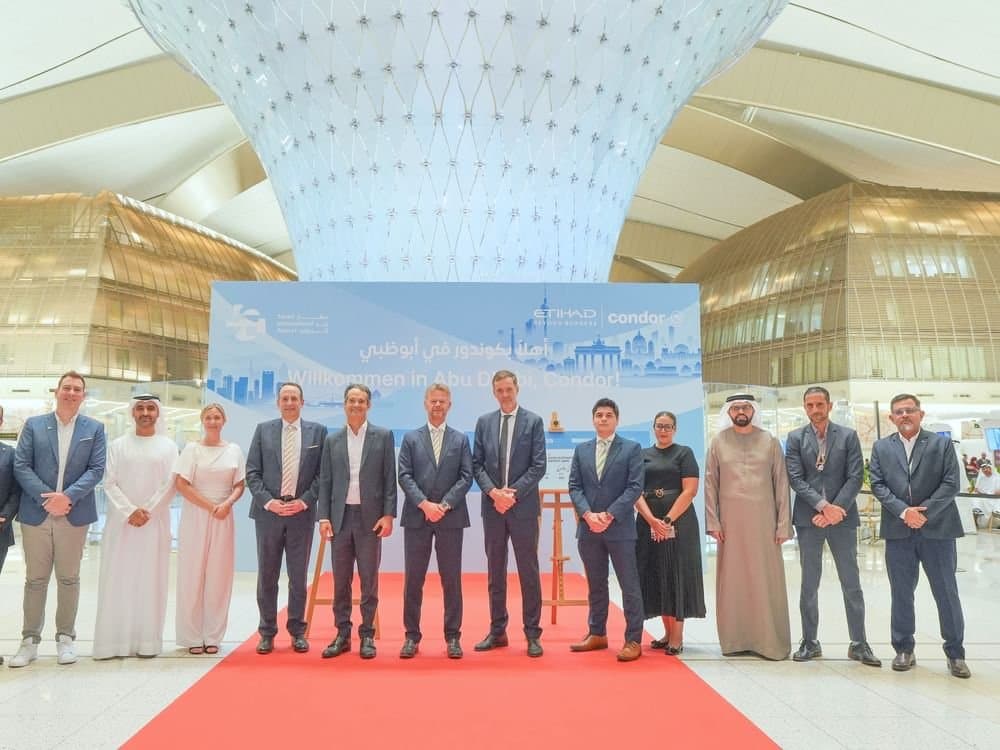
Condor Launches Daily Frankfurt to Abu Dhabi Flights Under Etihad Codeshare
3 hours ago · 1 min read
Business Construction Robotics Start-Ups Raise $1.6 Billion in 2026, Triple the Previous Record
4 hours ago · 3 min read
- Business

Dubai Access Club Offers Repeat Tourists a Five-Year Visa for Dh4,032.50
6 hours ago · 2 min read
Business UAE Central Bank Gives Interpolitan Money In-Principle Approval for Stored Value Licence
8 hours ago · 2 min read
Business Dubai Land Department Launches Rent Now, Pay Later Instalments With Emirates NBD
9 hours ago · 2 min read