US Agencies Warn of Ongoing Hacks on Industrial Refrigeration After Attacks in Europe
CISA, the FBI and three federal departments told grocers and cold storage operators to take temperature controllers offline after attacks on stores, a blood bank and military freezers.
By Nakoda News Desk
·3 min read
Prefer Nakoda News on Google
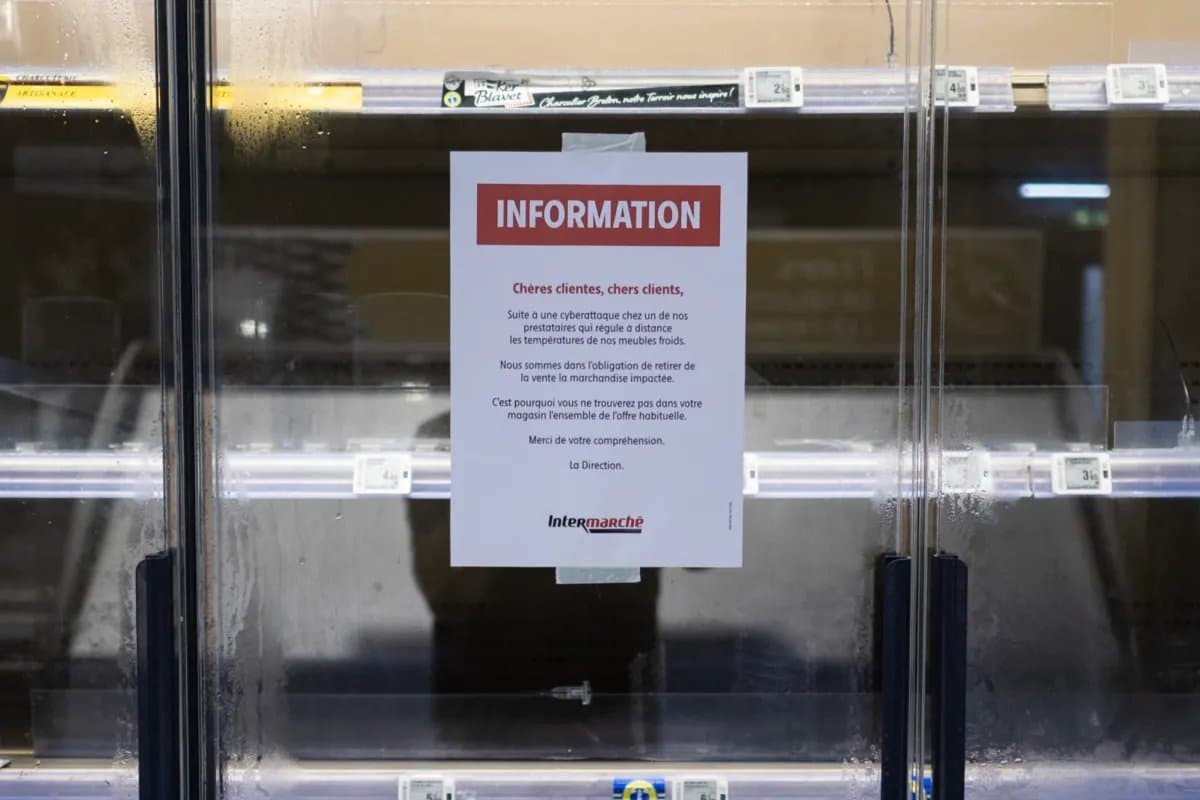
Five US federal agencies on Thursday told grocery chains, cold storage operators and other critical infrastructure to take refrigeration controllers off the public internet. They warned of an "ongoing cyber threat" to the systems that keep food and medicines cold.
The joint statement came from the Cybersecurity and Infrastructure Security Agency (CISA), the FBI and the Departments of Agriculture, Health and Human Services, and Transportation. It said unidentified "malicious cyber actors" are exploiting electronic temperature controllers and commercial refrigeration controllers that are unpatched or reachable from the internet in retail grocery and cold storage facilities. The agencies said the activity reaches into food and agriculture, transportation and the shipping of medicines.
The risk is physical as well as digital. "If successfully exploited, the actors could change the temperature and possibly cause physical impacts such as fire hazards, loss of inventory and changes to the service life of the system," the agencies warned. In a separate fact sheet, they said hackers may try to "force units into continuous heating and defrost cycles, which can cause widespread inventory loss and equipment hazards."
Chris Butera, CISA's acting executive assistant director for cybersecurity, said: "Every organization that depends on refrigeration and monitoring systems should assume it could be a target."
A Campaign That Began in Europe
The US warning follows weeks of attacks on store refrigeration across Europe. TechCrunch reported two separate waves of attacks that let hackers raise temperatures on freezers and chillers in at least a dozen countries, spoiling thawed food and destroying produce. According to TechCrunch, some of the affected units were remote-controlled systems made by the Danish manufacturer Danfoss, which had stopped issuing security updates for them. Attackers also targeted a blood bank in France, raising temperatures in units holding donated blood before they were stopped.
In an assessment published on November 3, researchers at the security company SentinelOne traced attacks on hundreds of French supermarkets between October 11 and 13. They also described a second cluster on November 2 and 3 that hit stores in countries including Belgium, Luxembourg, the Netherlands, Sweden, Ireland and Estonia. The report cites France's economy minister, Roland Lescure, as putting the number of affected French stores at about 700. It also says France's cyber agency, ANSSI, linked the French cases to exposed administration interfaces and weak passwords, not to software flaws that had already been published.
Military sites have been affected too. Reuters reported that the US Department of Defense is investigating a series of hacks on freezers run by the military. SentinelOne's timeline attributes freezer failures at six or more US military commissaries in late August and early September to suspected hacking.
Who Is Behind It
The US statement did not name any group or government. TechCrunch said security researchers have broadly attributed the attacks to Iran and that US officials reportedly see Iran as the likely culprit. SentinelOne was more cautious. It said attribution for the European incidents has not been publicly established, called Russian-aligned groups a credible hypothesis based on past attacks, and said suspicion of Iran-linked actors applies only to the US commissary cases and remains provisional.
Offline Controllers and New Passwords
The agencies urged operators to remove remote control systems from the internet, change and strengthen passwords, apply patches where they can and retire equipment the vendor no longer supports. SentinelOne also advised operators to limit remote access to secure VPNs and to keep logs before resetting compromised controllers. It called third-party maintenance access an important lead for investigators, though it said this has not been confirmed as a common route in. The researchers expect more incidents wherever the same access conditions persist.
Sources
- TechCrunch · US government warns of ‘ongoing cyber threat’ amid mass hacks of industrial retail and military freezers
- Reuters (via The Korea Times) · US warns of 'ongoing cyber threat' to industrial refrigeration systems
- SentinelOne Labs · Defrost and Disrupt: An Assessment of Europe's Refrigeration Attacks
Produced with AI assistance from the sources above. How we work
By
Nakoda News Desk
Nakoda News covers AI and business. Every story links the sources it draws on; how we work is set out in our editorial standards.
Related coverage
Policy OpenAI Sued by Man Who Says ChatGPT Helped His Wife Plan to Poison Him
1 hour ago · 3 min read
Policy House Republicans Ask Nvidia's Jensen Huang for Closed-Door Briefing on Espionage Concerns
2 hours ago · 2 min read
- Policy

Ras Al Khaimah to Test Driverless Cars in Homes and Shops at RAK Properties' Mina
3 hours ago · 2 min read
- Policy
Bank of England Questions Lenders About Data Centre Loans for Projects Without Tenants
4 hours ago · 2 min read
- Policy
DIFC Courts to Launch Three AI Initiatives for Judges and Court Users by Year-End
5 hours ago · 2 min read