UAE Traffic Law Sets Nine-Hour Daily Driving Limit and Five-Vehicle Cap From January
The amended federal rules, effective January 1, also tighten requirements for delivery riders and e-scooters, raising questions for taxi, bus and courier operators that authorities have not yet answered.
By Nakoda News Desk
·3 min read
Prefer Nakoda News on Google
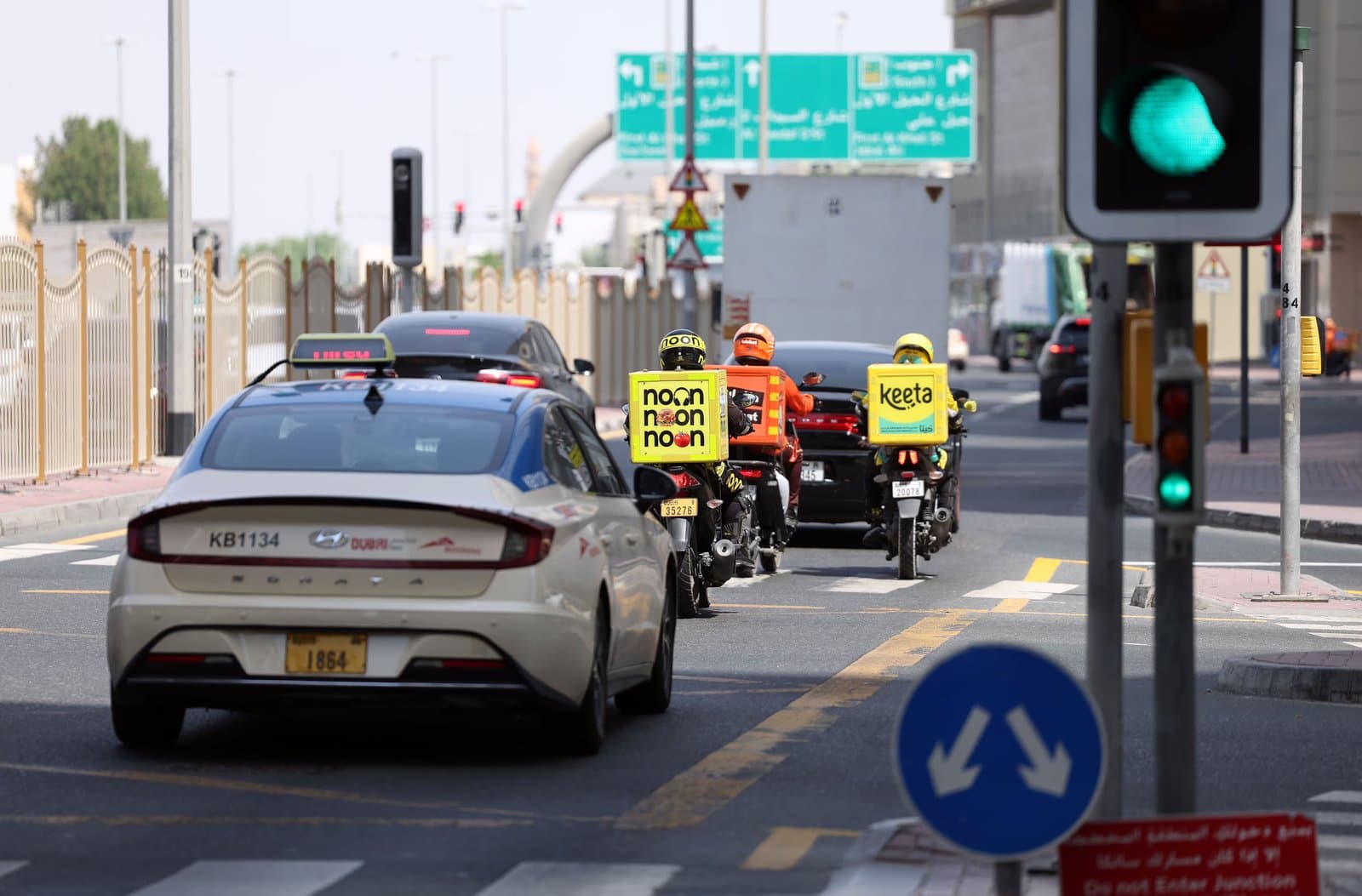
Drivers in the UAE will be limited to nine hours at the wheel in any 24-hour period, and no individual will be able to register more than five vehicles, under amendments to the federal traffic law that take effect on January 1.
The changes are aimed at cutting accidents, easing congestion and protecting child passengers as the country's road network carries a fast-growing population, according to The National's review of the legislation. Several of the rules bear directly on businesses that run fleets of drivers and riders, including taxi, bus and delivery companies, and some key details are still unclear.
The nine-hour limit is meant to prevent driver fatigue. The law does not make clear whether it covers private motorists as well as professional drivers, The National reported, and the newspaper said it had asked the authorities how the limit will work in practice. For ride-hailing, bus and courier operators, the answer will shape shift patterns and staffing levels.
Delivery Riders and Last-Mile Devices
Delivery riders will be barred from carrying passengers while making deliveries and from carrying orders in backpacks; they must use designated, approved carrying equipment instead. Dubai's Roads and Transport Authority has separately set out plans to use cameras and smart sensors to track the speed, location and riding behaviour of delivery motorcyclists, which it said would help identify dangerous riding and improve compliance.
The law creates a classification system for personal mobility devices, covering bicycles, e-bikes, e-scooters, small-wheeled cycles, skateboards and mobility aids for elderly and disabled people. Licensing authorities will issue three types of permits, for e-bikes, e-scooters and small-wheeled cycles. The minimum age for an e-scooter permit, valid for three years, will be 15. The rules do not say how this fits with Dubai's existing minimum age of 16.
Article 4 of the updated law sets technical requirements for e-scooters and e-bikes: a front light, a rear light with a red brake light, an audible warning device on the handlebars, at least one brake on the rear wheel, and properly maintained tyres and spokes. Such devices may be used only on routes and roads approved by the licensing or traffic authority in each emirate.
Registration Fees and Licence Terms
Under the new cap, a person may register at most five vehicles, and anyone registering or renewing a third, fourth or fifth vehicle will pay an extra fee. The law does not set the amount of that fee or say what happens to people who already have more than five vehicles in their name. Registering a new vehicle currently costs Dh400, and renewal costs Dh350 plus Dh150 for inspection.
Owners of light vehicles that were new when first registered and are no more than six years old can apply to extend registration from one year to two, subject to approval.
Driving licence validity will depend on age and nationality. Once temporary licence holders turn 21, or when people who first got a licence at 21 or older renew it, licences for UAE and GCC nationals will run for 10 years and those for expatriate residents for five. The law also sets eyesight standards by driver category, with stricter requirements for drivers of light and heavy buses and operators of light and heavy machinery.
Other provisions require rear-mounted safety seats for children aged four and under, suited to the child's weight and height and meeting national standards, with exemptions for documented medical conditions. Only people holding a valid, accredited first aid certificate will be allowed to give first aid at traffic accidents.
Operators will be watching for implementing guidance before January 1 on how the driving-hours limit will be enforced and how much the extra registration fees will be.
Sources
- The National · Ten new UAE traffic laws for 2027 explained
- The National · Driving limits to vehicle registration: Ten new UAE traffic laws for 2027
Produced with AI assistance from the sources above. How we work
By
Nakoda News Desk
Nakoda News covers AI and business. Every story links the sources it draws on; how we work is set out in our editorial standards.
Related coverage
Policy OpenAI's textGrain Watermark Weakens on Short or Edited Text, Raising EU Compliance Doubts
2 hours ago · 3 min read
- Policy

UAE Adds AI Categories to Government Excellence Award, Honouring Tax Authority's AI Chief
4 hours ago · 2 min read
Policy UAE Banks Federation Chief Flags AI-Driven Fraud and Cloud Concentration Risk
4 hours ago · 1 min read
Policy DIFC Courts Propose On-Chain Dispute Standard as DFSA Publishes Tokenisation Report
5 hours ago · 2 min read
- Policy

Sharjah Civil Defence Sends Fire Damage Certificates Automatically by SMS and Email
6 hours ago · 2 min read