South Korean Defence Stocks Lose Nearly Two-Thirds of Peak Value as Drones Reshape Demand
Weak earnings, a stronger won and slow export orders have hit Hanwha Aerospace and Hyundai Rotem, while analysts question how well tank and artillery makers fit drone-era warfare.
By Nakoda News Desk
·2 min read
Prefer Nakoda News on Google
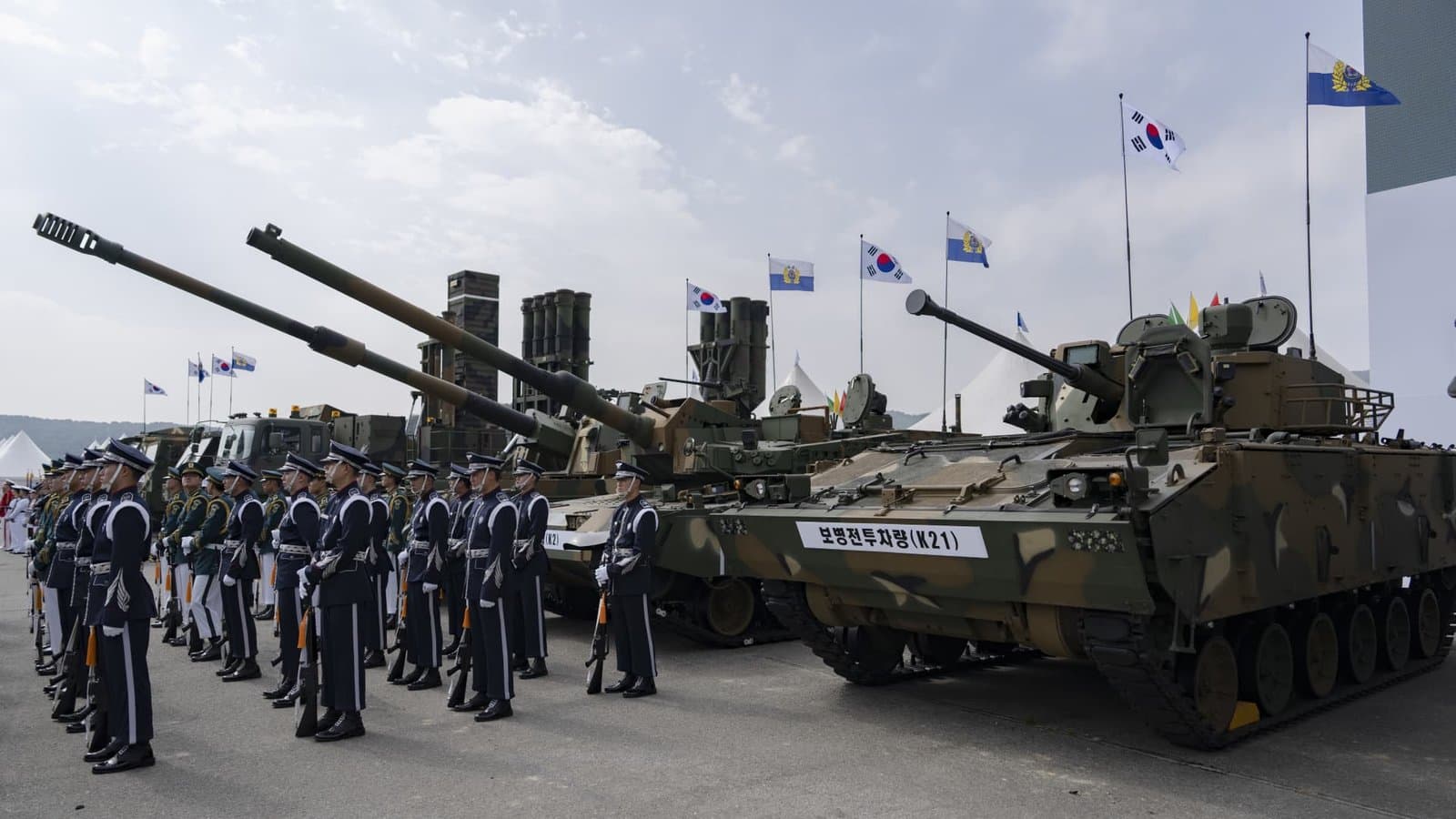
The four largest South Korean defence companies have lost nearly two-thirds of their combined stock market value from their recent peak, as investors question whether makers of tanks and artillery are positioned for battlefields increasingly shaped by drones.
Hanwha Aerospace, LIG D&A, Hyundai Rotem and Korea Aerospace Industries were worth about 62 trillion won ($46.18 billion) combined at the end of October, down from a 52-week peak of 170 trillion won, according to figures from South Korean broadcaster SBS cited by CNBC.
The sell-off reverses a two-year rally driven by global rearmament after Russia's invasion of Ukraine, when European buyers turned to Korean weapons for their price and fast delivery. The question now is whether demand is shifting away from the products Korea sells. Ukraine has shown that cheap drones can threaten expensive military hardware, and Iranian drone strikes have drained the stocks of costly air defence missiles held by the US and its Gulf allies.
"Modern warfare is being fought with less traditional weaponry (tanks, cannons, armored vehicles, etc.), which Koreans are positioned for," said Peter Kim, senior managing director at KB Securities. "Even on this front, drones, for example, are dominated by China, pricing out other potential competitors from Europe, the U.S., and Asia." KJ Hwang, Korea autos and industrials analyst at Bank of America, said procurement priorities were moving towards drones, counter-drone systems and air defence.
Earnings and Currency Pressure
Analysts said the slide is not only about changing warfare. Investors are also weighing disappointing earnings, a stronger won and delayed export orders. Kim said money flowing into semiconductor stocks, along with high valuations built on expectations of strong earnings growth, had weighed on defence shares. He added that governments had been slower than expected to turn defence spending pledges into approved budgets and orders.
Hanwha Aerospace's third-quarter operating profit fell more than 46% from a year earlier, which the company attributed to delivery-schedule adjustments and one-off costs. Its shares are down more than 28% this year. Hyundai Rotem reported a decline of more than 11.1% in operating profit, and its stock has fallen almost 60%. Korea Aerospace Industries was the exception: its third-quarter sales rose about 52% and operating profit about 32%, limiting its share decline to just over 8% this year.
Orders Still Coming In
Analysts remain positive on the sector's long-term prospects. Hwang said Korean defence companies had kept expanding cooperation with partners in Western Europe and the Middle East, including in air defence, and that further K9 howitzer orders showed conventional platforms were still in demand.
Deals signed this year include K9 howitzer orders from Spain for Hanwha Aerospace worth about 546 million euros and a $922 million order from Norway for K239 rocket systems. LIG D&A agreed a $94 million deal with Malaysia for its K-SAAM naval surface-to-air missile system, the system's first export sale.
Kim said the sector "remains attractive, given the long-term growth outlook is still in the teens." David Roche, strategist at Quantum Strategy, told CNBC that military orders were placing "greater emphasis" on AI and drone technology, but that "drones cannot capture and hold terrain," so infantry, tanks and armour remain essential on a mobile battlefield.
Korean defence groups are investing in drones and unmanned systems themselves. Kim said meaningful exports would take time because overseas buyers want a proven operational track record, though he expects more tangible results could emerge in the near future.
Sources
- CNBC · From tanks to drones: South Korea’s defense firms face a new battlefield test
Produced with AI assistance from the sources above. How we work
By
Nakoda News Desk
Nakoda News covers AI and business. Every story links the sources it draws on; how we work is set out in our editorial standards.