Nvidia Releases Four Open Cosmos 3 Models for Driving and Robot Simulation
The 16-billion-parameter checkpoints generate synchronised camera and lidar data for self-driving tests and predict how scenes change in response to a robot's actions.
By Nakoda News Desk
·2 min read
Prefer Nakoda News on Google
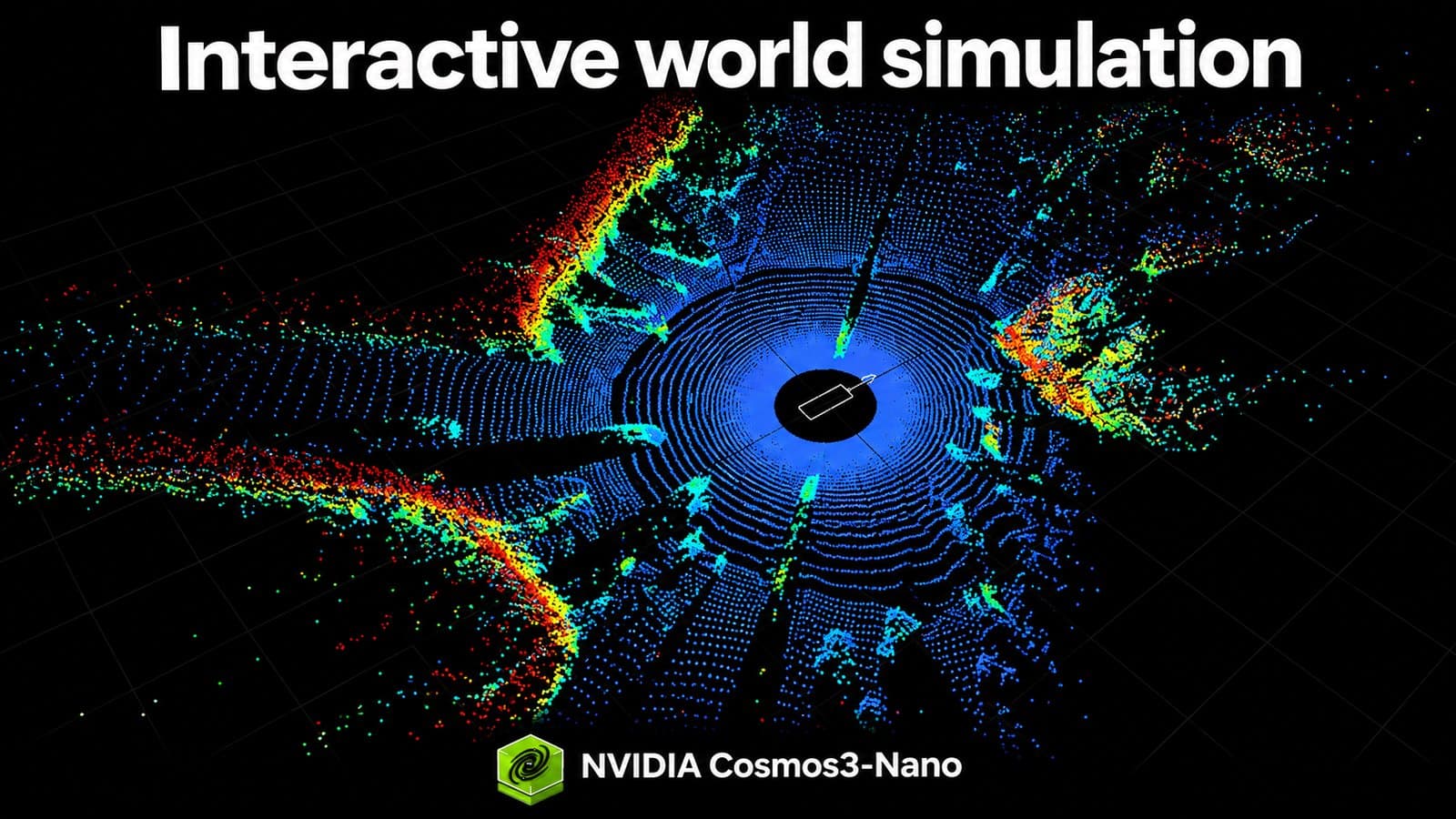
Nvidia has released four open-weight models in its Cosmos 3 world-model family that generate simulated driving scenes and robot environments. Developers of self-driving cars and robots can use them to train and test their control software on synthetic data instead of real-world footage.
The company published the checkpoints on Hugging Face on Thursday. All four are post-trained versions of Cosmos 3 Nano, each with 16 billion trainable parameters, and are released under the OpenMDW 1.1 licence, which allows commercial and non-commercial use under its terms. Nvidia also published a technical report and post-training recipes so others can adapt the models to their own sensors and environments.
The release goes after one of the costliest bottlenecks in physical AI: gathering enough varied, labelled sensor data to train and test driving and robotics systems, especially for rare conditions. Nvidia said in its announcement that when generating driving scenes, visual appearance and 3D geometry must agree, and that its models now generate camera and lidar output together. It also said the hard work is still ahead: measuring where the models can be trusted for training and evaluating control software, and where they fall short.
Two Models for Driving
Cosmos3-Nano-Transfer-Auto generates synthetic driving data offline. Nvidia said it can produce synchronised video from up to 11 camera views, including fisheye lenses, along with matching lidar. Developers lay out roads and traffic movement with per-camera scene maps and use text prompts to change weather, lighting and time of day. Nvidia presents it as the base model that carmakers and autonomy developers can retrain on their own sensor layouts and driving regions.
Cosmos3-Nano-Sim-Auto is a faster version distilled from Transfer-Auto. It produces camera video and lidar in short chunks over a few denoising steps, so a driving policy can be tested in long, interactive runs. Nvidia said closed-loop use still needs a separate simulation runtime and renderer to feed driving inputs back into the model.
Two Models for Robots
Cosmos3-Nano-Sim-Transfer takes depth, segmentation, edge or blur maps from a conventional physics simulator, plus a text prompt, and turns them into photorealistic video that a robot's control software can use. Physics and ground-truth state remain with the simulator. Cosmos3-Nano-Sim-Bimanual skips the physics engine and predicts the next video frames directly from a two-armed robot's actions or camera moves. Nvidia said it supports the YAM and AgiBot robot designs and can be driven by a policy or by a human with joysticks.
Nvidia launched Cosmos 3 earlier this year at GTC Taipei, with Nano and larger Super versions, as part of a wider push to sell hardware and software for robotics and autonomous vehicles alongside its data-centre chips. The new checkpoints need Linux, an Nvidia GPU, Docker and the Nvidia Container Toolkit, and the company has published notebooks and agent "skills" for running inference on each one.
Sources
- Axios · Nvidia expands AI push with Cosmos 3 world model
Produced with AI assistance from the sources above. How we work
By
Nakoda News Desk
Nakoda News covers AI and business. Every story links the sources it draws on; how we work is set out in our editorial standards.
Related coverage
- AI

Grimes Joins Fable's AI-Generated Film Gods Don't Give Gifts Ahead of December Release
4 hours ago · 1 min read
AI Baidu Releases Open Weights for ERNIE 5.5 Flash Base, a 280 Billion-Parameter Model
4 hours ago · 2 min read
- AI

OpenAI Launches GPT-6 Cyber, Saying It Strays Out of Bounds Less Than 1% of the Time
5 hours ago · 2 min read
AI ABB Robotics and Nvidia Plan Physical AI Certificate Built Around Simulation
7 hours ago · 1 min read
- AI
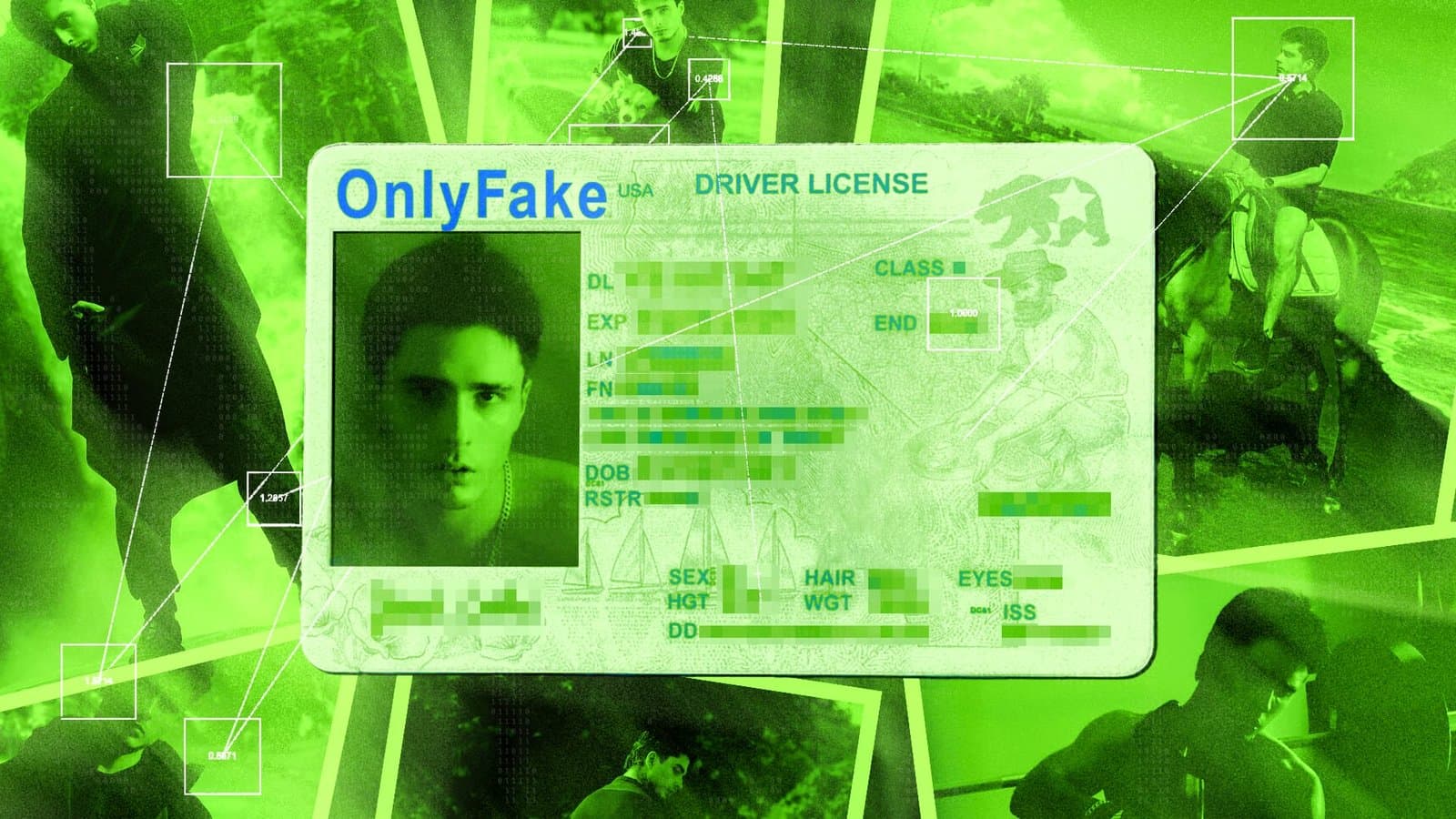
Creator of AI Fake-ID Site OnlyFake Speaks Out After US Sentence and Deportation
7 hours ago · 3 min read