Argentina's Milei Pitches Patagonia as a Regulation-Free Hub for AI Data Centres
Visitor logs obtained by AP show OpenAI, Amazon, Google, Oracle and Peter Thiel meeting Milei's government, while a proposed tax cut for billion-dollar AI projects awaits Senate approval.
By Nakoda News Desk
·2 min read
Prefer Nakoda News on Google
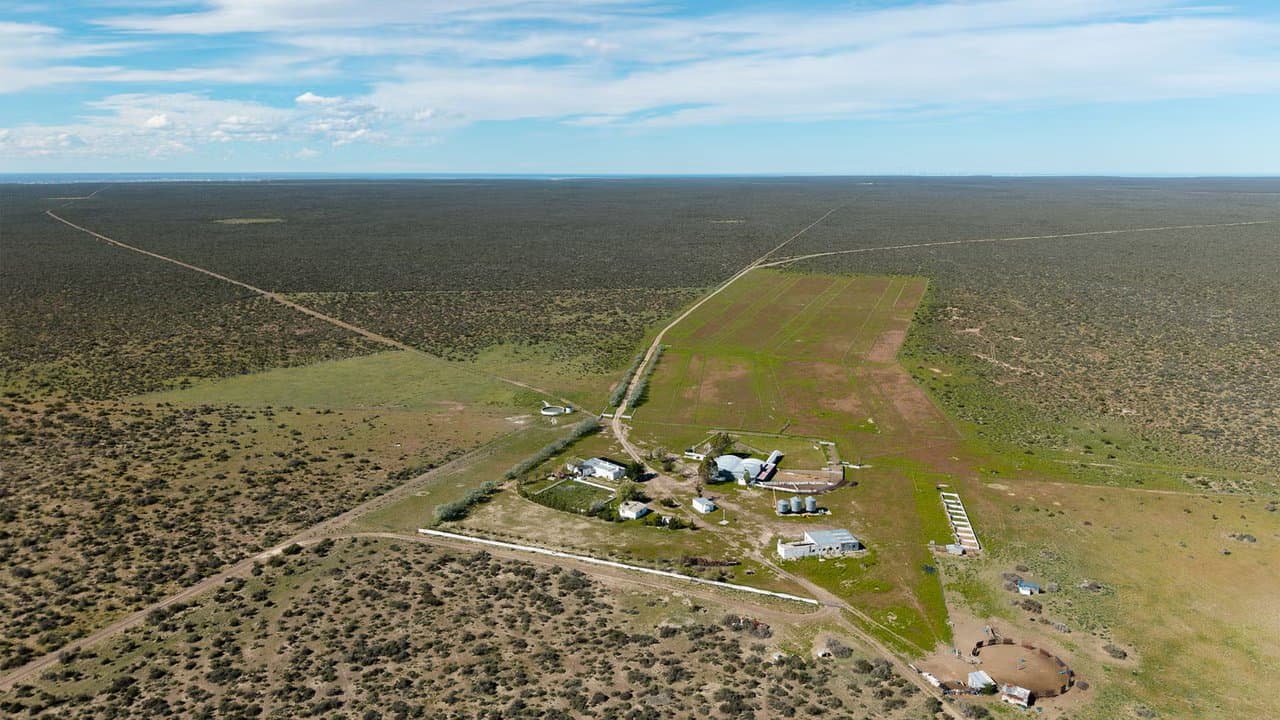
Argentina's President Javier Milei is promoting his country as a home for AI data centres with little or no regulation, betting that the open plains, cold climate and energy reserves of Patagonia can draw foreign investment, according to an Associated Press report.
"We are not going to regulate artificial intelligence," Milei told the US Chamber of Commerce in Washington last month, according to AP. "We are going to leave it free."
Visitor logs obtained by AP show a steady stream of technology figures meeting Milei and his aides in recent months, including venture capitalist Peter Thiel and representatives of OpenAI, Amazon, Google, Oracle and data centre companies. Foreign Ministry records show that Crusoe, the developer that helped build OpenAI's flagship campus in Texas, sought talks this year with Argentine energy officials about investments backed by the US government, the agency reported.
Tax Incentives and Energy Supply
To win over companies wary of Argentina's history of economic instability, Milei is pushing a scheme that would cut the corporate income tax rate from 25 percent to 15 percent for projects of at least $1 billion in AI and other emerging industries. The measure is awaiting Senate approval.
Patagonia offers wind power and the Vaca Muerta shale formation, one of the world's largest, to fuel gas-fired plants. Pampa Energía, one of Argentina's biggest power companies, has announced plans to supply large amounts of gas-fired power to a data centre near Vaca Muerta and is looking for developers. Green Capital, a Polish renewable energy company, plans a $3 billion data centre in Chubut province to lease to large technology firms, though AP said it has not yet secured a customer. Fourteen landowners have leased a combined 130,000 hectares to the company.
Marta Zlotkowska, Green Capital's head of international development, told AP the company compared sites around the world and that Patagonia "came out on top in every category."
Doubts About the Benefits
Critics question what Argentina would gain. Data centres employ relatively few people, and AP noted that Milei's proposed incentives do not require companies to reserve computing capacity for local use or to disclose their energy and water consumption. Nicolás Wolovick, a computer science professor at the National University of Córdoba, warned that without rules the country could become a "laboratory" for untested uses of the technology.
A senior official, speaking without authorisation, told AP that companies are waiting for Argentina to settle rules on training AI with copyrighted works and on sending personal data abroad. Some investors are also holding back until next year's presidential election, worried that a new government could reverse Milei's free-market reforms. AP added that, for all the pitch, Argentina still trails its neighbours in the race to become a regional data centre hub.
Why It Matters
As opposition to data centres grows in parts of the United States and Europe over grid access, power prices and local impact, governments with spare land and energy are competing for AI infrastructure. Argentina is offering light regulation and lower taxes. Others, including Gulf states, are leaning on state capital and energy supply. Whether Milei's approach turns meetings into signed contracts will depend on the Senate vote, the legal gaps investors have flagged and the outcome of the 2027 election.
Sources
- Fast Company · How AI data centers could find a regulation-free haven at the end of the world
- AP News · Argentina’s Milei pitches a regulation-free AI haven at the end of the world
Produced with AI assistance from the sources above. How we work
By
Nakoda News Desk
Nakoda News covers AI and business. Every story links the sources it draws on; how we work is set out in our editorial standards.
Related coverage
Policy Scott Wiener, Author of California's AI Safety Law, Wins Pelosi's House Seat
2 hours ago · 2 min read
Policy OpenAI's textGrain Watermark Weakens on Short or Edited Text, Raising EU Compliance Doubts
3 hours ago · 3 min read
- Policy
UAE Adds AI Categories to Government Excellence Award, Honouring Tax Authority's AI Chief
5 hours ago · 2 min read
Policy UAE Banks Federation Chief Flags AI-Driven Fraud and Cloud Concentration Risk
5 hours ago · 1 min read
Policy DIFC Courts Propose On-Chain Dispute Standard as DFSA Publishes Tokenisation Report
6 hours ago · 2 min read