Apple Plans Paid Expanded Access to Siri AI While Keeping Capex Far Below Rivals'
On John Ternus's first earnings call as chief executive, Apple said AI drives upgrades, earns App Store fees and will eventually be sold through usage tiers, all with a fraction of the infrastructure spending of Amazon and Alphabet.
By Nakoda News Desk
·3 min read
Prefer Nakoda News on Google
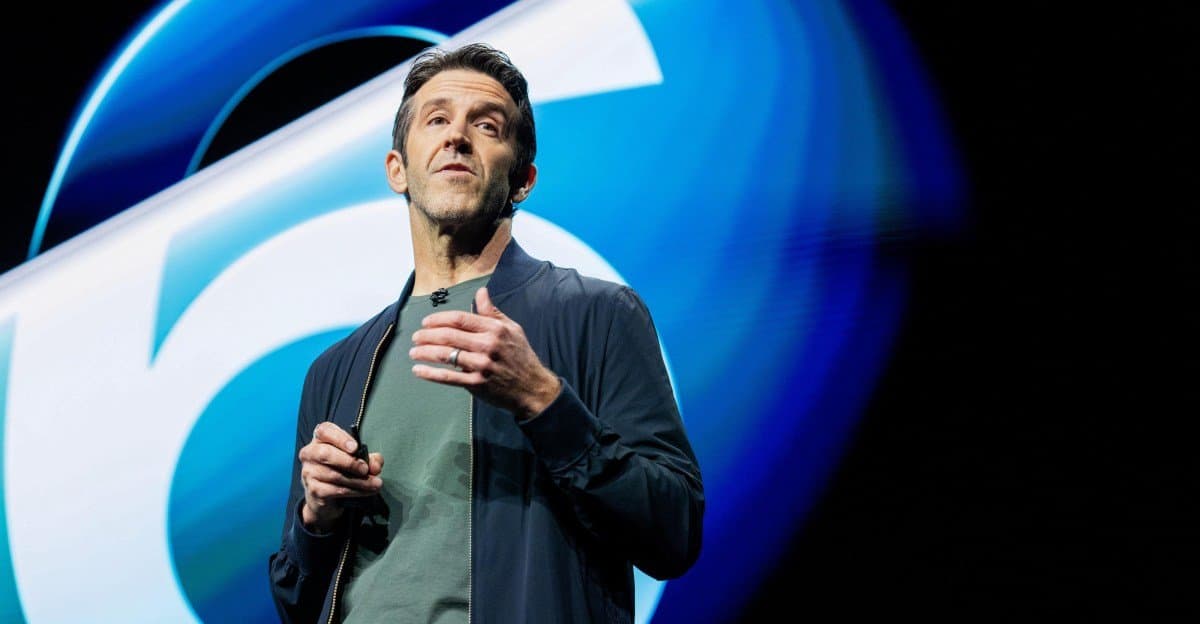
Apple intends to charge customers who want more use of its server-based AI features, chief executive John Ternus said on the company's fiscal fourth-quarter earnings call, setting out a strategy that lets the iPhone maker profit from artificial intelligence without matching the data centre spending of its largest peers.
Ternus, speaking on his first earnings call in the role, said features that rely on server-side models, including Siri AI and intelligent photo editing, will come with usage limits, and that customers who need more capacity "will be able to purchase expanded access in the future," according to The Verge. He compared the approach to iCloud, which began mainly as a storage product and has since gained additional features.
AI and Apple Intelligence were mentioned 45 times on the call, a record according to financial research platform AlphaSense cited by The Verge, exceeding the count on the call that followed Apple's unveiling of the technology and a revamped Siri in June 2024.
A Record Year With a Margin Warning
The call accompanied what Apple described as its best fiscal year ever for revenue and earnings per share. iPhone revenue rose 17.5% from a year earlier to $57.6 billion, a record for a September quarter, and Mac revenue grew 24% to $10.8 billion, its highest in four years. Even so, the shares fell in premarket trading on Tuesday after Apple warned that rising memory costs would weigh on profit margins in the holiday quarter. Apple has not said how much of its growth comes from AI demand as opposed to higher prices.
Chief financial officer Kevan Parekh pointed to a "wide range of ways that AI can contribute to revenue growth over time," saying the company believes AI gives customers a reason to upgrade or switch devices, and that there are opportunities in third-party apps, partnerships and Apple's own services.
Spending a Fraction of Its Peers
The contrast with other large technology companies is in capital expenditure. Apple spent $2.2 billion on capex last quarter, compared with $77.3 billion at Amazon and $51.4 billion at Alphabet, The Verge reported. Those figures cover all company spending rather than AI alone. Apple's operating expenses rose 21% to $19.2 billion as it increased research and development, including on AI.
Apple combines processing on its devices, its own servers and outside technology. Siri AI uses models developed with Google's Gemini technology, and Apple reportedly plans to let users choose among outside AI providers for features such as writing tools and image generation. The cloud costs of Siri AI will be booked in services cost of sales, and Parekh said it was too early to predict how many requests will need servers rather than on-device processing, so those costs could rise with usage.
The revamped Siri launched in beta for US English users in September and was extended to French, Japanese, Korean, Portuguese and Spanish in October.
Three Ways to Earn From AI
Apple is positioning itself as the interface through which its more than 2.5 billion active devices reach AI, including services built by competitors. It sells the hardware, takes commissions on AI app subscriptions and plans to charge for more of its own AI. The Wall Street Journal reported earlier this year that Apple was on track to collect more than $1 billion in App Store fees from generative AI apps in 2026, citing AppMagic, though the paper also reported that OpenAI has begun steering potential subscribers to pay on its website instead.
Ternus said the Mac is "having an AI moment all its own," as businesses run models locally to avoid paying cloud providers per request. Apple cited Gap, which runs AI for loss prevention across hundreds of stores on Mac Mini computers, and Christie's, which uses local models on Mac Studio machines for work including pricing estimates.
For investors weighing the borrowing and spending of hyperscalers, Apple is betting that controlling the device and the distribution channel can earn returns from AI while others carry most of the infrastructure cost. The open questions are how fast server costs grow as Siri AI usage increases and whether AI developers keep routing payments around the App Store.
Sources
- The Verge · Apple is all in on AI — its own and everyone else’s
Produced with AI assistance from the sources above. How we work
By
Nakoda News Desk
Nakoda News covers AI and business. Every story links the sources it draws on; how we work is set out in our editorial standards.
Related coverage
- Companies

Electric Truck Maker Harbinger Raises $240 Million as It Expands Into Defence
11 minutes ago · 1 min read
Companies Qatar's Qai Joins Brookfield and Drax on UK AI Data Centre Brookfield Says Could Top £20 Billion
1 hour ago · 2 min read
Companies India Overtakes US as ChatGPT's Largest Market, OpenAI India Chief Says
2 hours ago · 3 min read
- Companies

Lianlian DigiTech Opens DIFC Office to Expand Cross-Border Payments and Treasury Services
2 hours ago · 2 min read
Companies Empower Nine-Month Profit Rises 10.6% to Dh762 Million as Cooling Capacity Grows
2 hours ago · 2 min read